
How Alibaba Makes Its Money
China's Everything Store


September 19th, 2014. Alibaba, a Chinese tech company most Americans had barely heard of, is about to pull off something big on the New York Stock Exchange..
By the end of that day, they'd raised $25 billion. The largest IPO in history. For any company, period.

What had started as Jack Ma's scrappy online marketplace in his Hangzhou apartment was now being valued by global markets as a tech titan on par with Amazon and Google.
For Alibaba's team, it was validation. Years of building, expanding, and betting big on Chinese e-commerce were finally being recognized on the world stage.They were global.
And that IPO is still the biggest the tech world has ever seen. Alibaba's revenue has exploded. Its reach has expanded far beyond online shopping.
But the road hasn't been smooth.
China's government launched a regulatory crackdown on tech companies. The Chinese economy started cooling off. Competition intensified from all sides. At one point, Alibaba's co-founder Jack Ma basically disappeared from public view for months after criticizing regulators.
And yet, In its 2025 fiscal year, Alibaba pulled in nearly a trillion renminbi. That's $137 billion dollars.
So how does a company navigate all that chaos and still make that much money? What exactly is Alibaba's business? And why does it keep working, even when everything seems stacked against it?
Let's break it down.
China's Everything Store
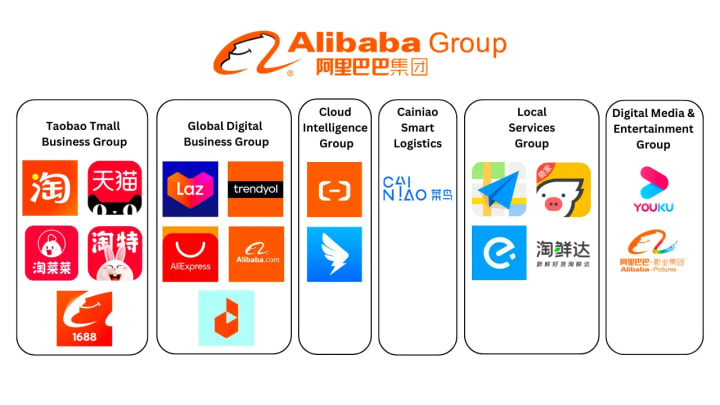
Trying to explain Alibaba to Americans is like describing a color that doesn't exist in English. It's Amazon, sure.
But it's also PayPal. And Google Cloud. And bits of Uber and Netflix thrown in for good measure. It's what happens when one company decides to colonize every profitable corner of the internet.
The whole thing started in 1999, in a small apartment in Hangzhou. Jack Ma and a crew of co-founders, probably subsisting on instant noodles and ambition, built what would become an empire of 25-plus businesses. E-commerce, cloud computing, logistics, entertainment, AI—if electrons touch it, Alibaba probably has a division for it.
The early years were a grind
Alibaba was trying to convince Chinese businesses to trade online and actually pay for things digitally. This was in a country with less than 10 million internet users.

Then came the eBay problem. The American giant was looming, flush with cash and global dominance.Alibaba faced an existential threat, The logic was simple: "eBay and Alibaba are the same animals. If we don't go to the C2C marketplace, someday, with eBay's power and resources, they come to China, and they'll kill us."
So in May 2003, they launched Taobao. The name means "treasure hunting," which is exactly the kind of romantic branding that either works brilliantly or crashes spectacularly. It worked brilliantly. Two years later, Taobao owned the Chinese market. eBay withdrew a year after that.
As Taobao exploded, major brands started showing up at Alibaba's door. Nike, established retailers—they wanted official storefronts, not the Wild West of individual sellers.
So Alibaba spun up Taobao Mall, later shortened to Tmall, creating a level marketplace: the chaotic bazaar of Taobao below, the polished department store of Tmall above.
Today, Taobao and Tmall form the core of Alibaba’s China e-commerce group — the company’s largest revenue driver — accounting for 56.6% of total revenue in the June 2025 quarter..
Not bad for a company that started in an apartment when most of China was still offline.
CMR
Something called customer management revenue, or CMR. It's a deliberately boring name for what's actually a money-making machine. CMR covers everything from marketing tools to sales commissions to software subscriptions that merchants pay to sell on Alibaba's platforms.
And it's growing fast. Alibaba recently introduced a 0.6% software service fee, replacing the old fixed annual charge that merchants used to pay.
It's a smart play for two reasons: high-volume sellers end up paying more (because they're making more), while small vendors face lower upfront costs to get started. Plus, it brings Alibaba in line with how competitors charge.
This is the genius of CMR. You'd think a massive e-commerce company makes its money from shoppers clicking "buy now." Wrong. It's the merchants — the businesses selling stuff — who really fuel the profit engine.
But Alibaba's business stretches way beyond China's borders. There's Alibaba.com for business-to-business trade, AliExpress for bargain hunters worldwide, Trendyol in Turkey, and Daraz and Lazada across Southeast Asia. These international ventures pulled in about 14% of Alibaba's total revenue in the June 2025 quarter.
One of Alibaba's signature moves is manufacturing shopping holidays. The crown jewel is Singles Day. Originally dreamed up as an anti-Valentine's Day celebration, Alibaba transformed it into the world's largest shopping event — bigger than Black Friday and Cyber Monday combined.
The Singles Day events in China are pure spectacle. We're talking annual galas with international celebrities, and at Alibaba's headquarters, they used to display a live counter tracking billions of renminbi flooding across the platform in real time.

But e-commerce is only part of the story. Alibaba runs a collection of businesses: the Cainiao logistics network, Youku (basically China's YouTube), and one of its most valuable assets — Alibaba Cloud, or Aliyun.
Aliyun dominates China's cloud market, holding more than a third of market share at the end of 2024. Globally, though It's a minnow, claiming just 4% compared to the giants like AWS, Microsoft Azure, and Google Cloud.
Still, cloud and AI are where China wants to compete on the world stage, and Alibaba is a chosen champion. The government named it a "national champion of AI" back in 2018. The vision is clear: what Alibaba wants and what China wants in AI are basically the same thing.
In December 2020, Chinese regulators came knocking with an antitrust investigation. Four months later, a record-breaking $2.8 billion fine for "monopolistic practices." It was the kind of penalty that sends a message, not just to one company, but to an entire industry.
The timing couldn't have been worse. When Alibaba went public in 2014, it was valued at $231 billion, with shares priced at $68. By 2020, the stock had climbed to $310. Then it collapsed. It never recovered those heights.
But the regulatory crackdown wasn't Alibaba's only problem. Competition was eating into its market share, and the company was surprisingly slow to respond. Upstarts like Pinduoduo and Temu were nibbling at the edges.
TikTok's e-commerce push arrived with whiplash speed. For a while, Alibaba tried competing on price — a race to the bottom that spooked investors and eroded margins.
Something had to change. If Alibaba wanted to stay relevant among tech's elite, it needed a bold move.
So in 2023, Alibaba announced it would split into six separate business units. The idea was to transform the company into a holding structure, with each division running independently — its own board, its own strategy, its own fate.
The logic seemed sound: nimble units could move faster without being dragged down by a lumbering corporate parent.
Except it created chaos. Too many moving parts, too much confusion. Just two years later, Alibaba scrapped the plan.
To steady the ship, the company brought back co-founders Joe Tsai and Eddie Wu as chairman and CEO. Promoting respected internal leaders was a calculated move to calm nerves after the six-division experiment imploded.
The new strategy was to double down on core e-commerce, and bet big on the future — AI and cloud computing.
Keeping AI tethered to the larger organization turned out to be smart. As AI became critical to every business on the planet, Alibaba's heavy investment in cloud infrastructure and digital tools started paying real dividends. The company isn't just an e-commerce platform anymore. It's a serious technology player.
There's a quote from Jack Ma when Alibaba was founded in 1999. He said the company needed to last at least 102 years — spanning three centuries: the 20th, 21st, and 22nd. It sounded grandiose at the time, maybe even absurd. But he was planting seeds for the long game.
Whether Alibaba makes it to 2101 is anyone's guess. But after weathering antitrust fines, strategic misfires, and brutal competition, it's still here — leaner, refocused, and arguably more dangerous than before.
About the Creator
Arsalan Haroon
Writer┃Speculator
Keep reading
More stories from Arsalan Haroon and writers in Journal and other communities.
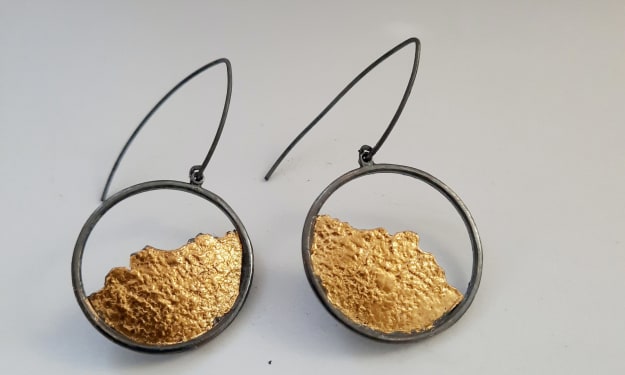
Keum-boo: The Ancient Korean Gold-Bonding Technique That Makes Silver Glow
If you’ve ever seen a piece of silver jewelry that seems to “catch fire” in certain spots, warm gold flashing against cool gray metal, you may have been looking at keum-boo. Keum-boo is an old Korean technique where ultra-thin, high-purity gold is bonded to silver using heat and pressure, creating a permanent two-tone surface without solder or adhesives. Instead of “sticking” metal on top, you’re encouraging a microscopic bond at the boundary where gold and silver meet, which is why well-done keum-boo can look clean, intentional, and remarkably durable.
By Md Mehedi Hasan Rifad5 days ago in Journal
Cassie and Johnny
I’m the kind of dame you notice. I’m no femme fatale, but you can’t ignore me, at least not until I warn you about what’s coming, then everybody ignores me. Hell, they usually blame me afterwards and give Johnny all the credit for saving the day, but my Johnny couldn’t save a seat at the movies without my help. Sure, he’s brawny, but brainy? Not so much. Like that time I asked him to spot me five bucks, and he said he didn’t see it anywhere on me, and believe you me, he looked but good.
By Harper Lewis4 days ago in Critique



Comments
There are no comments for this story
Be the first to respond and start the conversation.