
How a Software Company Works: From Concept to Code
Know the behinds of software companies!


Do you know software companies are behind the modern innovation? Even though they build the applications that we run on our devices. As a result, tech-driven businesses are growing rapidly in the modern era.
Though you're using a smartphone to check emails, booking a ride with an app, or collaborating with a team on a project management tool, all the credit goes to software companies.
Ever thought about how a software company works? And, how do they transform ideas into products? In this write-up, I will go through every aspect that comes with how a software company works.
How can You Define a Software Company?
A software company creates, designs, and maintains software products or services for consumers or businesses. Software can include mobile apps, websites, desktop applications, operating systems, games, and enterprise solutions. These products are typically designed to solve specific problems or fulfill particular needs within industries or for individual users.
Types of Software Companies: Product-Based vs. Service-Based
Software companies primarily fall into two categories based on their business model and product offerings:
Product-Based Software Companies: These companies focus on building software products that are sold to customers. The revenue model could be through one-time purchases or recurring subscriptions. These companies develop software with a broad audience in mind and rely on scaling their products to achieve success.
For example, Microsoft, with its Windows operating system and Office software suite, and Adobe, known for products like Photoshop, Lightroom, and Illustrator.
Service-Based Software Companies: These companies provide software solutions as a service, often in the form of cloud-based offerings (SaaS). Their customers usually pay recurring subscription fees to use the software, which can be tailored to their needs over time.
For instance, Shopify, a platform that allows individuals to create and manage e-commerce stores, and Salesforce offer customer relationship management (CRM) software.
How a Software Company Works?

Building software is a complex, multi-phase process that requires careful planning, execution, and ongoing support. Here’s a detailed look at the stages of the software development lifecycle:
Idea & Planning: The idea phase involves brainstorming and evaluating the feasibility of the software. This is where product managers define the scope and vision for the project.
Requirements Gathering: PMs, developers, and stakeholders collaborate to understand user needs and translate them into specific features.
Designing the Architecture: The technical foundation is built here, where developers define the database structure, API endpoints, and server-side logic.
Coding: Developers write the software’s code based on the specifications from the design phase.
Testing: QA testers ensure the product is bug-free by performing a variety of tests, such as unit testing, integration testing, and regression testing.
Deployment: The software is launched and made available to users.
Maintenance & Support: Once the product is live, ongoing support and maintenance are required to fix bugs, release updates, and improve the software based on user feedback.
Core Functions of a Software Company
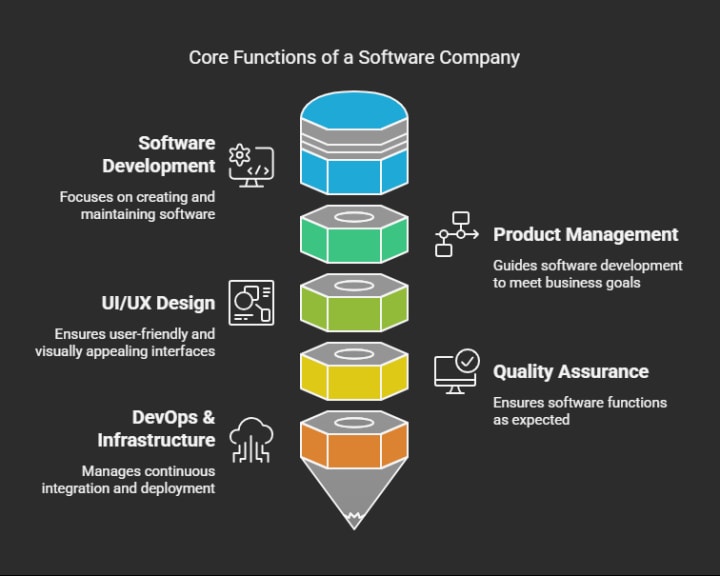
At the heart of a software company’s success lies a multi-faceted approach to various functions that support product development, team collaboration, and business operations. Let’s explore each core function in greater depth.
Software Development
Front-End vs. Back-End vs. Full Stack Development:
Front-End Development: Focuses on the part of the software that users directly interact with. Front-end developers work on website layouts, user interfaces, and the overall user experience. They primarily use technologies like HTML, CSS, JavaScript, and frameworks such as React, Angular, or Vue.js.
Back-End Development: Deals with the server-side of software, ensuring that data is properly stored, retrieved, and processed. Back-end developers use languages like Python, Ruby, Java, C++, and work with databases like MySQL, MongoDB, and PostgreSQL.
Full Stack Development: Full-stack developers are capable of working across both the front-end and back-end, making them versatile in building entire applications from start to finish. They need proficiency in multiple languages and frameworks, often acting as a bridge between the front-end and back-end teams.
Agile/Scrum Methodology:
Agile is an iterative approach to software development, where tasks are broken down into smaller, manageable pieces called sprints. This methodology allows teams to quickly adapt to changes, collaborate more effectively, and maintain flexibility in product development. Scrum, a specific type of Agile methodology, uses daily standups and sprint reviews to ensure teams stay on track.
Popular Coding Languages and Frameworks:
In today’s software landscape, several coding languages and frameworks are widely used, such as:
JavaScript: Essential for front-end development and often used in frameworks like React and Angular.
Python: Known for its simplicity and versatility, often used in web development and data science.
Ruby: A dynamic programming language popular for building web applications, particularly using the Ruby on Rails framework.
Java: A robust and scalable language used for enterprise-level applications.
C++: A high-performance language used for systems and game development.
Product Management
Role of Product Managers:
Product managers (PMs) are essential in guiding the software’s development, ensuring that it aligns with business objectives and user needs. PMs collaborate with stakeholders, developers, designers, and marketers to define the product vision and ensure the delivery of a quality product on time.
User Stories and Roadmaps:
A product manager creates user stories, which describe features or functionality from the perspective of the end user. These user stories help guide the development team’s work. Roadmaps, on the other hand, outline the strategic direction of the product, listing upcoming features, timelines, and business goals.
UI/UX Design
Wireframing, Prototyping, and User Testing:
UI/UX designers are responsible for ensuring the software’s design is user-friendly and visually appealing. Wireframes are low-fidelity sketches that demonstrate the structure of a page, while prototypes are interactive mock-ups that allow users to experience the design before development begins. User testing, including A/B testing and usability studies, helps validate design decisions.
Design Thinking:
Design thinking is a creative problem-solving approach used by designers to focus on human needs throughout the development process. It encourages empathy, ideation, and iteration to build user-centered solutions.
Quality Assurance (QA)
Manual vs. Automated Testing:
Testing ensures that the software functions as expected. In manual testing, QA professionals execute test cases manually to identify bugs. In automated testing, tools like Selenium or JUnit run tests automatically, ensuring continuous quality assurance during the development process. Automated testing speeds up the process and helps catch regressions in code.
Importance of Bug Tracking and User Feedback:
Software companies use bug tracking systems (e.g., Jira, Bugzilla) to report and manage issues. Additionally, user feedback gathered through surveys, reviews, or customer support interactions plays a critical role in identifying and fixing problems post-launch.
DevOps & Infrastructure
Continuous Integration/Deployment (CI/CD):
CI/CD practices allow developers to continuously integrate their code into a shared repository and deploy updates to production quickly and reliably. This reduces the time between writing new features and delivering them to end users, improving both productivity and quality.
Cloud Hosting and Infrastructure:
Most software companies rely on cloud hosting services like Amazon Web Services (AWS), Microsoft Azure, and Google Cloud. These platforms provide scalable and cost-effective infrastructure that helps software companies manage their computing resources efficiently and support millions of users.
People Work Behind a Successful Project
A software company’s success is rooted in the collaborative efforts of several roles. These professionals, each with distinct skills and responsibilities, work together to build and maintain software products.
Organizational Chart and Key Roles:
Developers: Build and maintain the codebase.
Designers: Responsible for the product’s look and feel.
QA Testers: Identify and resolve bugs.
Product Owners: Define product features and manage the roadmap.
Project Managers: Ensure timely delivery of features, manage resources.
Technical Writers: Create user documentation and API guides.
Collaboration Tools:
Tools like Jira (for issue tracking), Slack (for communication), GitHub (for code management), and Trello (for project management) enable software teams to collaborate seamlessly, even if they are working remotely.
How Software Companies Make Money
Software companies employ a variety of revenue models depending on their market and product type:
Subscription (SaaS): Companies like Salesforce, Netflix, and Dropbox generate revenue by offering their software on a subscription basis.
One-Time Licenses: Older models, like Microsoft Office, often use a one-time purchase model.
Freemium: Some companies, like Spotify and LinkedIn, offer a free version of their software with limited features, while premium versions are available for a fee.
Custom Software Development: Companies may offer custom software solutions for specific clients, charging based on the project size and complexity.
Maintenance Contracts: Ongoing support and system updates for enterprise clients.
Advertising/Affiliate: Free applications like Facebook and Google generate revenue through targeted ads.
What Is the Leading Software Development Company in Bangladesh?
If you're looking for a reliable partner to bring your digital vision to life, Softineers is the best software development company in Bangladesh. With a proven track record of delivering high-quality, tailor-made solutions.
Softineers specializes in custom website development and web application development. Their expert team of developers, designers, and project managers works closely with clients to transform ideas into powerful, scalable, and user-friendly digital products.
Whether you’re a startup or an established business, Softineers ensures technology works for your growth.
Final Thoughts - How a Software Company Works
Understanding how a software company works is essential for anyone interested in the tech industry. From development processes and organizational structures to revenue models and emerging trends, this comprehensive guide covers the essential components that make up a modern software company.
Whether you’re starting a software business, joining a development team, or simply curious about how it all comes together, you now have a clear understanding of the inner workings of these vital organizations.
If you're thinking about building your software product or pursuing a tech career, now you know how the industry operates from the inside out.
About the Creator
Jennifer Wilson
Trendy tech research and digital content creator.
Keep reading
More stories from Jennifer Wilson and writers in Journal and other communities.
Why Is My Facebook Feed All Ads? Here’s What You Need to Know
Have you opened your Facebook app lately? And wondering, you are scrolling through nothing but ads? Don’t think that you are alone. Your feed looks more like a sales catalog than a place to connect with friends.
By Jennifer Wilson10 months ago in Journal
HOUSING MARKET WARNING:
--- **Introduction: A Critical Moment for Young Homebuyers** If you're under 30 and considering purchasing your first home, financial experts are urging caution. A convergence of geopolitical tensions, energy market volatility, and economic indicators suggests that waiting 12-24 months could save you hundreds of thousands of dollars. This isn't speculation—it's an analysis of historical patterns and current market dynamics that every prospective buyer should understand before making the largest financial commitment of their life.
By Literary fusion5 days ago in Journal



Comments
There are no comments for this story
Be the first to respond and start the conversation.