
Heavy-Duty Industrial Carts for Manufacturing and Warehousing
Helping You Move Heavy Items with Ease and Safety

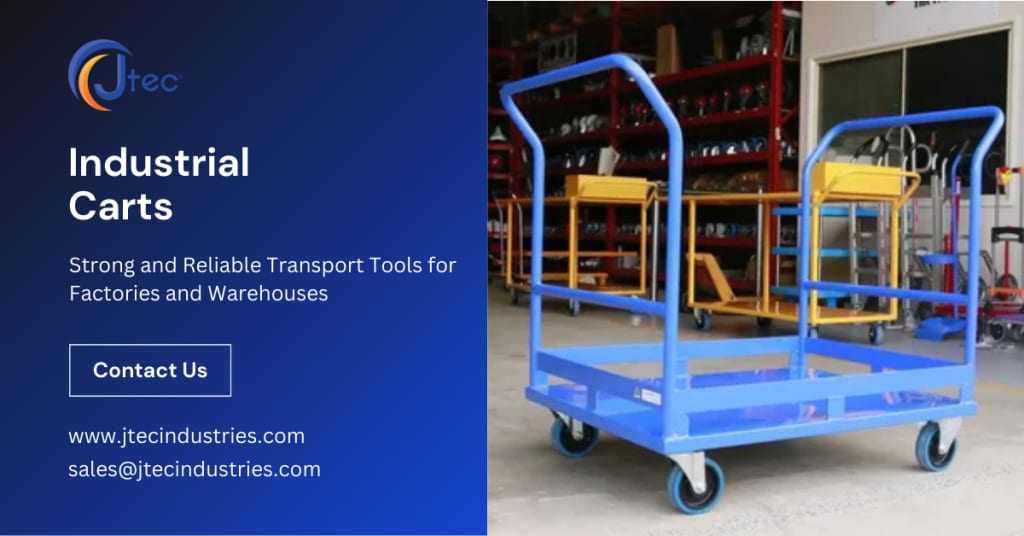
Efficiency and safety are more critical than ever in any industrial environment. Whether managing a large-scale manufacturing plant or a bustling distribution warehouse, the tools you use for material handling play a key role in your day-to-day operations. Among those tools, industrial carts stand out as essential workhorses, designed to transport heavy loads, reduce strain on workers, and improve productivity across the board.
What are Heavy-Duty Industrial Carts?
Heavy-duty carts are designed for transporting large, bulky, or heavy items within manufacturing and warehousing facilities. These carts are built from durable materials like toughened steel or high-grade aluminum and withstand extreme weights and harsh operating conditions. Unlike standard utility carts, heavy-duty variants are engineered with industrial-grade wheels, solid frames, and advanced features that cater to high-load tasks and continuous use.
Whether moving engine parts across an assembly line or hauling inventory through a warehouse, industrial carts provide a reliable and ergonomic way to handle materials.
Types of Heavy-Duty Carts Used in Industry
Different operational needs call for different types of carts. Here are a few of the most commonly used in industrial settings:
- Flatbed Carts: These feature a large, flat surface and are ideal for carrying oversized or irregularly shaped items.
- Utility Carts: Versatile and multi-tiered, perfect for organizing tools, parts, or small components.
- Tilt Trucks: Used for waste handling and recycling, featuring a tipping function for easy unloading.
- Platform Trucks: Heavy-duty options with decks and high load capacity, often used for transporting bulk items.
- Specialty Carts: Designed for unique needs, such as anti-static carts in electronics manufacturing or stainless steel carts in food processing plants.
Benefits of Using Heavy-Duty Carts
Incorporating heavy-duty industrial carts into your workflow offers several advantages.
- Improved Worker Safety: Manual lifting and repetitive strain are among the top causes of workplace injuries. Carts reduce the need for employees to carry heavy loads, minimizing physical strain and improving overall workplace safety.
- Increased Efficiency: These carts help reduce downtime and improve turnaround times across various departments by enabling smoother and faster transport of goods.
- Durability and Longevity: These carts are built to last. Their solid construction means they can handle constant use in challenging environments, providing a long-term return on investment.
- Ergonomics and Customization: Many carts come with ergonomic handles, adjustable shelves, and modular attachments, allowing you to tailor them to your team’s needs.
- Cost Savings Over Time: Although heavy-duty carts might involve a higher upfront investment, their longevity and reduced maintenance requirements translate into significant savings in the long run.
Key Features to Consider When Choosing a Cart
Before purchasing, it is vital to evaluate a few critical features:
- Load Capacity: Always choose a cart rated for more weight than you think you will need; it is better to have a buffer.
- Wheel Type and Maneuverability: Swivel casters, brake locks, and pneumatic tires contribute to easier handling, especially in tight spaces.
- Handle Design and Braking Systems: Good ergonomics reduce strain and prevent accidents during operation.
- Material and Construction: Steel carts are strong and stable, while aluminum offers lighter weight with decent strength.
- Environment Suitability: Ensure the cart is resistant to corrosion, chemicals, or temperature extremes, depending on your setting.
Industry Applications
Heavy-duty industrial carts are used in nearly every sector that involves physical goods. Here are a few areas where they are particularly valuable:
- Automotive Manufacturing: Transporting parts from one workstation to another.
- Food and Beverage Production: These carts handle ingredients or packaged goods in cleanroom environments.
- Warehousing and Distribution Centers: These carts move pallets, boxes, and bulk items quickly and efficiently.
- Aerospace and Defense: Safely transporting delicate or high-value components.
- Electronics Assembly: Using ESD-safe carts to prevent static damage to components.
Customization Options
One of the biggest strengths of modern material handling carts is their flexibility. Many manufacturers offer customization options such as:
- Modular Shelving or Bins: To organize tools, materials, or inventory.
- Tow Bars or Hooks: For linking multiple carts in a train system.
- Specialty Wheels: Anti-static, pneumatic, or noise-reducing options.
- Color Coding or Branding: For visual organization or to match company colors.
- Smart Features: Integration with RFID tracking or inventory systems.
These enhancements can significantly improve workflow and allow your team to work more intelligently and safely.
Maintenance Tips for Longevity
To maximize the life of your industrial carts, follow a few best practices:
- Inspect Casters Regularly: Worn wheels can lead to poor handling or accidents.
- Lubricate Moving Parts: Prevent rust and ensure smooth operation.
- Follow Proper Loading Guidelines: Avoid overloading, which can damage the cart and pose safety risks.
- Store in Clean and Dry Areas: Especially if carts are not used for long periods.
How to Source Reliable Industrial Carts
When it is time to buy, ensure you are investing in quality. Here is how to find the right supplier:
- Look for Industry Certifications: Ensure the carts meet OSHA, ANSI, or other relevant standards.
- Check Warranties: A solid warranty shows confidence in product durability.
- Review Customer Testimonials: See how the carts perform in real-world environments.
- Ask About Customization: Ensure the supplier can tailor solutions to your facility’s needs.
Conclusion
Heavy-duty industrial carts are more than simple transport tools—they are essential assets in any manufacturing or warehousing operation. The right cart system can significantly advance your material handling strategy by improving efficiency, safety, and reducing long-term costs. If your current equipment is holding you back, now is the time to explore high-performance material handling carts customized to your business needs. Whether upgrading an old fleet or starting from scratch, choosing the right cart can make all the difference.
About the Creator
Jtec Industries
J-TEC Industries is a manufacturing company specializing in material handling equipment solutions.
Keep reading
More stories from Jtec Industries and writers in Journal and other communities.
Top 7 Features for Material Handling Carts in 2025
From warehousing to healthcare, material handling is a critical part of operations in every industry. As demand for faster deliveries increases and labor shortages challenge businesses, the need for efficient and reliable material handling solutions has never been more important. Among these solutions, material handling carts are vital tools that help streamline workflows, improve safety, and increase productivity. As we move into 2025, material handling carts are changing with new, advanced features designed to meet modern demands.
By Jtec Industries9 months ago in Journal
The Future of Work in the Age of AI
AI changed the workforce faster than any other technology. Artificial intelligence has become such a big part of our daily lives that most of us don’t even realize it. But what happens when AI comes into your work? Companies are investing in AI right now because it’s cheap to operate and runs nonstop.
By Mark Arthur5 days ago in Journal



Comments
There are no comments for this story
Be the first to respond and start the conversation.