
Healthcare Contract Manufacturing Market: The Silent Growth Engine of Pharma
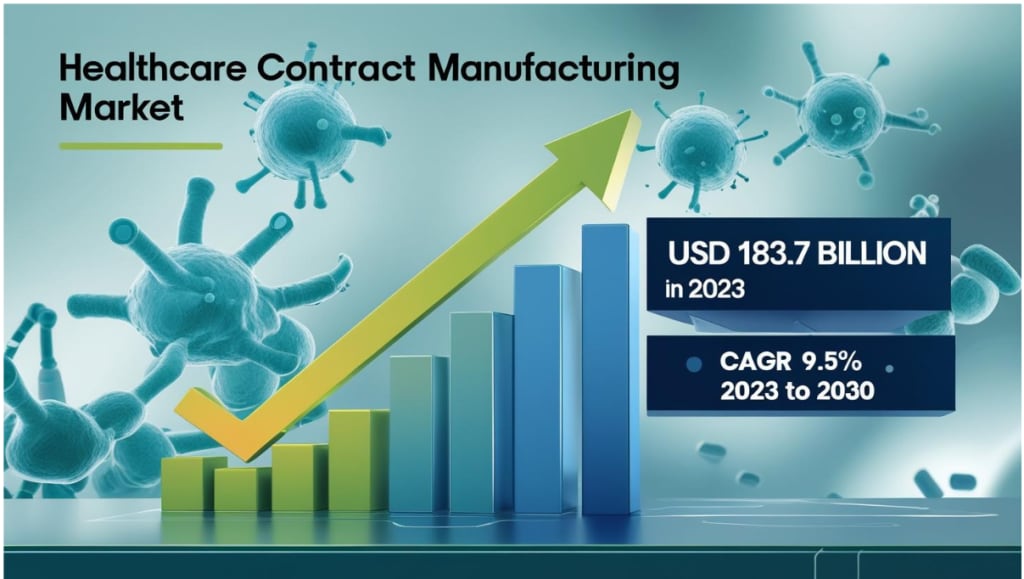
The healthcare contract manufacturing market is set to grow at a compound annual growth rate (CAGR) of 9.5% from 2023 to 2030, building on its 2023 valuation of USD 183.7 billion.

The healthcare contract manufacturing market sector has been quietly transforming the global pharmaceutical industry while remaining outside the spotlight of blockbuster drugs and biotechnology breakthroughs. The need to innovate while cutting expenses and meeting tough regulations makes outsourcing to contract manufacturing organizations (CMOs) a vital strategy for pharmaceutical companies. Healthcare contract manufacturing was once a secondary function but now serves as a fundamental component to grow pharma companies by enhancing agility, efficiency, and scalability.
What factors are driving the dramatic increase in outsourcing within industries?
Recent years have shown strong expansion in the healthcare contract manufacturing market which experts predict will exceed $300 billion before this decade ends. Multiple industry factors are pushing this growth trend forward.
The primary factor driving this trend is the escalating complexity and expense associated with developing new drugs. As pharmaceutical companies face average R&D expenses reaching billions and drug development timelines extending over ten years they are turning more towards CMOs for improved production efficiency and reduced capital costs which result in faster market entry. Pharma companies can concentrate on essential functions such as drug discovery and marketing because contract manufacturers provide specialized capabilities together with modern facilities and regulatory knowledge.
The patent expiration of blockbuster drugs has forced companies to rapidly create and introduce generics and biosimilars which need adaptable production methods that save costs. CMOs possess adaptable production systems and expandable infrastructure that makes them ideal partners for facilitating these industry transitions.
Biologics and Specialty Drugs Drive Demand
The increase in biologics production such as monoclonal antibodies, vaccines, and cell and gene therapies drives substantial growth in contract manufacturing. The production of these products involves complex processes that demand advanced bioprocessing equipment along with expert knowledge in sterile production methods and quality control systems.
Pharma companies prefer to delegate biologics production to specialized CMOs because they possess the necessary skills in fermentation, purification, and aseptic processing. Small to mid-sized biotech companies face significant demand for specialized services since they do not possess the necessary infrastructure to independently expand their operations.
The rising emphasis on personalized medicine and small-batch production has increased the appeal of contract manufacturing. Through efficient handling of customized manufacturing processes CMOs support companies in delivering patient-specific therapies and orphan drugs.
Regulatory Pressure and Risk Mitigation
Today global regulatory standards present unprecedented complexity challenges to navigate. Contract manufacturers who maintain solid connections with regulatory authorities like the FDA, EMA, and WHO possess a distinct competitive edge. Their compliance-ready facilities and quality systems help reduce delays and rejections during inspection and audit processes.
When pharmaceutical companies use CMOs they achieve better risk management capabilities. Collaboration with contract manufacturers located in different regions can help businesses overcome manufacturing disruptions from supply chain problems and natural disasters. The strategic diversification approach strengthens drug production by increasing both continuity and resilience.
Consolidation and Strategic Partnerships
The market for healthcare contract manufacturing experiences greater consolidation because CMOs combine forces or purchase specialized companies to extend their range of services. The industry demonstrates expanding need for comprehensive services which include development and formulation as well as packaging and distribution.
Pharmaceutical companies are forming long-lasting strategic partnerships by moving away from short-term transactions to fully integrated collaboration models. Through collaborative partnerships companies can co-develop products together while investing jointly in technology and improving supply chain processes for enhanced speed and efficiency.
The Road Ahead: Digitalization and Sustainability
Contract manufacturing will be transformed by digital innovations which will establish themselves as essential driving forces. The implementation of smart factories together with data-driven process control and real-time monitoring technology leads to better quality outcomes while enhancing operational efficiency. CMOs adopting Industry 4.0 technologies establish themselves as future-oriented manufacturing partners in the tech-focused pharmaceutical industry.
Sustainability is also gaining traction. CMOs must adopt environmentally friendly manufacturing processes while reducing waste and boosting energy efficiency to match the sustainability targets set by their pharmaceutical partners.
Conclusion
Healthcare contract manufacturing has moved from a behind-the-scenes role to become essential in the pharmaceutical industry’s strategic plans for growth and operational innovation. As drug development becomes more complicated and specialized therapies increase in demand contract manufacturing organizations will advance from basic service providers into essential partners in the worldwide healthcare system. The quiet transformation of contract manufacturing enables it to drive the future of the pharmaceutical industry beyond mere support.
About the Creator
Paxton Templeton
I’m a storyteller at heart with a passion for turning data into compelling narratives. With a focus on industry trends, market insights, and growth statistics, I bring clarity to complexity
Keep reading
More stories from Paxton Templeton and writers in Journal and other communities.
Tracking the Trends: What’s Powering the Sodium-ion Battery Market
The rising global need for energy storage systems directs more attention to options apart from lithium-ion batteries. The sodium-ion battery (Na-ion) stands out as a leading technology because it combines economic benefits with environmental sustainability and plentiful raw materials. The sodium-ion battery market is advancing quickly even though it remains in its early development phase compared to lithium-ion batteries. The ability to predict energy storage's future trajectory requires a thorough comprehension of the major trends driving its current momentum.
By Paxton Templeton10 months ago in Journal
Author’s Advice
If you would’ve asked me 20 years ago did I know I’d become a writer and an author, I would’ve said “nope, ain’t happening”. As fate would have it I did become an author and I can honestly say I’m loving it so far. It really does feel good to be a writer. I’ve learned a lot on this journey and I feel like with even me being as new to this world as I am, there’s some wisdom I need to share with every other aspiring author.
By Joe Patterson5 days ago in Journal




Comments
There are no comments for this story
Be the first to respond and start the conversation.