
Healing the Future: Trends Driving the Wound Care Market
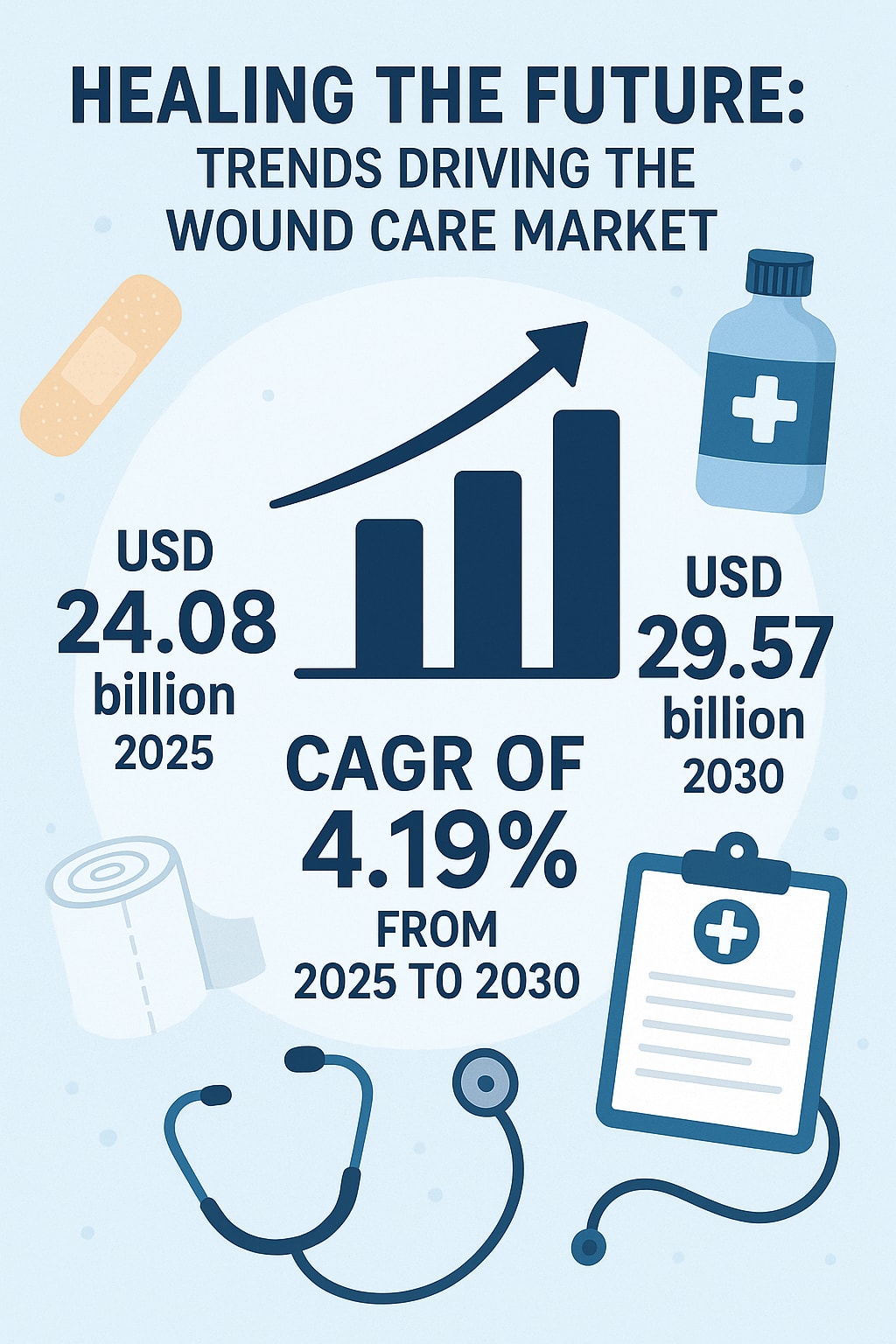
The wound care market is set to grow at a compound annual growth rate (CAGR) of 4.19% from 2025 to 2030, building on its 2025 valuation of USD 24.08 billion.

Technological innovation along with changing patient needs and increased healthcare awareness is causing a profound transformation in the global wound care market. The aging population combined with the increase of chronic diseases creates greater demand for wound care solutions that provide efficient treatment and personalized care at reduced costs. The phrase "Healing the Future" encapsulates real-world advancements in wound care methods and products that enhance medical results for numerous people. This overview examines the major trends that will define the wound care industry's future direction.
1. Advanced Wound Care Products on the Rise
Modern wound treatment solutions are replacing conventional dressings such as gauze and bandages. Advanced wound care solutions including hydrocolloid, alginate, hydrogel, and foam dressings deliver enhanced moisture retention along with quicker healing times and reduced infection risks. Advanced wound care products prove especially effective in managing chronic conditions such as diabetic ulcers, pressure sores, and surgical wounds.
Bioactive dressings which contain antimicrobial agents alongside collagen or growth factors to support tissue regeneration are gaining popularity in the market. These products both decrease healing duration and reduce the necessity for frequent dressing replacements which leads to enhanced patient comfort.
2. Emphasis on Chronic Wound Management
The growing prevalence of diabetes combined with obesity and vascular illnesses is leading to more chronic wounds. The International Diabetes Federation reports that diabetic conditions affect more than 500 million people worldwide and many of them face the threat of diabetic foot ulcers.
Healthcare systems face financial and logistical challenges with chronic wound care which is driving the adoption of early treatment approaches alongside sustained monitoring and preventive measures. Specialized wound care clinics along with telemedicine and home care services now form crucial elements of chronic wound management strategies.
3. Digital Health and Smart Wound Care
Wound evaluation and treatment methods are undergoing revolutionary changes due to advancements in digital technologies. Clinicians receive real-time data about wound temperature, pH levels and moisture from smart dressings which contain sensors and allows them to adjust treatment strategies proactively.
Through remote wound monitoring enabled by AI-powered imaging tools and mobile applications clinicians can track patient progress and identify complications at an early stage. These innovations prove most beneficial in rural regions or underserved locations due to the limited availability of specialist healthcare services.
4. Biologics and Regenerative Medicine
Products produced from natural elements including cells and proteins known as biologics demonstrate effectiveness in expediting wound recovery. Healthcare providers now frequently use skin substitutes along with stem cell therapies and platelet-rich plasma (PRP) treatments to restore damaged tissue and enhance healing in challenging wound cases.
Although regenerative solutions currently carry high costs they should become more accessible as research and development work continues to remove entry barriers.
5. Focus on Personalized and Patient-Centered Care
The future of wound care is personal. Customizable treatment plans which encompass patient-specific factors including wound type, underlying conditions and genetic predispositions now establish the gold standard. The continued trend toward personalized medicine is backed by the combined use of electronic health records (EHRs), predictive analytics technologies and wearable devices which offer real-time monitoring of patient health information.
Patient education alongside active patient involvement has been acknowledged as essential for achieving positive outcomes in wound care treatments. Digital platforms along with educational materials and self-care tools enable patients to lower their chances of hospital readmissions while simultaneously enhancing adherence to medical treatment plans.
6. Sustainability and Eco-Friendly Materials
Healthcare providers now recognize environmental sustainability as an essential factor in wound care management. Manufacturers research biodegradable dressings while developing recyclable packaging systems and adopting sustainable production methods. The industry is starting to find equilibrium between technological progress and environmental duty due to rising demands from both regulatory bodies and consumers.
Conclusion: Healing the Future, Today
The wound care market combines innovative solutions with clinical requirements and patient control for better outcomes. Advancements in technology combined with healthcare models that emphasize prevention and personalization will enable future wound healing to become quicker and more intelligent while maintaining compassion.
For equitable and effective wound care to emerge from these transformative trends healthcare providers, manufacturers, policy-makers, and patients need to engage in collaborative efforts. The future will involve not only wound healing but also a transformation of our health recovery methods.
About the Creator
Paxton Templeton
I’m a storyteller at heart with a passion for turning data into compelling narratives. With a focus on industry trends, market insights, and growth statistics, I bring clarity to complexity
Keep reading
More stories from Paxton Templeton and writers in Journal and other communities.
Healthcare Contract Manufacturing Market: The Silent Growth Engine of Pharma
The healthcare contract manufacturing market sector has been quietly transforming the global pharmaceutical industry while remaining outside the spotlight of blockbuster drugs and biotechnology breakthroughs. The need to innovate while cutting expenses and meeting tough regulations makes outsourcing to contract manufacturing organizations (CMOs) a vital strategy for pharmaceutical companies. Healthcare contract manufacturing was once a secondary function but now serves as a fundamental component to grow pharma companies by enhancing agility, efficiency, and scalability.
By Paxton Templeton10 months ago in Journal
Author’s Advice
If you would’ve asked me 20 years ago did I know I’d become a writer and an author, I would’ve said “nope, ain’t happening”. As fate would have it I did become an author and I can honestly say I’m loving it so far. It really does feel good to be a writer. I’ve learned a lot on this journey and I feel like with even me being as new to this world as I am, there’s some wisdom I need to share with every other aspiring author.
By Joe Patterson4 days ago in Journal




Comments (1)
The wound care market's changing fast. Advanced products like hydrocolloid dressings are replacing gauze. Chronic wound management's crucial due to diabetes. We need better solutions for patients.