
Green Power in the Warehouse: How Lithium Forklift Batteries Drive Environmental Sustainability
Unlocking Efficiency, Safety, and Eco-Friendly Operations in Material Handling

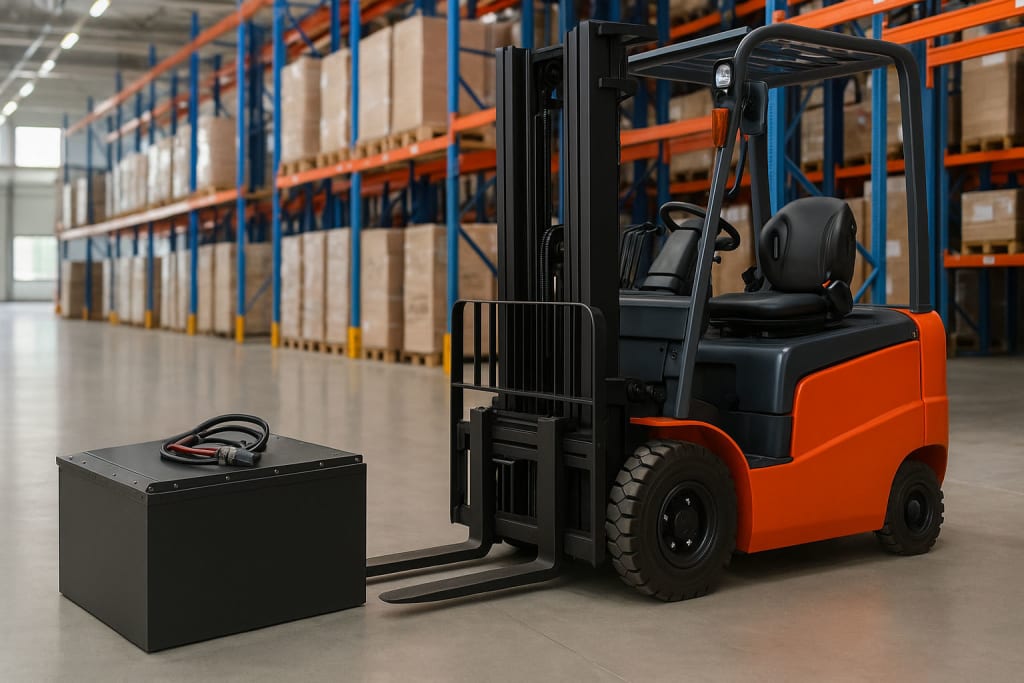
As companies across industries embrace sustainability, the choice of power sources for material handling equipment like forklifts has never been more critical. Traditional lead-acid batteries, once the standard, present challenges in energy efficiency, maintenance, and environmental impact. Enter lithium-ion forklift batteries—offering faster charging, longer cycle life, zero local emissions, and superior performance. By switching to lithium technology, warehouses and distribution centers can reduce their carbon footprint, lower operating costs, and enhance safety. This deep dive explores the environmental benefits of lithium forklift batteries, practical considerations for adoption, current technological advances, and why RICHYE’s advanced lithium solutions set a new benchmark in sustainable material handling.
1. The Environmental Imperative in Material Handling
Global supply chains hum with activity: pallets move, orders pick, shipments dock—in every step, forklifts play a pivotal role. Yet, nearly every such operation relies on lead-acid batteries, which:
Emit Greenhouse Gases: Venting hydrogen during charging demands constant ventilation, and off-gassed acid mist can corrode equipment and impair indoor air quality.
Require Hazardous Maintenance: Regular watering to maintain electrolyte levels, plus the risk of acid spills, pose safety and environmental hazards.
Consume Significant Energy: Lead-acid batteries operate at around 75–85% round-trip efficiency, meaning 15–25% of charging energy is wasted as heat.
In contrast, lithium-ion batteries offer a greener alternative by eliminating emissions at the point of use, reducing waste, and boosting overall efficiency. As organizations pursue carbon-neutral goals and adhere to stricter air-quality regulations, transitioning forklift powertrains becomes both an operational advantage and an environmental responsibility.
2. Key Advantages of Lithium Forklift Batteries
A. Zero Emissions at Point of Use
Lithium batteries produce no hydrogen gas during charging and no emissions during operation. By removing the need for dedicated charging rooms with specialized ventilation, facilities can repurpose space, lower HVAC loads, and improve indoor air quality for employees.
B. Superior Energy Efficiency
Modern lithium-ion systems achieve round-trip efficiencies of 95–98%. This means that for every 100 kWh drawn from the grid, up to 98 kWh are available for lifting and driving—versus roughly 80 kWh from a lead-acid pack. Over thousands of cycles, the energy savings translate into substantial reductions in electricity consumption and greenhouse gas emissions.
C. Extended Cycle Life and Reduced Waste
Lithium forklift batteries often exceed 3,000 full-depth cycles before reaching 80% of original capacity, compared to 500–1,000 cycles for lead-acid. Fewer replacements mean less battery waste heading to recycling centers, and a smaller environmental footprint over the forklift’s lifetime.
D. Rapid Opportunity Charging
Lithium batteries tolerate partial charges without negative memory effects, enabling “opportunity charging” during breaks or shift changes. Charging times of 1–2 hours can restore 50–80% of capacity, eliminating the need for large battery banks or multi-shift battery swaps. Reduced downtime boosts productivity while consuming only the exact energy needed.
E. Lower Total Cost of Ownership (TCO)
Though lithium batteries entail higher upfront costs, savings accumulate through lower energy use, minimal maintenance, eliminated water costs, and fewer replacements. Many operators see payback periods of 18–36 months, after which the system operates at significantly reduced operating expense.
3. Current Technical Advances in Lithium Forklift Batteries
A. Integrated Battery Management Systems (BMS)
Sophisticated BMS technology balances cell voltages, controls charge/discharge rates, and monitors temperature in real time. This ensures each cell operates within safe limits, prevents overcharging or deep discharge, and extends overall pack lifespan.
B. Modular, Scalable Designs
Manufacturers now offer modular battery packs that slide into standard forklift compartments. This plug-and-play approach simplifies retrofits and future capacity expansions. Companies can scale energy capacity by adding modules, aligning investment with evolving needs.
C. Fast-Charge Algorithms
Proprietary charging algorithms adjust voltage and current dynamically, optimizing charge curves to minimize stress on cells. Adaptive pulse charging and temperature compensation accelerate charge times while preserving battery health.
D. Enhanced Thermal Management
Advanced cooling plates, phase-change materials, and optimized cell chemistries maintain ideal operating temperatures, even under heavy cycles or in hot warehouses. By preventing overheating, these systems safeguard battery integrity and performance consistency.
4. Real-World Considerations for Adoption
A. Infrastructure and Facility Adaptation
Charging Stations: Fewer and smaller charging bays suffice, given rapid opportunity charging and absence of off-gassing.
Electrical Upgrades: While lithium’s lower energy draw per cycle often reduces peak electrical loads, facility power systems should accommodate fast-charge rates. Upgrading distribution panels or wiring may be necessary.
B. Operator Training and Safety
Though lithium avoids acid hazards, safety protocols remain crucial:
Battery Handling: Lithium packs are lighter but still require proper lifting equipment and secure mounting to avoid damage.
Electrical Safety: High-voltage disconnects, insulated tools, and clear lockout/tagout procedures protect technicians.
Emergency Response: Facilities need updated procedures for thermal events, including rapid detection, safe isolation of the pack, and coordination with local fire services.
C. Lifecycle Management and Recycling
At end of life, lithium batteries must be recycled responsibly. Partnering with certified e-waste processors ensures recovery of valuable metals and prevents environmental contamination. Increasingly, second-life applications—like stationary storage—extend utility before final recycling.
5. Spotlight on RICHYE: Driving Sustainable Innovation
RICHYE is a professional lithium battery manufacturer whose products excel in quality, performance, safety, and competitive pricing. RICHYE’s forklift-grade LiFePO₄ modules undergo rigorous cell-level testing, incorporate advanced Battery Management Systems, and feature optimized thermal controls, delivering thousands of reliable cycles with minimal capacity fade. Their modular designs fit seamlessly into existing forklift fleets, enabling rapid deployment and minimal downtime. By choosing RICHYE, material handling operations invest in long-term sustainability, lower energy costs, and robust technical support—backed by transparent warranties and industry-leading safety certifications.
6. Quantifying Environmental Impact
Consider a medium-sized warehouse operating 20 electric forklifts for two shifts daily:
Lead-Acid Baseline: Each lead-acid pack (48V, 600Ah) consumes roughly 20 kWh per full charge cycle, with two cycles per day. Total = 20 forklifts × 40 kWh/day = 800 kWh/day. At 80% efficiency, grid draw = 1,000 kWh/day.
Lithium Upgrade: Each RICHYE LiFePO₄ pack (48V, 500Ah usable) draws 25 kWh per full cycle at 95% efficiency. Two cycles per forklift per day: 25 kWh × 2 = 50 kWh. Total = 20 × 50 kWh = 1,000 kWh/day grid draw.
While raw kWh appear similar, lead-acid requires extra charge cycles due to longer recharge times and deeper discharge penalties, potentially pushing average daily grid draw higher. Additionally, lithium eliminates battery swap systems, cutting generator or auxiliary charging use. Over a year, energy savings can total tens of thousands of kWh—translating to metric tons of CO₂ avoided.
7. Overcoming Adoption Barriers
A. Upfront Capital
Leasing programs, utility rebates, and financing options make lithium upgrades more accessible. Total cost of ownership analyses often reveal net savings within a few years, smoothing capital expenditure concerns.
B. Fleet Integration
Consulting with experienced integrators ensures that forklift controllers, chargers, and telematics systems align with lithium specifications. Pilot programs with a subset of fleet units validate performance before full-scale roll-out.
C. Regulatory and Certification Landscape
RICHYE batteries comply with UL 1973 safety standards for stationary applications and UL 2580 for electric vehicle use, ensuring regulatory acceptance. Clear documentation aids facilities navigating local fire codes and classification requirements.
8. Future Outlook: Beyond Forklifts
As lithium battery costs continue to fall and energy densities rise, opportunities extend beyond forklifts:
Automated Guided Vehicles (AGVs): Embedded lithium modules power autonomous fleets for goods-to-person operations.
Mobile Charging Platforms: Battery carts can recharge forklifts anywhere on the warehouse floor, further enhancing flexibility.
Integration with Renewable Energy: Excess rooftop solar can charge forklift batteries during off-peak hours, optimizing on-site generation and accelerating sustainability goals.
The convergence of lithium battery advances, intelligent controls, and renewable integration points toward warehouses that are not only greener but also more agile and cost-effective.
9. Best Practices for a Smooth Transition
Conduct Energy Audits: Measure actual kWh use, peak power demands, and duty cycles to size batteries appropriately.
Pilot Testing: Start with a select number of forklifts to evaluate performance under real-world conditions.
Operator Engagement: Train drivers and maintenance staff on new charging protocols and safety measures.
Monitor and Optimize: Leverage telematics to track state of charge, cycle counts, and efficiency, adjusting schedules as needed.
Plan for Circularity: Partner with certified recyclers and explore second-life applications to maximize value and minimize waste.
Conclusion
Switching to lithium forklift batteries represents a transformative opportunity for material handling operations aiming to meet sustainability targets, reduce operating costs, and improve workplace safety. With zero point-of-use emissions, superior energy efficiency, extended cycle life, and rapid charging capabilities, lithium-ion technology sets a new standard—especially when supported by RICHYE’s industry-leading battery solutions. By embracing best practices in fleet integration, charging infrastructure, and lifecycle management, warehouses can achieve measurable environmental gains and position themselves at the forefront of eco-efficient, future-ready logistics.
About the Creator
Richye Power
Discover RICHYE Battery, a leading lithium battery manufacturer renowned for excellence in performance and quality. Experience superior reliability and innovative solutions tailored to meet your specific needs.
Keep reading
More stories from Richye Power and writers in Journal and other communities.
Powering Heights: Unlocking Peak Performance with the Right Aerial Work Platform Battery
In industries that rely on aerial work platforms (AWPs) — from construction and facility maintenance to film production and warehousing — the battery is the linchpin that determines uptime, safety, and cost-effectiveness. Despite the widespread adoption of electric-powered AWPs, many operators still struggle with unexpected battery failures, shortened runtime, and escalating maintenance costs. This article will delve into the crucial role of the Aerial Work Platform Battery, unpack common challenges faced by fleet managers and technicians, and provide actionable solutions to optimize performance, extend battery life, and minimize downtime.
By Richye Power8 months ago in Journal
The goals I did not achieve
Every writing goal I made for the year is a wash. It has been this way for a while, but I think it's important to be open about my failures and the reality of how life can get in the way. This is especially true considering the several times I have posted on Vocal about my writing goals, how I was changing my approach, and where I was hoping to be for the upcoming year. I will probably do that again in a couple months, but for now, it is time to acknowledge where I am today.
By Kay Husnick24 days ago in Journal
The Councils of the Church and Why They Were Important
The Catholic Church has faced countless challenges since its founding, from doctrinal disputes to external persecution. One of the most important ways the Church has maintained unity, clarified its teachings, and preserved the faith is through ecumenical and local councils. Church councils are formal gatherings of bishops and Church leaders to deliberate on matters of doctrine, discipline, and practice. These gatherings have shaped Christianity as we know it today, ensuring that the Church remains faithful to the teachings of Christ and the apostles.
By Sound and Spirit5 days ago in Journal



Comments
There are no comments for this story
Be the first to respond and start the conversation.