
Green Imagination: Exploring the Environmental Education Value of the Plant-Themed Interactive Installation
Immersive Learning Through Nature-Inspired Play: How Attractions Like the Swing Tower and Worm Coaster Foster Ecological Awareness
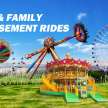
In an era increasingly shaped by ecological uncertainty, immersive installations centered on nature offer a vital conduit for environmental education. Among these, plant-themed interactive installations provide more than entertainment; they foster a visceral understanding of ecological interdependence. By engaging the senses, these installations enable the public—particularly younger audiences—to connect with the natural world in both novel and intuitive ways.
This article examines the environmental pedagogical significance of plant-themed interactive installations, analyzing how attractions like the swing tower and worm coaster can be designed not merely for recreation but for cultivating ecological literacy.
Sensory Engagement and Ecological Cognition
Human interaction with the environment has become progressively mediated by technology. As such, tactile and immersive learning experiences are essential to rekindle intuitive environmental awareness. A plant-themed installation, by engaging touch, sound, and visual stimulation, encourages embodied cognition—learning that arises through physical interaction with educational stimuli.
The swing tower, for example, simulates motion among canopy layers, offering riders a high-angle perspective akin to that experienced by arboreal species. This shift in vantage point disrupts everyday perception, allowing visitors to reflect on vertical forest stratification and the microclimates within. These perspectives are rarely encountered in conventional learning environments, giving the installation intrinsic pedagogical value.
Bio-Inspired Design as Didactic Architecture
Plant-themed installations often draw upon principles of biomimicry, wherein organic patterns and structures inform the design. These biomorphic elements act as nonverbal communicators of environmental principles. In this way, design becomes an implicit curriculum.
The worm coaster exemplifies this educational synergy. By mimicking the undulating movements of soil organisms, the coaster simulates subterranean pathways, evoking curiosity about decomposition, soil aeration, and nutrient cycles. Riders may be immersed in dynamic tunnel environments lined with mycorrhizal motifs, LED-lit roots, or interactive sensors that simulate root respiration or nitrogen fixation. Each element contributes to a cohesive, multisensory lesson on the ecological services provided by invertebrates and root systems.
Promoting Systems Thinking Through Interactive Landscapes
Environmental education seeks to instill systems thinking—the ability to perceive interrelationships and feedback loops within natural processes. Interactive plant-themed environments are especially effective for fostering this cognitive model.
Installations may feature a progression of attractions, each linked thematically to a segment of a broader ecosystem. A visitor might begin in a pollination garden with kinetic flower sculptures, then pass through the swing tower, representing canopy life, and finally descend into the worm coaster's subterranean domain. This sequence of spatial narratives illustrates the vertical and horizontal interconnectivity within ecological systems. By tracing pathways from photosynthesis to decomposition, visitors internalize a circular rather than linear model of ecological flow.
Active Participation as Environmental Praxis
Interactive installations invite not passive observation but participatory engagement. This distinction is crucial in environmental education, where experiential learning enhances long-term retention and moral commitment.
Within a plant-themed installation, features such as seed-dispersal simulators, composting exhibits, or photosensitive foliage displays transform the visitor from consumer to co-creator. When individuals contribute to kinetic energy generation via the swing tower or power environmental feedback loops within the worm coaster, they experience agency. This fosters an ethic of environmental stewardship grounded in action rather than abstraction.
Child-Centered Design and Intergenerational Transmission
Children are particularly receptive to informal learning environments. Their cognitive development benefits from multi-sensory and kinesthetic experiences, which plant-themed installations are uniquely positioned to deliver. Attractions designed to resemble botanical morphologies, or to simulate pollinator behavior, reinforce botanical literacy from an early age.
The worm coaster, with its playful structure and thematic content, can incorporate educational overlays such as interactive screens explaining vermicomposting, soil biodiversity, or detritivore ecology. The swing tower may include audio loops of forest sounds interspersed with ecological facts, thereby embedding educational content within the entertainment experience. This dual-function design not only captivates younger audiences but also facilitates intergenerational learning as guardians are often required to participate alongside their children.
Integrating Technology and Environmental Messaging
The incorporation of technology into these installations—through augmented reality overlays, data visualization panels, or real-time air quality sensors—can bridge the gap between environmental data and personal experience. Such integrations are instrumental in transforming abstract environmental metrics into tangible, memorable experiences.
For instance, real-time data on local air quality could be visualized as color gradients within the swing tower, correlating ascent with changes in atmospheric composition. The worm coaster could feature soil humidity sensors that alter lighting schemes based on microbial activity. These implementations link sensory experience with ecological data, enhancing cognitive associations and reinforcing environmental awareness.
Ecological Aesthetics and Emotional Resonance
Beyond cognitive learning, environmental education also depends on affective engagement. The aesthetic dimension of plant-themed installations—floral color palettes, organic shapes, natural materials—elicits emotional resonance that fosters biophilic attachment.
Designs that emphasize natural rhythms, such as seasonal color changes or plant phenology cycles, create a sense of temporal connection to ecological processes. When the swing tower aligns with the flowering cycle of surrounding flora, or when the worm coaster's lighting transitions mirror diurnal soil activity, visitors are subtly educated on biological rhythms and seasonal flux.
Conclusion
Plant-themed interactive installations such as the swing tower and worm coaster are not mere diversions; they are sophisticated tools for environmental education. By integrating sensory immersion, bio-inspired design, systems thinking, participatory engagement, and technological augmentation, these spaces cultivate ecological literacy in a format that is accessible, engaging, and emotionally resonant.
In a world where environmental challenges grow more complex and urgent, such installations offer a model for educational innovation—merging play with pedagogy, aesthetics with analytics, and experience with ecological consciousness. Their educational value lies not only in the information conveyed, but in the seeds of environmental empathy they plant in the minds of their participants.
About the Creator
Beston Amusement Rides
As a leading amusement facility manufacturer, we provide safe and interesting amusement equipment to customers around the world, including roller coasters, Ferris wheels, pirate ships and so on.
Website:https://bestonamusementrides.com/
Keep reading
More stories from Beston Amusement Rides and writers in Journal and other communities.
Fire Safety Compliance in Children's Playgrounds: Critical Regulatory Considerations
Children’s playgrounds, particularly those incorporating complex attractions such as a pirate ship fairground ride or a swing tower, require stringent adherence to fire safety regulations. Unlike static playground structures, these amusement-type installations involve moving parts, electrical systems, and higher occupancy—heightening the potential for fire hazards. Ensuring regulatory compliance in these environments is not merely a legal mandate but a fundamental aspect of risk mitigation and public safety stewardship.
By Beston Amusement Rides8 months ago in Journal
Author’s Advice
If you would’ve asked me 20 years ago did I know I’d become a writer and an author, I would’ve said “nope, ain’t happening”. As fate would have it I did become an author and I can honestly say I’m loving it so far. It really does feel good to be a writer. I’ve learned a lot on this journey and I feel like with even me being as new to this world as I am, there’s some wisdom I need to share with every other aspiring author.
By Joe Patterson3 days ago in Journal
Why Didn't Anyone Tell Us
Men, move along. This is not for you. This is for the women. I was forty-five when I began menopause. It is pretty young for that to be going on in a woman’s life, but I had undiagnosed PCOS, my entire life. Thank you to all the gynecologists I had seen my entire life. That in itself should encourage women to keep seeking second opinions, especially when you are not getting correct answers or any at all.
By Alexandra Grant4 days ago in Humans




Comments
There are no comments for this story
Be the first to respond and start the conversation.