
Google is betting on artificial intelligence to lead the next digital era
Sundar Pichai reveals how the company is transforming its search engine, bolstering infrastructure, and tackling energy and talent challenges in an increasingly competitive global environment.


Sundar Pichai, CEO of Alphabet, is facing one of the most defining moments in Google's history: the emergence of artificial intelligence (AI) at the heart of its business.
In an exclusive interview at the Googleplex in Mountain View, California, Pichai explained how the company is transforming its search engine, embracing innovation and strengthening its technological infrastructure to lead the new digital era, while competing with global giants and overcoming energy and talent challenges.
As published by the All-In Podcast, the executive detailed Google's strategy to stay ahead in an environment where AI is redefining human-computer interaction.
The Evolution of Google Search and the Integration of AI
The transformation of Google's search engine is at the heart of the company's strategy. Pichai explained that the company has been preparing for an "AI-first" approach for years, with milestones such as the creation of Google Brain in 2012 and the acquisition of DeepMind in 2014. "We launched AI overviews a year ago, and it's already used by more than 1.5 billion people in 150 countries," the CEO stated, emphasizing that this feature expands the types of queries and use cases on the platform.
The executive previewed the arrival of "AI mode," a dedicated AI experience in search that will allow for conversational queries and the use of advanced models like Gemini. "In the labs, we're testing a completely new AI experience, which will soon be available in search," Pichai revealed in the interview reported by All-In Podcast.
According to the executive, the average query length has increased two to three times compared to two years ago, reflecting a profound change in the way users interact with information.
Innovation Strategy and Response to Disruption
Pichai addressed the so-called "innovator's dilemma," the challenge of innovating without jeopardizing the core business. "The dilemma only exists if you treat it as a dilemma. You have to innovate to stay ahead," he said.
The CEO also recalled that Google has always followed the principle of "following the user," prioritizing the experience and trusting that monetization will come later. He exemplified this approach with the evolution of YouTube and the introduction of Shorts, which initially did not generate revenue comparable to long-form content, but over time found its business model.
The company, according to Pichai, is guided by metrics and empirical data to understand user behavior and adjust its products. "Empirically, we see that people are more engaged and use the product more," he noted, reaffirming the importance of continuous innovation to overcome industry challenges.
Global AI Competition: The United States and China
The competitive landscape in AI is increasingly intense, with prominent US players such as OpenAI, Meta, Microsoft, and xAI, and the emergence of Chinese companies such as DeepSeek. Pichai acknowledged the quality of rivals and Nvidia's relevance in the sector, but highlighted Google's ability to deliver large-scale, low-cost AI models thanks to its proprietary infrastructure.

Regarding Chinese competition, the CEO warned: "China will be very competitive on the AI frontier." According to Pichai, DeepSeek's advancement forced an adjustment to internal and external expectations regarding the proximity of Chinese developments to the global state of the art. "The DeepSeek moment showed that they are closer to the frontier than many thought," he stated in an interview with All-In Podcast.
Regarding user share, Pichai cited recent data presented in a US court: Google's Gemini app has 350 million monthly users, compared to 600 million for ChatGPT and 500 million for Meta AI. However, he emphasized that the integration of AI into search could make it the most widely used AI product in the world.
Infrastructure Advantage: Data Centers, Chips, and Cost Reduction
One of the pillars of Alphabet's strategy is its technological infrastructure. Pichai highlighted the company's sustained investment in data centers, servers, and proprietary chips (TPUs), which allow for the efficient training and deployment of AI models. "Google is on the Pareto frontier in performance and cost. We offer the best models at the most competitive price," he stated.
The company has developed seven generations of TPUs since 2017 and recently introduced Ironwood, its most advanced chip, capable of reaching more than 40 exaflops in a single pod. "The scale of our infrastructure is unmatched," said Pichai, who detailed that the majority of Google's $75 billion in capital investment by 2025 will be allocated to servers and data centers, with half of the computing spending targeted at Google Cloud.
Although Google uses both Nvidia TPUs and GPUs, Pichai valued the flexibility of having both technologies and highlighted the long-standing collaboration with Nvidia. “We train our Gemini models on TPUs, but we also deploy GPUs internally and offer options to customers,” he explained.
Energy and Scalability Challenges
The growth of AI faces significant constraints in terms of energy and technical talent, as Pichai himself acknowledged. The CEO cautioned that the expansion of data centers and AI infrastructure depends on the availability of electricity and skilled professionals, such as electricians and engineers.
Google is currently experiencing supply constraints in its cloud business due to permitting delays and labor shortages. Pichai believed the solution to these challenges is primarily one of execution and policy, rather than technology. “We must avoid the innovator's dilemma in the energy sector and pursue all possible innovations: solar, batteries, nuclear, geothermal, and grid modernization,” he stated.
The CEO expressed confidence in the United States' ability to overcome these obstacles, although he warned that if the current trend continues, the limitations will become increasingly visible and could affect competitiveness against China.
Future Projects: Quantum Computing, Robotics, and Hardware
Alphabet maintains a long-term commitment to disruptive technologies such as quantum computing and robotics. Pichai compared the current state of quantum computing to that of AI in 2015 and predicted that a decisive breakthrough will occur within three to five years. “Quantum will have its ‘aha’ moment in three to five years,” he predicted, adding that the company plans to offer access to these developments through the cloud.

In robotics, Google is working on models that integrate vision, language, and action, and is collaborating with partners to bring products to market. “The combination of AI and robotics is the next big leap,” said Pichai, who foresees significant announcements in this field in the coming years.
Regarding the future of human-computer interaction, the CEO envisions a more fluid and personalized experience, driven by multimodal models and devices such as augmented reality glasses. “The goal is for computing to work for you, in an increasingly natural and frictionless way,” he explained.
Company Culture and Talent Management in the Age of AI
Google's internal culture remains a key factor for innovation, according to Pichai. The CEO defended the importance of empowering employees and fostering an optimistic and collaborative environment. “The culture of empowering employees remains a strength,” he stated, although he acknowledged that the COVID-19 pandemic altered in-person dynamics and forced the reinforcement of the company's values and mission.
Pichai highlighted Google's ability to attract and retain high-level talent, as well as the company's role as a breeding ground for entrepreneurs. "More than 2,000 companies have been founded by former Google employees," he noted, highlighting the virtuous cycle of innovation and internal renewal.
The executive also anticipated that AI will transform education and talent development, enabling the emergence of outstanding professionals worldwide, beyond traditional centers.
Alphabet as an innovation engine and holding model
Regarding Alphabet's role, Pichai clarified that the company is not a traditional holding company, but rather an organization that leverages its technological and R&D base to create differentiated businesses. "The structure is the result of identifying problems where we can innovate and add value," he explained.
The CEO mentioned that the synergy between the different units—such as Waymo, Google Cloud, YouTube, Isomorphic, and X—is based on the transfer of technology and knowledge. “The work on Gemini and AI benefits all of the group's businesses,” he stated, highlighting X's role as an incubator for disruptive projects in areas such as energy and computing.
Sundar Pichai's Personal Reflections: Achievements and Minor Regrets
Reviewing his decade at the helm of Google and Alphabet, Pichai expressed pride in the company's ability to push the technological frontier and turn fundamental research into businesses with a global impact. “There aren't many companies that can win Nobel Prizes and create business value from that foundation,” he stated.
Among the unrealized opportunities, Pichai mentioned the acquisition of Netflix as one of the most debated decisions internally. “Perhaps our biggest ‘regret’ was not acquiring Netflix,” he admitted, although he clarified that he prefers to look forward and learn from every experience.
The interview concludes with Pichai's vision for Alphabet's future as a driver of technological innovation, his confidence in overcoming current challenges, and his conviction that culture and talent will continue to be key to maintaining leadership in the era of artificial intelligence. Upcoming announcements in quantum computing and robotics, the CEO anticipated, will mark the next milestones in the company's evolution.
About the Creator
Omar Rastelli
I'm Argentine, from the northern province of Buenos Aires. I love books, computers, travel, and the friendship of the peoples of the world. I reside in "The Land of Enchantment" New Mexico, USA...
Keep reading
More stories from Omar Rastelli and writers in Journal and other communities.
The impact of sugar on cholesterol: Studies reveal the hidden connection and how to protect your heart
Cholesterol has traditionally been viewed as an adversary in the fight for cardiovascular health. Although its reputation as a dangerous accumulation of body fat capable of clogging arteries and leading to heart disease is well-known, the reality is that the situation is much more complex.
By Omar Rastelli10 months ago in Journal
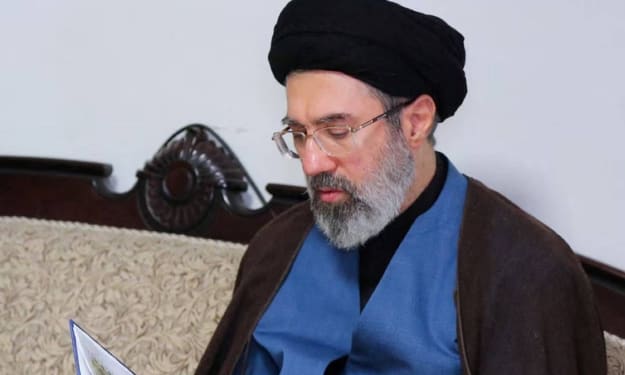
The Shadow Successor: The Rise of Mojtaba Khamenei as Iran’s New Supreme Leader
The political landscape of the Middle East shifted tectonically this Sunday as Iran’s Assembly of Experts officially announced the election of Mojtaba Khamenei as the country’s third Supreme Leader. This historic transition follows the sudden death of his father, Ali Khamenei, who was killed during the opening stages of a major military escalation involving American and Israeli strikes on Tehran on February 28th. For decades, the question of who would sit atop the pyramid of the Islamic Republic’s power remained a subject of intense speculation. Now, the ascension of the 56-year-old Mojtaba marks the end of an era and the beginning of a highly controversial hereditary transition in a system that once prided itself on its revolutionary departure from monarchy.
By Alex Sterling 4 days ago in Journal
The Politics of Playing Dress-Up
Well, to start off I'd like to say a happy world book day to all who celebrate. I know I haven't really posted anything on my socials about it but I'm not a jubilant kind of person. I lay low most of the time. Let's start off with a popular anecdote from the vaults...
By Annie Kapur7 days ago in Geeks



Comments
There are no comments for this story
Be the first to respond and start the conversation.