
Global Stocks Slide as Trump’s Greenland Message Sparks Market Panic and Trade War Fears
Stocks sell off globally as traders digest Trump message saying he wants Greenland because ‘your Country decided not to give me the Nobel’

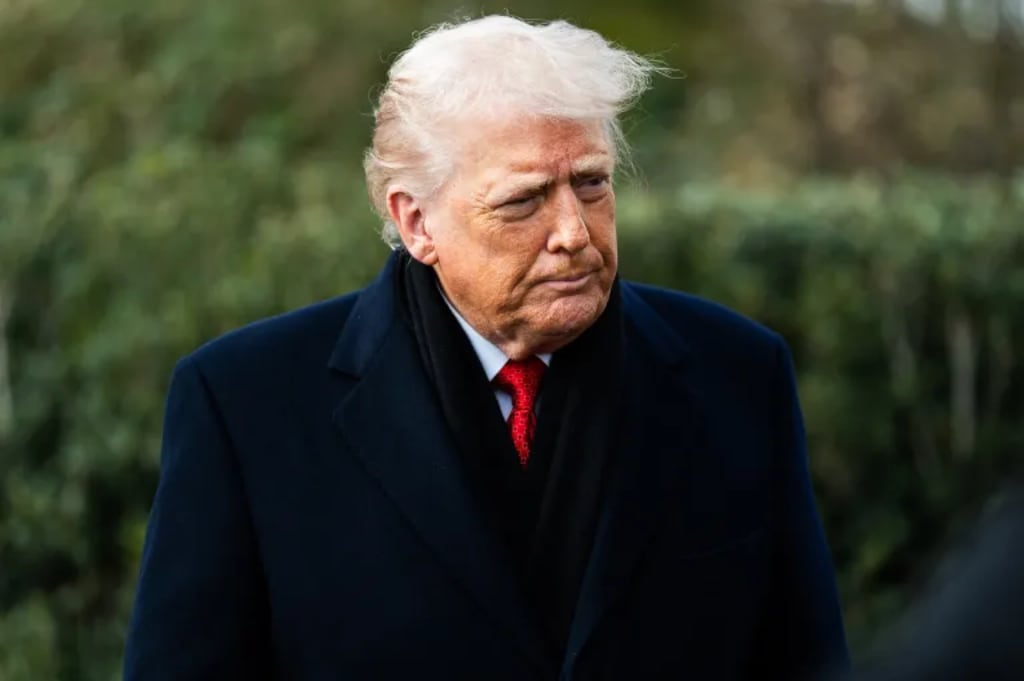
Global financial markets woke up to a shockwave on Monday morning as investors digested an extraordinary message attributed to U.S. President Donald Trump, linking his long-standing desire to take control of Greenland to his failure to win the Nobel Peace Prize.
By the time world leaders gathered in Davos, markets across Europe and Asia were already sliding — not because of earnings or inflation data, but because of renewed geopolitical uncertainty that traders fear could ignite a fresh U.S.–Europe trade war.
The result? A synchronized global sell-off, a surge in gold prices to record highs, and a clear signal from markets: uncertainty is back, and investors don’t like it.
📉 Markets React Swiftly: A Global Sell-Off Unfolds
The reaction across financial markets was immediate and broad-based.
S&P 500 futures fell 1.12%, a steep drop for futures trading, especially with U.S. markets closed for Martin Luther King Jr. Day
STOXX Europe 600 dropped 1.25%
FTSE 100 (UK) declined 0.49%
Japan’s Nikkei 225 slid 0.65%
India’s NIFTY 50 fell 0.42%
Bitcoin dipped to around $93,000
Only one major market bucked the trend: South Korea’s KOSPI, which rose 1.32%, offering a rare bright spot amid global declines.
Meanwhile, gold, the classic safe-haven asset, surged to a new all-time high of $4,673.40, signaling deep investor anxiety about geopolitical risk.
📱 The Message That Moved Markets
At the center of the turmoil is a reported text message from Trump to Norwegian Prime Minister Jonas Gahr Støre, in which Trump suggested his desire to control Greenland was influenced by Norway’s role in awarding the Nobel Peace Prize.
According to the message:
“Considering your Country decided not to give me the Nobel Peace Prize… I no longer feel an obligation to think purely of Peace… The World is not secure unless we have Complete and Total Control of Greenland.”
The statement stunned diplomats and analysts alike — not least because Norway does not control the Nobel Committee’s decisions, and Greenland is a territory of Denmark, not Norway.
Adding fuel to the fire, Trump later posted on social media that NATO had warned Denmark for 20 years about the Russian threat in Greenland, claiming Denmark had failed to act and that “now it is time.”
⚠️ Why Markets Are Nervous: Trade War Anxiety Returns
For traders, the issue isn’t just Greenland — it’s what comes next.
Wall Street analysts broadly agree that Trump’s renewed rhetoric raises the specter of tariffs on European allies, particularly the European Union and the United Kingdom.
Economists at ING warned that tariffs of 25% could shave 0.2 percentage points off European GDP growth, but stressed that models fail to capture the full damage caused by uncertainty and geopolitical tension.
Their conclusion was blunt:
“A full-blown trade war between the EU and the U.S. would leave only losers.”
At UBS, analyst Paul Donovan highlighted the domestic risk for the United States itself, noting that tariffs could push consumer prices for European goods up by 4% to 10% within six months, reinforcing the narrative of an American affordability crisis.
🏭 Policy Uncertainty Freezes Business Decisions
Beyond immediate market moves, analysts are warning of a more insidious effect: corporate paralysis.
Large-scale policy uncertainty has historically caused U.S. businesses to delay:
Capital investment
Hiring decisions
Long-term planning
While some firms had adapted to earlier Trump-era volatility, analysts now fear uncertainty on this scale could once again put corporate activity on pause, dampening economic momentum just as global growth remains fragile.
🇪🇺 Europe Pushes Back — But Unity Is Tested
European leaders appear determined to resist U.S. pressure — at least rhetorically. However, analysts caution that Europe remains deeply dependent on the U.S. for both economic stability and security.
That dependence was a key reason the EU accepted a trade deal last summer that many critics say favored Washington.
The big question now:
👉 Could Greenland and tariffs finally push Europe toward real geopolitical unity?
Some strategists believe this moment could become a tipping point, forcing Europe to assert itself as a stronger independent power. Others remain skeptical, noting that unity has often collapsed under pressure in the past.
🗳️ Domestic U.S. Support Appears Limited
Another factor weighing on markets is uncertainty over whether Trump has the political capital at home to sustain such an aggressive stance.
According to a recent Reuters/Ipsos poll:
Only 17% of Americans support efforts to acquire Greenland
47% oppose it
Just 4% approve of using military force
Even among Republicans, support for force stands at 8%
These numbers raise doubts about whether bold rhetoric can translate into durable policy — adding another layer of unpredictability for investors.
📊 Market Snapshot: Before the New York Open
Here’s how markets looked heading into the New York session:
S&P 500 futures: −1.12%
STOXX Europe 600: −1.25%
FTSE 100: −0.49%
Nikkei 225: −0.65%
CSI 300 (China): Flat
KOSPI (South Korea): +1.32%
NIFTY 50 (India): −0.42%
Bitcoin: ~$93,000
Gold: Record high at $4,673.40
🧠 Why This Story Is Going Viral
This story is dominating global news feeds because it sits at the intersection of:
Politics
Markets
Social media
Global security
A single message, amplified online, managed to:
✔ Trigger a worldwide sell-off
✔ Push gold to record highs
✔ Reignite trade war fears
✔ Expose fragile geopolitical alliances
In today’s hyper-connected financial system, words move markets — and this episode is a textbook example.
✨ Final Take
Whether Trump’s Greenland rhetoric leads to concrete policy or fades into political theater, markets have already delivered their verdict: uncertainty is costly.
For now, investors are retreating to safety, governments are scrambling to manage diplomatic fallout, and global markets are bracing for what could be a volatile start to 2026.
One thing is clear — when geopolitics, ego, and economics collide, the fallout is global.
About the Creator
Omasanjuwa Ogharandukun
I'm a passionate writer & blogger crafting inspiring stories from everyday life. Through vivid words and thoughtful insights, I spark conversations and ignite change—one post at a time.
Keep reading
More stories from Omasanjuwa Ogharandukun and writers in Journal and other communities.
How MAGA Rhetoric Went Viral in Europe
Imagine scrolling your social feed and seeing political debates about France’s elections, Germany’s nationalist rise, or far-right gains in Italy and Poland — all tied, at least in part, to the influence of America’s Make America Great Again (MAGA) movement. What started as an American slogan transformed into a global conversation about nationalism, identity, and political strategy, generating massive public interest, academic analysis, and viral news cycles across the United States and Europe.
By Omasanjuwa Ogharandukun3 days ago in Journal
The goals I did not achieve
Every writing goal I made for the year is a wash. It has been this way for a while, but I think it's important to be open about my failures and the reality of how life can get in the way. This is especially true considering the several times I have posted on Vocal about my writing goals, how I was changing my approach, and where I was hoping to be for the upcoming year. I will probably do that again in a couple months, but for now, it is time to acknowledge where I am today.
By Kay Husnick24 days ago in Journal
How to Put Out Electrical Fire Without Causing More Damage
By the time the smoke has cleared and the room seems still, the true extent of the destruction caused by an electrical fire is usually on display-melting wires, burned outlets, and blackened walls and, in rare instances, preventable injuries. The spread of most electrical fires is not because they are, powerful, but rather because people act in a wrong manner. Knowledge of the safety of extinguishing electrical fire is not only related to the prevention of fire, but also to the prevention of a small fire turning into a very expensive tragedy.
By Deborah Larson7 days ago in Journal


Comments
There are no comments for this story
Be the first to respond and start the conversation.