
Giorgio Armani's Biography, Net Worth, and Family
King of Italian Fashion

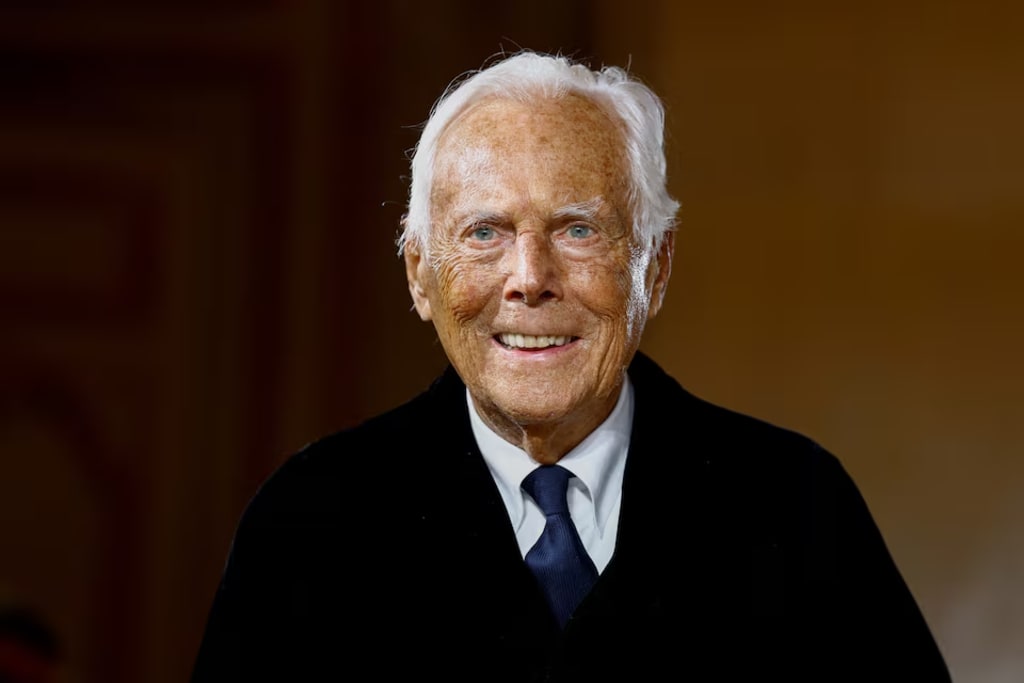
Introduction: The Man Who Wove Elegance into History
When the world speaks of timeless fashion, one name resonates like the chime of cathedral bells across Milan: Giorgio Armani. More than a designer, Armani was an architect of elegance, a man who reshaped how the world viewed style — not as flamboyance, but as refined simplicity. His life journey, from a small town in Italy to building a global empire worth billions, is not just a fashion story — it is a testament to vision, resilience, and legacy.
Early Life and Humble Beginnings
Giorgio Armani was born on July 11, 1934, in Piacenza, Italy, a modest town south of Milan. The young Armani initially dreamed of becoming a doctor, enrolling in medical studies at the University of Milan. But destiny often stitches unexpected patterns. A part-time job as a window dresser in a Milanese department store revealed his eye for aesthetics and attention to detail. Slowly, medicine gave way to fabric, cuts, and silhouettes.
The Turning Point: From Medicine to Fashion
After working as a buyer and window dresser, Armani moved into design under Nino Cerruti’s fashion house in the 1960s. Here, he honed his craft, learning the mechanics of tailoring and the artistry of style.
In 1975, with his partner Sergio Galeotti, Armani took the boldest step of his life. They sold their Volkswagen for about $10,000, money that seeded the launch of Giorgio Armani S.p.A. What began as a menswear line soon expanded into womenswear, redefining Italian ready-to-wear fashion.
The Rise of the Armani Empire
Armani’s signature was subtlety. While the 1970s fashion world adored loud prints and exaggerated styles, Armani introduced something revolutionary: the liningless jacket. Soft, relaxed, and urban, it allowed comfort without sacrificing elegance.
By the 1980s, Armani was no longer just a designer; he was a cultural force. The Armani power suit, with its structured shoulders and understated palette, became the symbol of women breaking into executive boardrooms. For men, the Armani suit was the badge of sophistication.
Armani and Hollywood: A Love Story
Hollywood came calling in 1980, when Armani dressed Richard Gere in “American Gigolo.” Gere’s sharp Armani wardrobe elevated both actor and designer into global icons.
From there, Armani became the go-to designer for red carpet glamour. Oscar winners and nominees, including Sean Penn, Anne Hathaway, George Clooney, and Jodie Foster, regularly chose Armani. His designs graced over 200 film productions, and in 2003 he earned a star on the Rodeo Drive Walk of Style.
Net Worth: The Business Behind the Elegance
Unlike many designers who sold their brands to luxury conglomerates, Armani remained independent. He never merged, never sold out. By sheer discipline and vision, he built an empire spanning:
- Fashion (menswear, womenswear, haute couture)
- Accessories
- Perfumes & cosmetics
- Home décor & furnishings
- Hotels (Dubai & Milan)
- Restaurants, bars, and clubs
- Sports ownership (basketball team Olimpia Milano)
By 2025, Armani’s net worth exceeded $10 billion, placing him among the top 200 billionaires worldwide according to Forbes. His empire employed over 9,000 people across 600 stores in 46 countries.
Family and Personal Life
Armani never married and had no children of his own. His closest relationships shaped both his personal and professional journey.
Sergio Galeotti – Armani’s business partner and confidant, who passed away in 1985. Their bond fueled the rise of Armani S.p.A.
Roberta Armani – His niece, daughter of his late brother Sergio. She became his public relations director, often representing him at events.
Silvana Armani – Another niece, who served as head of womenswear design.
Leo Dell’Orco – Longtime head of menswear, widely considered one of his potential successors.
For Armani, family was not defined by blood alone but by trust, loyalty, and shared vision.
The Philosophy of Giorgio Armani
Armani once said:
“I design for real people. There is no virtue in creating clothes that are not practical.”
His style reflected him — minimalist homes with bare walls, his daily uniform of a navy t-shirt and jeans, and a deep belief in practical elegance. He embodied his brand.
Legacy Beyond Fashion
Armani was not just about profits; he gave back generously. He supported HIV/AIDS awareness campaigns, funded children’s charities, and in 2002 was appointed UN Goodwill Ambassador for Refugees.
In 2000, the Guggenheim Museum in New York honored him with a retrospective — a rare achievement for a living designer.
Conclusion: The Eternal King of Elegance
Giorgio Armani’s life was a runway — one that began in Piacenza and stretched across every continent. His clothes were not just garments; they were symbols of empowerment. His empire was not just about wealth; it was about influence and timeless taste.
As the world remembers him, Armani’s philosophy remains stitched into fashion’s DNA: true elegance is simplicity refined.
About the Creator
Omasanjuwa Ogharandukun
I'm a passionate writer & blogger crafting inspiring stories from everyday life. Through vivid words and thoughtful insights, I spark conversations and ignite change—one post at a time.
Keep reading
More stories from Omasanjuwa Ogharandukun and writers in Journal and other communities.
Giorgio Armani Dead at 91
By FastInfo Magazine, Date: September 4, 2025 Introduction: The World Mourns a Fashion Legend On September 4, 2025, the fashion world lost one of its most profound visionaries. Giorgio Armani passed away at his Milan residence at the age of 91. The founder of the iconic Giorgio Armani fashion house, he transformed Italian elegance into a global phenomenon, creating designs that redefined how the world dressed.
By Omasanjuwa Ogharandukun5 months ago in Journal


Comments (1)
i like it