
Future Trends in Automation for Warehouse Overhead Cranes
Automation Driving Smarter, Safer Warehouse Cranes
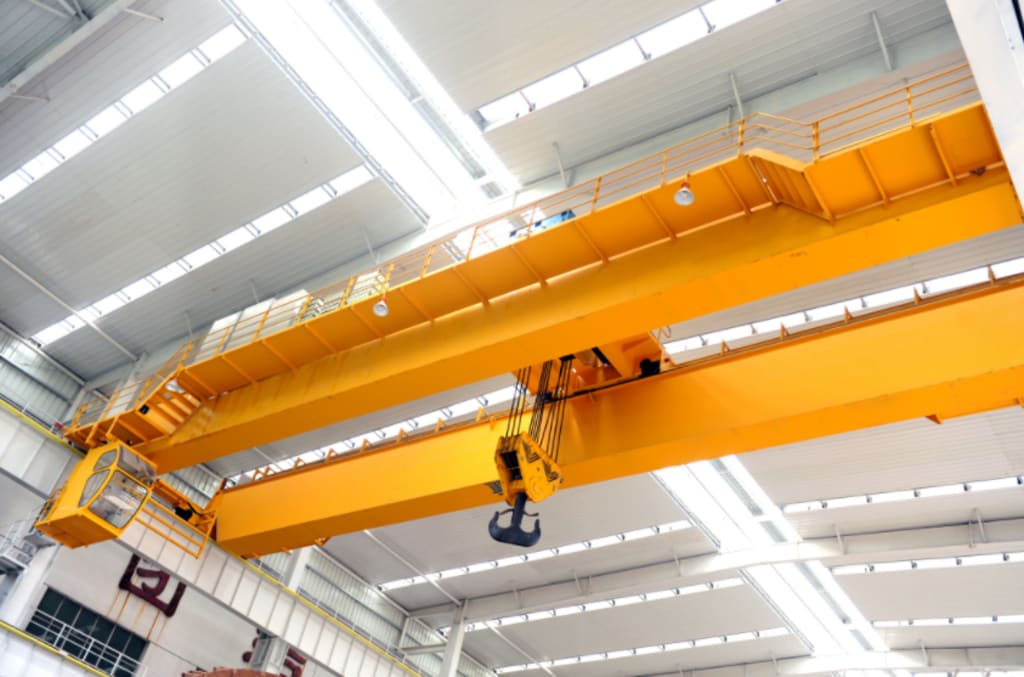
Warehouse operations are experiencing a transformative evolution driven by automation, robotics, and data intelligence. Overhead cranes — long a backbone of heavy material handling — are uniquely positioned to benefit from this shift. Traditionally operated manually or semi‑automatically, overhead cranes in modern warehouses are evolving into fully automated systems that improve safety, efficiency, accuracy, and throughput.
As markets demand faster delivery, better inventory visibility, and safer workplaces, automated overhead crane solutions are at the cutting edge of warehouse innovation. This article explores the major trends shaping the future of automation in warehouse overhead cranes, highlighting technologies, benefits, challenges, and real‑world impacts.
1. The Rise of Fully Autonomous Crane Systems
Automation in cranes began with remote controls and programmable logic controllers (PLCs). However, fully autonomous overhead cranes — capable of planning, execution, decision‑making, and adaptation without human intervention — are emerging rapidly.
Autonomous systems use sensors, embedded intelligence, and decision algorithms to:
- Navigate within predefined warehouse zones
- Identify and locate loads using machine vision
- Coordinate with other automated vehicles or cranes
- Self‑adjust positioning and pathing to optimize cycle times
Unlike manual or assisted systems, fully autonomous cranes can reduce labor dependency, minimize human error, and operate continuously with consistent performance. This trend aligns with the broader shift toward “lights‑out” warehouses — facilities that run without on‑site staff during certain shifts.
2. Integration with Warehouse Management Systems (WMS) and ERP Platforms
Tomorrow’s overhead cranes will not operate in silos. Integration with Warehouse Management Systems (WMS) and Enterprise Resource Planning (ERP) platforms will unlock centralized automation.
With this integration:
- Crane commands can be driven by real‑time order priorities.
- Inventory levels can trigger automatic pick‑up and transfer tasks.
- System alerts can optimize workflows between material input and output.
- Data synchronization eliminates manual coordination and reduces cycle times.
For example, when a high‑priority order arrives, the ERP can assign overhead cranes to retrieve items directly from storage, updating inventory counts in real time. This connected ecosystem enhances throughput and accuracy while reducing operational friction.
3. Machine Vision and AI‑Enhanced Load Recognition
One of the most exciting developments in crane automation is machine vision combined with artificial intelligence (AI).
Machine vision systems — cameras and sensors — enable overhead cranes to:
- Detect and classify objects
- Recognize load shapes, sizes, and weights
- Adjust grip points dynamically
- Avoid obstacles in real time
AI models trained on extensive warehouse datasets help cranes make intelligent decisions. For instance:
- Rejecting handles on hazardous or unstable loads
- Selecting optimal attachment points
- Adapting motion profiles for safer and smoother handling
This capability reduces reliance on manual tagging and human intervention, making operations more flexible — especially in environments with varied load types.
4. Collaborative Robotics (Cobots) and Human‑Machine Interaction
Automation does not necessarily mean eliminating human presence. Collaborative robots (cobots) enable safe interaction between cranes and workers.
Cobots can:
- Assist workers with load guiding
- Take over repetitive or strenuous tasks
- Share workspace safely using sensors and safety barriers
- Trigger automated actions when humans are in proximity
This trend fosters a balanced environment where human expertise complements automated precision. Workers are freed from mundane duties to focus on supervision, exception handling, and decision‑making.
5. Predictive Maintenance and IoT Monitoring
Downtime is one of the biggest cost drivers in warehouse operations. Traditional maintenance — periodic checks or run‑to‑failure — is being replaced by IoT‑enabled predictive maintenance.
Sensors embedded in overhead crane components (motors, gears, brakes, cables) collect:
- Vibration data
- Temperature changes
- Load stresses
- Operational cycles
Connected through the Internet of Things (IoT), these sensors feed data to cloud analytics platforms. Machine learning models analyze trends and identify potential failures before they occur — enabling:
- Scheduled repairs during low‑demand periods
- Reduced emergency maintenance costs
- Extended equipment lifespan
This predictive approach minimizes unexpected downtime and improves overall equipment effectiveness (OEE).
6. Advanced Positioning and Navigation Technologies
Precise positioning is essential for automated cranes moving large or delicate loads. Future systems will increasingly rely on:
- LIDAR (Light Detection and Ranging)
- 3D spatial mapping
- SLAM (Simultaneous Localization and Mapping)
- Ultra‑wideband (UWB) radio positioning
These technologies allow overhead cranes to localize accurately within the warehouse, dynamically adjust paths, and avoid collisions with other cranes, vehicles, or staff. Compared to older encoder‑based systems, these advanced sensors enable real‑time responsiveness even in complex environments.
7. Digital Twins for Simulation and Optimization
A digital twin is a virtual model that mirrors a physical system in real time. In warehouse automation, digital twins of overhead cranes can:
- Simulate operational scenarios
- Predict workflow bottlenecks
- Test layout changes before implementation
- Optimize pathing and task allocation
By running simulations, facility managers can evaluate performance impacts of shifts in demand, new load types, or altered storage patterns — all without disrupting actual operations. Digital twins thus become a powerful tool for continuous improvement.
8. Collaborative Multi‑Crane Coordination
Large warehouses often use multiple overhead cranes. With automation, cranes can operate collaboratively through centralized control systems that:
- Assign tasks dynamically based on workload
- Avoid interference or collisions through shared awareness
- Balance working zones to prevent idle time
- Synchronize movement for large or awkward loads
For example, dual‑crane lifts — previously requiring highly skilled operators — can now be coordinated automatically for precision and safety. This is especially valuable in heavy‑load environments like manufacturing warehouses or distribution centers with oversized products.
9. Energy Efficiency and Regenerative Systems
Automation isn’t just about intelligence — it’s also about efficiency. Future overhead cranes will increasingly incorporate:
- Variable frequency drives (VFDs)
- Regenerative braking
- Smart energy management algorithms
These technologies reduce energy consumption by recuperating power during lowering or deceleration phases and optimizing motor usage based on load patterns. As energy costs continue to rise and sustainability becomes a business imperative, automated crane systems will contribute to greener warehouse operations.
10. Safety First: Automated Risk Mitigation
Safety is a cornerstone of warehouse automation. Automated overhead cranes enhance safety by:
- Automatically slowing or stopping when obstacles or personnel are detected
- Enforcing speed limits in sensitive zones
- Eliminating hazardous manual intervention for heavy lifts
- Generating compliance reports and safety logs
Regulatory bodies are increasingly encouraging technologies that reduce workplace injuries — and automation in crane systems directly supports this objective.
Challenges and Considerations
While the future of automated overhead cranes is promising, the transition carries challenges:
Initial Investment Costs
High upfront costs for automation hardware, sensors, software, and integration can be significant. However, long‑term ROI benefits (labor savings, reduced downtime, increased throughput) often justify the investment.
Cybersecurity
Automated systems connected to networks are vulnerable to cyber threats. Robust encryption, authentication, and regular security audits are essential.
Workforce Reskilling
Automation changes job roles. Organizations must invest in training for technicians and operators to manage and maintain intelligent systems.
Interoperability
Integrating cranes with different manufacturers’ systems, WMS platforms, AGVs, or robots requires standards and careful planning.
Conclusion
Automation is transforming overhead cranes from manually operated machines into intelligent, interconnected assets at the heart of warehouse operations. The future holds systems that are autonomous, data‑driven, predictive, efficient, and deeply integrated with broader warehouse technologies.
Key trends — from machine vision and AI to IoT‑enabled predictive maintenance — are driving safer, faster, and more flexible operations. As automation technology matures, overhead cranes will not only lift loads more precisely but will actively contribute to optimized workflows, higher throughput, reduced costs, and enhanced safety.
For warehouse managers, embracing these automation trends will be essential to remain competitive in an era where speed, accuracy, and efficiency define success.
About the Creator
Aicrane01
Welcome to the Aicrane Blog, your practical guide to lifting solutions. Discover articles covering overhead cranes, gantry cranes, winches, steel structures, boat lifts, and more.
Website: https://steelmillcranes.com/
How Do I Start Being a Findom and Make $1000 Per Week
How Do I Start Being a Findom and Make $1000 Next Week? | A Complete Fidom Guide Do you like the idea of controlling someone financially and sexually? Would you like to become a financial domme and make thousands of dollars weekly? If you answered yes, you have landed on the perfect Findom guide.
By Intelligent Creator5 days ago in Journal



Comments
There are no comments for this story
Be the first to respond and start the conversation.