

One April morning I was frying up some eggs for my breakfast. At this point, I’d eaten fried eggs, sticky rice, and seaweed every single morning for three months. After I’d transferred the eggs to the bowl, my arm decided to violently jerk . The searing-hot lip of the pan grazed my bare abdomen as a consequence. I had worked out that morning and was in a sports bra and shorts.
Hence, lesson one: don’t fry eggs without a shirt on.
Later that afternoon, I was writing in my journal. Nothing particularly interesting had happened over the past few days and so I wrote about burning myself with the frying pan. This is partly because, right now, I have a goal to write…no matter what. I’m slowly getting back into it and am attempting to build up my muscles for something bigger. The more I write, the more vocabulary I recall, the more interesting my writing becomes, and the faster I get at it.
Anyway, at the outset of that journaling session, I didn’t have much material to work with. So, I told my boring frying-pan story.
The entry started off as inconsequential as you’d imagine. Just a description of the event. But, the amazing thing about the human mind is that it can take the most mundane singularity and transfigure it into gospel. By the end of most of my journal entries, I will have asked myself some big questions. These questions have sprung from the quantum realm. Supernaturally. The more unremarkable things that I recount, the more interesting things I tend to think about. They are inextricably and inexplicably linked.
While I was writing, I began to realize that most of our lives are composed of frying pan stories. And don’t get hung up on frying pans. We could also call them stubbed toes or afternoon naps or Instagram scrolls. They are simply the least intriguing, least memorable, yet most common parts of our lives.
We rarely remember our personal frying pan moments unless we create a physical record of them through images or the written word. According to my past self,
“It’s just life. It’s mostly frying pan stories that you don’t write down and don’t remember. Thirty years of frying pan stories [assuming you’re also thirty] interspersed with traumas and triumphs.”
We mostly remember the traumas and triumphs of our lives, but if the majority of our existence is frying pan stories, then who’s to say they don’t have an equally if not more significant impact on who we are? Imagine if every single thought that crossed your mind, or every single thing that ever happened to you was written in the diary of your life. There would be no library that could contain this. Furthermore, you could infinitely “divide” your thoughts into smaller component parts. Everything down to the atomic mechanics involved. Your thoughts are supertasks.
Lesson two: write about your frying pan stories when you have nothing else. They may trigger the gems within that never would have gleamed otherwise. This is true even if different events trigger similar thoughts. The thoughts are just that; similar. There are an infinite number of ways to think about the same topic. Infinite appendices to our thoughts.
The frying-pan anecdote also calls into question the reliability of our memories. Consider the first paragraph of this post. I described what I thought had definitely happened. My arm just spasmed for no reason, causing the frying pan to graze my skin. But, when I went back into my journal entry to find material for this post, I realized that my memory had fooled me. Here’s what really happened:
“I burned my stomach on a frying pan this morning. How pray tell did that happen, asks my future self? Well, what had happened was, I was in a sports bra cooking my eggs for breakfast and I got distracted because the eggs had dropped out onto the counter and bam! Whacked it into my ab.”
I genuinely apologize for forcing you to endure a description of this event twice. My point is that my memory was partly false! My arm didn’t decide to seizure for no reason. I had accidentally dropped the eggs onto the counter and, in my attempt to save them from the eternity of darkness that is the crevice between the stove and the counter, I hit myself. Ahhh…now I remember! But wait. You could even take the uncertainty a step further. I had written this entry hours after it happened. I wonder what lies within the shadowed chasms of this memory? What has my brain come up with to trick me into believing there are no holes? That my memory is what objectively happened?
Imagine your earliest memory. How can you be sure it’s objectively true and not a false memory resulting from something your Mom told you? Who’s to say her memory is any more reliable than yours? Did your brain come up with a backstory so that you could visualize what someone else said happened? I don’t know the answer to those questions, but maybe it doesn’t matter. The memories inside of our heads are a part of us, and they’ve led us to these bodies, and these brains, and these values, and these thoughts. Maybe this makes them as real as anything else.
Lesson three: frying pan stories, when we read them later, may help us avoid taking the past too seriously. If we can’t wholly rely on our understanding of the past, and the future is not yet a reality, then all we can really trust is what happens from moment to moment. That is all that is real. One thin slice in time-space after slice, after slice, after slick, after tick, after tock, tick, tock, tick.
While it brings me incomparable joy, writing is difficult for me. It can be painful. Especially when I don’t know how to start. So, I try to remember. Write a frying pan story. I wanted to write here today, and I didn’t know what to do. So, I literally told my frying pan story. In my original journal entry, I declared,
“...what’s the point of sharing frying pan stories? I’ll leave it at that because there’s nothing profound that comes to mind in answering that question.”
Joke’s on me. Here I am 1600 words later. I’ve produced five lessons out of practically nothing. Big bang! Shazam!
Here’s some hopefully hopeful hope for struggling writers like me. This is for people who lament when they sit down at the computer and realize all they have is frying pan stories. Like me, do you say,”who the hell would want to read that? Why bother?”
Perhaps we’ve been attempting to write about the wrong things the whole time. I have often felt that I needed to come up with the perfect plot before I sat down and got on with it. Fleshed out all the characters and outlined the major plot points (and there had to be lots of complex characters). My stories had to be epic and they had to be weighty. Everything had to be connected. They had to involve magic and vast landscapes. And guess what? Not only did I end up without any epic stories. I ended up with no stories at all.
Lesson four: don’t let perfect be the enemy of the good.
I get lots of ideas. Really cool ideas that I think would make great books or short stories. But I never feel like I have enough information to turn any singular idea into a novel. So then I don’t write at all. And there is no greater enemy to the writer than this. But, when all else fails, I have an infinite number of frying pan stories. And an infinite number of things I could say about them. And an infinite web of interconnected synapses.
When I finally gave in to the frying pan story dying to leap from my core onto the page, I ended up producing something valuable – if not to anyone else – to myself. And that’s enough for me.
Lesson five comes from one of the big boys. In On Writing, Stephen King says:
“Now comes the big question: What are you going to write about? And the equally big answer: Anything you damn well want. Anything at all …. as long as you tell the truth.”
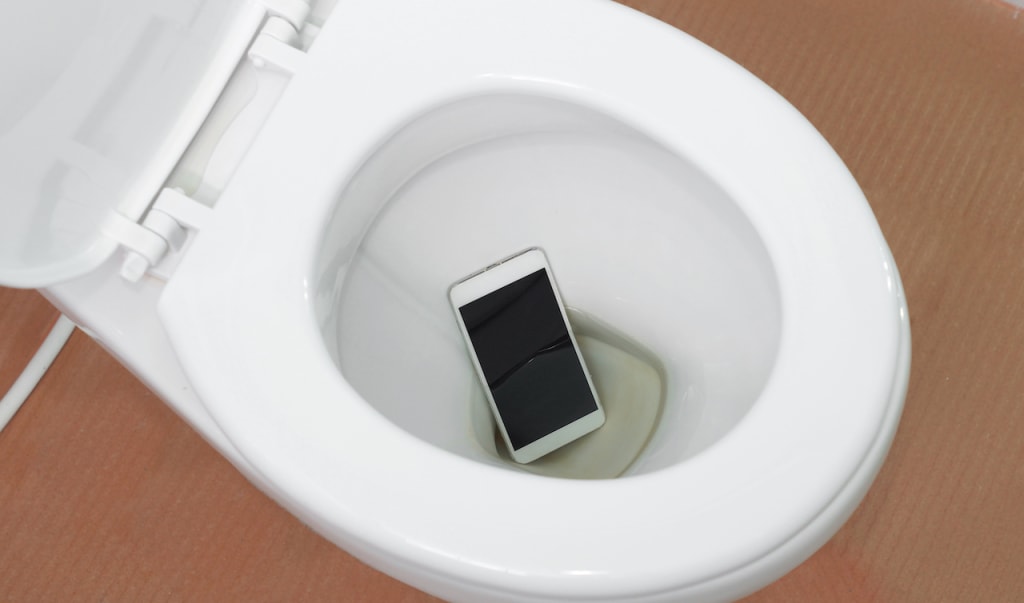
If you’re dying to write and completely blanking out, don’t ignore what “isn’t profound enough.” Just write about the damn frying pan. Or the time you fell into the toilet because you cleaned it earlier and forgot to put the inner flap down and it was dark and you were half asleep. Write about what happened to you that day (or at least what you think happened).
You may be astounded by the ideas that can spring from an account of last night's dinner. Frying pan stories are as true as anything else. They are valuable and you may learn something in their retelling.
About the Creator
Kayleigh Weaver
The urge to write crashes around inside of me like a vast ocean contained in a glass bottle. I can't contain it anymore and so here I am. Just trying to release the pressure on the rice cooker.
Keep reading
More stories from Kayleigh Weaver and writers in Journal and other communities.
5 Lessons for an *Acceptable* New Year - My 2022 in Review
My boyfriend's sister, Rose, is one of the most remarkable people I know. She trains in Brazilian jiu-jitsu, leads a content marketing department at Multiverse, travels the world, and constantly welcomes new experiences. Recently, Rose explored 12 things she learned in 2022 in a blog on Medium. I am a huge proponent of written reflection, and I imagine this project helped her to clarify her thoughts, refresh her perspective, and keep up her momentum for 2023.
By Kayleigh Weaver3 years ago in Motivation
What Happens When Group Identity Overrides Personal Judgment.
Human beings are social creatures, and a sense of belonging is central to psychological well-being. Group identity provides safety, recognition, and shared meaning, but it also has a powerful influence on individual judgment. When group identity dominates personal reasoning, decisions are often guided more by loyalty, conformity, or fear of exclusion than by independent evaluation. This phenomenon can produce significant psychological, social, and behavioral consequences, affecting ethical choices, critical thinking, and personal responsibility. Understanding how group identity overrides personal judgment is essential for navigating social dynamics and maintaining autonomy.
By Wilson Igbasi4 days ago in Journal


Comments
There are no comments for this story
Be the first to respond and start the conversation.