
From Voice to Touch: Evolution of Ordering with the McDonald’s Drive Thru Kiosk
The transition from traditional voice ordering to touch-enabled kiosks marks a significant transformation in the quick-service restaurant industry.

For decades, the McDonald’s drive-thru has been a symbol of speed and convenience, allowing customers to place orders through a speaker system without leaving their vehicles. While this voice-based model served millions efficiently, changing consumer expectations and rapid advancements in technology demanded a smarter, more accurate solution. This shift has led to the evolution of the McDonald’s Drive Thru kiosk, marking a major milestone in how quick-service restaurants use the kiosk machine to enhance customer experience.
The Early Drive-Thru Experience: Voice-Based Ordering
Traditional drive-thru ordering relied entirely on voice communication between customers and staff. While effective, this approach came with limitations—misheard orders, language barriers, background noise, and inconsistent upselling. During peak hours, these challenges often led to longer wait times and reduced order accuracy.
As McDonald’s expanded globally, maintaining consistency across thousands of outlets became increasingly complex. The need for a standardized, scalable ordering system laid the foundation for integrating kiosk technology into the drive-thru environment.
The Rise of Digital Menuboards and Automation
Before touch-based kiosks entered drive-thru lanes, McDonald’s began digitizing its menu boards. Digital displays allowed dynamic pricing, real-time menu updates, and time-based promotions. This shift marked McDonald’s first step toward automation in drive-thru operations.
These digital systems also paved the way for deeper integration with the kiosk machine, enabling seamless connections between ordering interfaces, kitchen display systems, and point-of-sale platforms. Automation reduced manual errors and improved order flow across busy outlets.
Introduction of the McDonald’s Drive Thru Kiosk
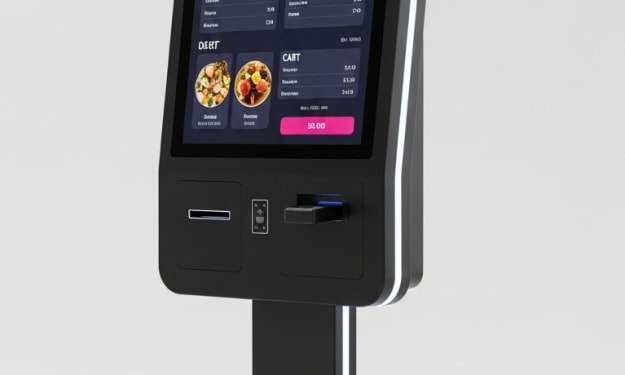
The McDonald’s Drive Thru kiosk represents a significant evolution from voice-only ordering to touch-enabled interaction. These kiosks allow customers to browse the full menu, customize items, and review their order before confirmation—all without verbal communication.
By using a kiosk machine in the drive-thru lane, McDonald’s empowers customers with greater control over their ordering experience. Visual menus eliminate ambiguity, while guided prompts ensure accurate selections. This transition reflects broader consumer preferences for self-service and digital convenience.
Enhancing Order Accuracy and Speed
One of the most impactful benefits of the McDonald’s Drive Thru kiosk is improved order accuracy. Touch-based selection minimizes miscommunication, especially in noisy environments or multilingual markets. Customers can clearly see item descriptions, images, and add-on options, reducing the chances of mistakes.
From an operational perspective, the kiosk machine streamlines order processing by directly transmitting orders to the kitchen system. This reduces dependency on staff input and accelerates preparation time, helping outlets handle higher volumes efficiently.
Personalization Through Smart Kiosk Technology
Modern drive-thru kiosks are not just static ordering terminals—they are intelligent systems. The McDonald’s Drive Thru kiosk can integrate with loyalty programs, previous order data, and location-based preferences to offer personalized recommendations.
This level of customization was nearly impossible with voice-based systems. A smart kiosk machine can suggest meal upgrades, promote limited-time offers, and adapt menus based on time of day, all while maintaining a smooth ordering flow.
Reducing Staff Workload and Improving Efficiency
As labor challenges continue to impact the food service industry, automation has become essential. The McDonald’s Drive Thru kiosk reduces the pressure on frontline staff by handling routine ordering tasks. Employees can focus more on food preparation, quality control, and customer service.
This shift does not replace staff but optimizes their roles. By deploying kiosk machines strategically, McDonald’s improves operational consistency while maintaining fast service standards across locations.
Accessibility and Customer Inclusivity
Touch-enabled drive-thru kiosks also improve accessibility. Clear visuals, multilingual interfaces, and intuitive navigation make ordering easier for a wider range of customers. For individuals who may struggle with verbal communication, the McDonald’s Drive Thru kiosk offers a more comfortable and inclusive alternative.
Such inclusivity strengthens brand trust and aligns with McDonald’s global commitment to customer-centric innovation.
The Future: Voice, Touch, and AI Integration
The evolution from voice to touch does not mean voice technology is disappearing. Instead, the future lies in hybrid systems where voice recognition, AI, and touch interfaces coexist. McDonald’s is already exploring AI-driven order prediction and automated upselling, further enhancing the capabilities of the kiosk machine.
In the coming years, the McDonald’s Drive Thru kiosk is expected to become even smarter—leveraging real-time data, predictive analytics, and seamless mobile integration to deliver faster, more personalized experiences.
Conclusion
The transition from traditional voice ordering to touch-enabled kiosks marks a significant transformation in the quick-service restaurant industry. The McDonald’s Drive Thru kiosk exemplifies how a well-designed kiosk machine can improve accuracy, speed, personalization, and operational efficiency.
As customer expectations continue to evolve, McDonald’s drive-thru innovation demonstrates how technology, when thoughtfully implemented, can redefine convenience without compromising quality. This evolution is not just about faster food—it’s about smarter, more engaging customer experiences.
About the Creator
Keep reading
More stories from Athulya Ns and writers in Journal and other communities.
McDonald’s Drive Thru Kiosk: A Benchmark for Speed, Accuracy, and Customer Experience
In today’s fast-paced food service industry, speed and accuracy are no longer optional—they are essential. Customers expect quick service, correct orders, and a seamless experience, especially in drive thru environments. One global brand that has consistently set the standard in this space is McDonald’s. With the integration of advanced kiosk machine technology into its drive thru operations, McDonald’s drive thru has become a benchmark for efficiency, innovation, and customer satisfaction.
By Athulya Ns24 days ago in Journal
The Night Sovereignty Went Silent in Caracas
At 2:00 a.m. on January 3, 2026, Caracas was asleep. In a modest apartment on the city’s outskirts, a family jolted awake as windows rattled and car alarms screamed. The sound was unfamiliar—not fireworks, not thunder. It was heavier. Louder. The roar of aircraft tore through the night sky, followed by explosions that made the ground tremble.
By Shahjahan Kabir Khan6 days ago in Journal


Comments
There are no comments for this story
Be the first to respond and start the conversation.