
From Pathogens to Preparedness: Inside the Rapid Rise of the Biodefense Sector
Industry experts predict the global biodefense market will expand from USD 16.1 billion in 2023 to USD 22.8 billion by 2030 with an annual growth rate of 5%

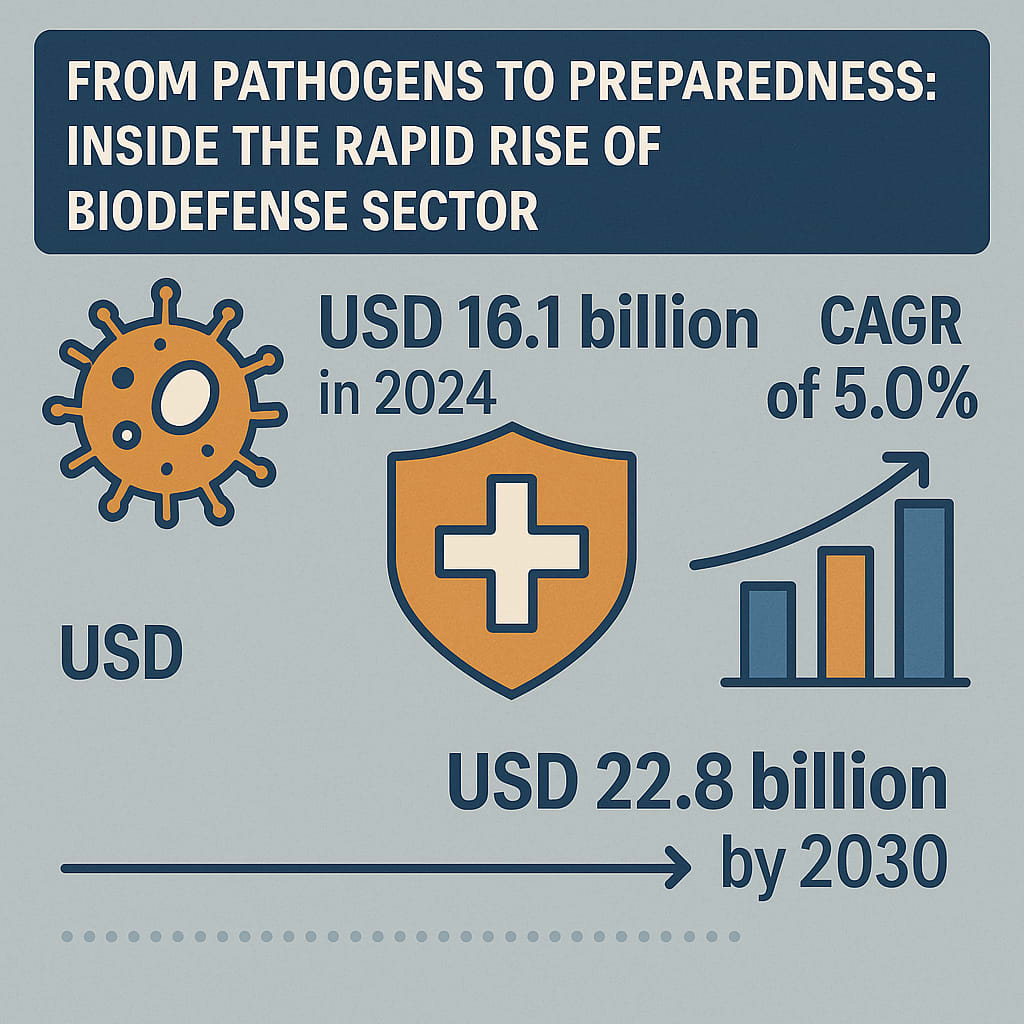
Global health threats have propelled the biodefense market sector from its military program origins into a fundamental component of public health and national security. The imperative to identify, stop and manage biological dangers has reached its highest level of immediacy when considering pandemics and bioterrorism scenarios. The biodefense market today is going through an extraordinary phase of growth and change as it moves from reactive approaches towards a sophisticated proactive preparedness system.
The Global Wake-Up Call
The COVID-19 pandemic demonstrated the rapid way pathogens can break down societies while overwhelming medical facilities and destroying economic stability. The worldwide effects of the pandemic led to increased investments in biodefense technologies and infrastructure as well as policy improvements despite it not being a targeted attack. The focus for governments along with research institutions and private companies now centers on strengthening defenses against any future biological events whether they occur naturally, accidentally, or are deliberate acts.
The growth trajectory is driven by escalating geopolitical conflicts alongside advances in synthetic biology and more frequent zoonotic disease transmissions.
From Defense to Deterrence
The scope of modern biodefense extends beyond vaccine stockpiling and laboratory security. The biodefense field now includes an extensive network of surveillance systems alongside rapid diagnostics, genomic research initiatives, countermeasure production methods and biosecurity procedures. Key components of this growing sector include:
• Vaccines and Therapeutics: The mRNA-based rapid-response platforms now lead pandemic preparedness strategies because they can quickly adapt to novel pathogens within a few weeks.
• Detection and Diagnostics: Early detection systems in the form of AI-powered biosensors together with PCR labs-on-a-chip technology and wastewater monitoring tools enable the identification of outbreaks prior to their full development.
• Personal Protective Equipment (PPE): The latest advancements in reusable and intelligent PPE systems protect frontline workers and alleviate supply chain challenges.
• Bioinformatics and AI: Through predictive modeling governments can simulate potential scenarios which together with pathogen tracking and digital twin simulations enable effective resource distribution.
Governments Take the Lead
Government-led initiatives form a crucial foundation for enhancing biodefense preparedness.
• United States: Next-generation biodefense countermeasures receive billions in funding from agencies such as BARDA and DARPA for pandemic preparedness alongside biodefense R&D.
• European Union: The European Union improves its ability to identify and manage cross-border health threats as part of its HERA framework.
• Asia-Pacific: Japan, South Korea, and Australia are increasing their funding for biotech defense measures and regional disease surveillance systems.
The Role of the Private Sector
Governments are turning to partnerships with biotech firms, pharmaceutical giants and AI startups to rapidly scale solution delivery. Modern vaccines and rapid tests together with antiviral drugs from Moderna, Pfizer, Emergent BioSolutions, and Roche Diagnostics represent leading innovations in scalable medical solutions. Startups are creating synthetic biology tools alongside portable diagnostics and next-generation biohazard containment systems.
Dual-Use Concerns and Ethical Questions
The expansion of this sector brings with it an increased risk of dual-use research which allows scientific tools designed for defense to be redirected for harmful purposes. The situation has led to increased attention towards bioethics principles, tighter regulatory controls, and international partnerships designed to prevent harmful applications.
Cybersecurity also plays a growing role. Bio-cybersecurity stands as a vital field for securing both the integrity and confidentiality of response systems because digital health systems and genomic data form the key structural components of biodefense infrastructure.
Challenges Ahead
Although the sector shows signs of advancement it continues to confront multiple obstacles.
• Funding Gaps: Crisis situations generate temporary increases in both interest and financial support which decline when the crisis ends. Maintaining steady investment in preparedness remains an ongoing difficulty.
• Global Equity: High-income countries dominate biodefense efforts which leads to an imbalance in access to medical resources such as diagnostics and vaccines.
• Misinformation: During biological emergencies public trust management holds equal importance to medical preparedness in today's fast-paced information landscape.
The Future of Biodefense
Defense contractors and classified laboratories no longer exclusively handle biodefense responsibilities. Biodefense represents a worldwide collaborative venture that integrates healthcare, technological advancements, scientific research and security measures. Future biodefense efforts will focus on developing pan-pathogen vaccines and AI-based outbreak prediction tools as well as synthetic biology protection measures together with global biosecurity governance treaties.
Our era of vigilance against biological threats demands precision and foresight instead of panic while fostering global collaboration for preparedness. The biodefense sector will play a crucial role in defending humanity against future invisible threats as this landscape continues to change.
About the Creator
Silvie Karson
Passionate storyteller exploring the world of trends. With a background in digital marketing, I craft compelling narratives that inform and inspire. Whether diving into deep-dive features, growth analysis, or trend analysis.
Keep reading
More stories from Silvie Karson and writers in Journal and other communities.
Beyond the Lens: The Quiet Transformation of the Eyewear Industry
Eyewear has always served a dual purpose: correcting vision and expressing personal style. What started as simple spectacles to aid sight has now evolved into a vast global industry that blends fashion, technology, and health in increasingly sophisticated ways. While the transformation may seem subtle to the casual observer, the eyewear market is quietly reinventing itself — driven by innovation, shifting consumer habits, and growing awareness of eye health. This evolution is reshaping how we perceive and purchase glasses, sunglasses, and smart lenses across the world.
By Silvie Karson9 months ago in Journal
The BAFTA Awards
By now, in a stunning departure from recent years, most of the world is aware of what happened at the BAFTA film awards. Social Media Headlines will tell you the bare bones: that John Davidson, a Tourette's Syndrome advocate, shouted a racial slur at two Actors of Colour, Michael B Jordan and Delroy Lindo.
By Natasja Rose2 days ago in Psyche


Comments (1)
The COVID-19 pandemic really woke us up. It's good to see the shift from reactive to proactive biodefense. mRNA vaccines are a great example of this progress.