
"From Gujarat Chief Minister to Prime Minister: The Story of Narendra Modi"
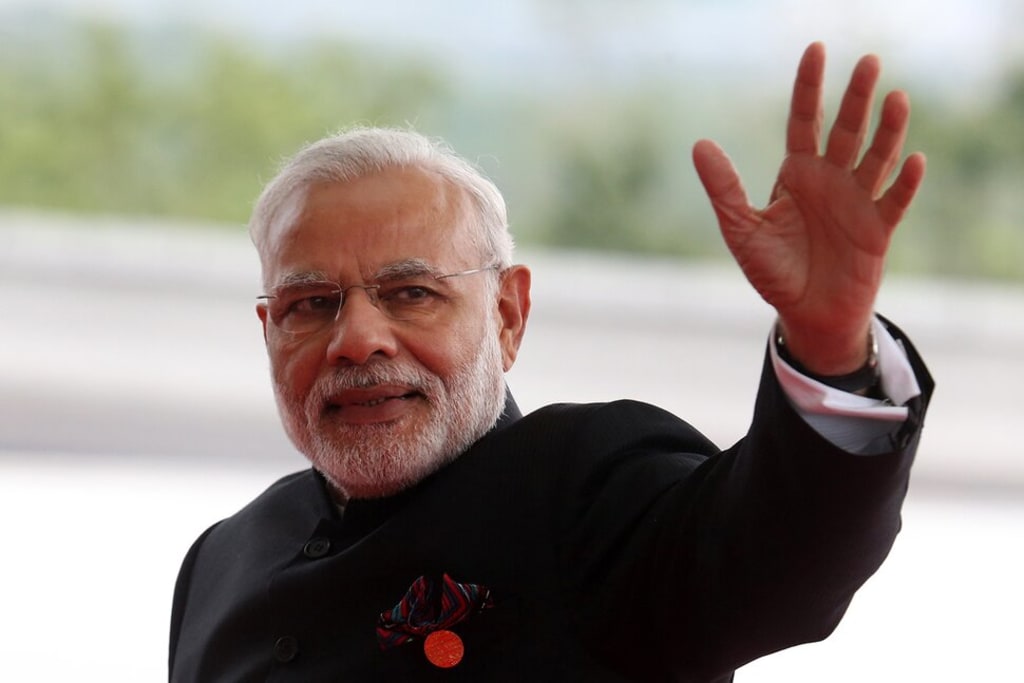
1. Early life and political career
Narendra Modi was born on September 17, 1950 in Vadnagar, Gujarat, India. He was the third of six children born to Damodardas Mulchand Modi and Hiraben Modi. Modi received a degree in political science from the University of Delhi and later earned a master's degree in political science from Gujarat University.
Modi was a member of the Rashtriya Swayamsevak Sangh (RSS), a Hindu nationalist organization, and later joined the Bharatiya Janata Party (BJP). He began his political career as a volunteer for the RSS and later rose through the ranks of the BJP. In 1987, he was appointed as the general secretary of the party in Gujarat, and he served in a number of other roles within the party over the years.
Modi's early political career was marked by his strong nationalist views and his commitment to the principles of the RSS and the BJP. He played a key role in the party's campaigns in Gujarat and became known for his organizational skills and his ability to mobilize support.
In 2001, Modi was appointed as the Chief Minister of Gujarat, and he held this position for three consecutive terms. During his time as Chief Minister, he implemented a number of economic and social reforms and focused on infrastructure development, which helped to improve the state's economy and boost development.
2. Chief Minister of Gujarat
Narendra Modi was appointed as the Chief Minister of Gujarat in 2001, after the Bharatiya Janata Party (BJP) won a majority in the state assembly elections. He held this position for three consecutive terms, until 2014.
During his time as Chief Minister, Modi implemented a number of economic and social reforms that aimed to improve the state's economy and boost development. Some of the key initiatives and reforms he implemented include:
Industrial development: Modi focused on attracting investment and promoting industrial development in Gujarat. He implemented policies to make it easier for businesses to set up and operate in the state, and worked to create a favorable business environment. As a result, Gujarat saw a significant increase in industrial growth and job creation during Modi's tenure.
Agricultural reform: Modi implemented a number of initiatives to improve the agricultural sector in Gujarat. These included the Sardar Patel Agricultural and Animal Husbandry University, which provided training and research facilities for farmers, and the Kisan Call Center, which provided information and support to farmers.
Infrastructure development: Modi prioritized infrastructure development in Gujarat, with a focus on building new roads, airports, and ports. He also launched the Gujarat State Road Transport Corporation (GSRTC), which provided improved bus services and helped connect remote areas with major cities.
Economic liberalization: Modi pursued a policy of economic liberalization in Gujarat, with a focus on reducing regulation and bureaucracy. He implemented measures to make it easier for businesses to set up and operate in the state, and worked to create a more business-friendly environment.
Overall, Modi's initiatives and reforms helped to improve the state's economic performance and boost development, and contributed to his reputation as a competent and effective leader.
3. Rise to national prominence :
During his time as Chief Minister of Gujarat, Narendra Modi's successful economic and social reforms helped to raise his profile nationally and he emerged as a prominent figure within the Bharatiya Janata Party (BJP). Modi's success in improving the state's economy and infrastructure, and his reputation as a competent and effective leader, made him a popular figure in Gujarat and helped to boost his standing within the party.
5Modi's rise to national prominence was also aided by his strong nationalist views and his commitment to the principles of the Rashtriya Swayamsevak Sangh (RSS) and the BJP. He played a key role in the party's campaigns in Gujarat and became known for his organizational skills and his ability to mobilize support.
In the years leading up to the 2014 national elections, Modi emerged as a key figure within the BJP and was seen as a strong contender for the role of Prime Minister. He campaigned on a platform of economic development and national security, and promised to bring change to the country. His strong leadership and vision for the future helped to appeal to voters and contributed to his party's victory in the elections.
Overall, Modi's success as Chief Minister of Gujarat and his rise to national prominence were the result of his economic and social reforms, his strong leadership skills, and his commitment to the principles of the RSS and the BJP.
4. Prime Minister of India
Narendra Modi was elected as the Prime Minister of India in 2014, after the Bharatiya Janata Party (BJP) won a majority in the national elections. He ran on a platform of economic development and national security, and promised to bring change to the country.
As Prime Minister, Modi has implemented a number of key policies and initiatives aimed at improving the country's economy and strengthening its national security. Some of the key initiatives he has implemented include:
1. Economic reforms: Modi has implemented a number of economic reforms, including the Goods and Services Tax (GST) and the demonetization of high-value currency notes. These measures were aimed at reducing corruption and increasing transparency in the economy.
2. Infrastructure development: Modi has made infrastructure development a priority, with a focus on building new roads, airports, and ports. He has also launched initiatives such as the Smart Cities Mission, which aims to develop 100 smart cities across the country.
3. National security: Modi has taken a strong stance on national security, with a focus on counter-terrorism efforts and strengthening the country's military capabilities. He has also worked to improve relations with other countries, including the United States and China, and has taken a strong stance against terrorism.
4. Social initiatives: Modi has launched a number of social initiatives, including the Swachh Bharat Abhiyan (Clean India Campaign) and the Jan Dhan Yojana (People's Wealth Scheme), which aim to improve sanitation and financial inclusion, respectively.
Overall, Modi's time as Prime Minister has been marked by economic and social reforms, as well as a focus on national security and infrastructure development. However, he has also faced criticism for his handling of communal tensions and for his perceived failure to address issues of poverty and inequality in the country.
5. Controversies and criticisms:
During his time as Prime Minister of India, Narendra Modi has faced a number of controversies and criticisms. Some of the key issues that have surrounded his time in office include:
1. Communal tensions: Modi has been criticized for his handling of communal tensions in India, with some accusing him of promoting a Hindu nationalist agenda and failing to address issues of discrimination against minority groups. In particular, Modi has faced criticism for his handling of the 2002 Gujarat riots, which resulted in the deaths of over 1,000 people, mostly Muslims. Modi has consistently denied any wrongdoing in connection with the riots and has said that he is committed to upholding the rule of law and protecting the rights of all citizens.
2. Poverty and inequality: Modi has faced criticism for his perceived failure to address issues of poverty and inequality in India. Despite India's strong economic growth in recent years, poverty and inequality remain major challenges in the country, and some have accused Modi of not doing enough to address these issues.
3. Allegations of corruption: Modi and members of his party have faced allegations of corruption and wrongdoing, including in connection with the purchase of fighter jets from France and the allocation of coal mining licenses. Modi has consistently denied any wrongdoing and has said that he is committed to upholding the highest standards of integrity in public life.
4. Environmental concerns: Modi has faced criticism for his handling of environmental issues, with some accusing him of prioritizing economic development over the protection of the environment. In particular, Modi has faced criticism for his support of large-scale infrastructure projects, such as the construction of new roads and airports, which have been accused of damaging the environment and displacing local communities.
Overall, Modi's time in office has been marked by a number of controversies and criticisms, including in relation to his handling of communal tensions, his perceived failure to address issues of poverty and inequality, and allegations of corruption.
10. Conclusion
Narendra Modi's journey from Chief Minister of Gujarat to Prime Minister of India has been marked by economic and social reforms, as well as a focus on national security and infrastructure development. During his time as Chief Minister, Modi implemented a number of initiatives and reforms that aimed to improve the state's economy and boost development, and he emerged as a popular and effective leader.
As Prime Minister, Modi has implemented a number of key policies and initiatives aimed at improving the country's economy and strengthening its national security. He has pursued economic reforms, including the Goods and Services Tax (GST) and the demonetization of high-value currency notes, and has focused on infrastructure development, with a particular emphasis on building new roads, airports, and ports. He has also taken a strong stance on national security, with a focus on counter-terrorism efforts and strengthening the country's military capabilities.
However, Modi's time in office has also been marked by a number of controversies and criticisms. He has faced accusations of promoting a Hindu nationalist agenda and failing to address issues of discrimination against minority groups, and has faced criticism for his perceived failure to address issues of poverty and inequality in the country. He has also faced allegations of corruption and wrongdoing, and has faced criticism for his handling of environmental issues.
Overall, Modi's legacy and impact on the country will likely be assessed differently by different people. Some will point to his economic and social reforms and his focus on national security and infrastructure development as key achievements, while others will criticize his handling of communal tensions and his perceived failure to address issues of poverty and inequality.
About the Creator
The goals I did not achieve
Every writing goal I made for the year is a wash. It has been this way for a while, but I think it's important to be open about my failures and the reality of how life can get in the way. This is especially true considering the several times I have posted on Vocal about my writing goals, how I was changing my approach, and where I was hoping to be for the upcoming year. I will probably do that again in a couple months, but for now, it is time to acknowledge where I am today.
By Kay Husnick24 days ago in Journal



Comments
There are no comments for this story
Be the first to respond and start the conversation.