
From Fossil to Fuel Cell: Methanol Market Expands with Renewable Energy Integration
The methanol market is experiencing a major transformation through the development of renewable methanol which utilizes biomass and municipal solid waste as well as captured CO₂ and green hydrogen for production.

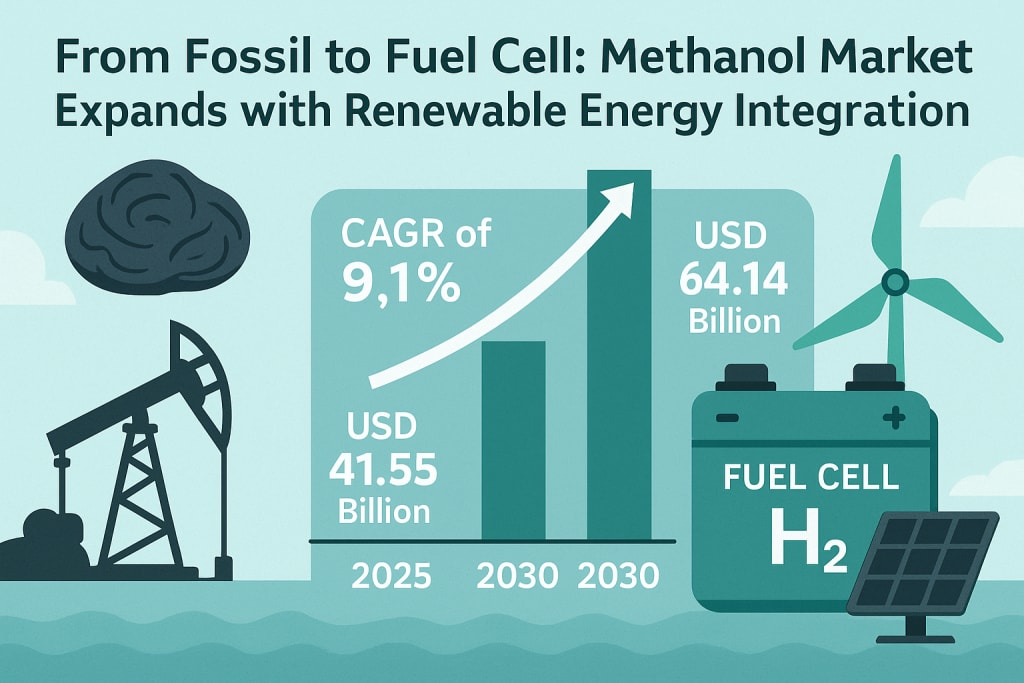
The methanol market worldwide experiences significant change because the world moves toward cleaner energy forms and sustainable industrial methods. After being largely produced from fossil fuels methanol has become essential to the progress toward low-carbon fuel solutions and sustainable chemical processes. The methanol market expected to achieve a valuation of USD 41.55 billion in 2025 will grow to reach USD 64.14 billion by 2030 with a compound annual growth rate (CAGR) of 9.1%. The leading force behind this growth is the rising methanol demand in energy applications like fuel cells and marine fuel along with renewable methanol initiatives.
Methanol: A Versatile Energy Carrier
Methanol (CH₃OH) serves as a basic alcohol used extensively in industrial processes such as plastics and paints production while functioning as both a solvent and antifreeze agent. The use of methanol as an alternative fuel source has become increasingly popular during recent years. The clean combustion properties of methanol along with its biodegradable nature and compatibility with current storage and transportation systems position it as a viable substitute for traditional fuels like gasoline and diesel.
Methanol is becoming increasingly attractive as a transitional fuel and hydrogen carrier because governments and industries aim to decrease their carbon emissions. Methanol can be produced from both fossil fuels and renewable resources which allows it to function as an adaptable solution for reducing carbon emissions in multiple sectors.
Renewable Methanol: A Sustainable Shift
Renewable methanol produces substantially fewer carbon emissions than traditional methanol produced from natural gas or coal.
Both companies and countries are directing investments towards large-scale renewable methanol projects as part of their climate target strategies. Both Europe and China are at the forefront of implementing renewable methanol in industrial and transportation sectors. Renewable methanol emerges as a key ingredient for sustainable aviation fuel and synthetic hydrocarbons which boosts its market growth potential.
Methanol in Fuel Cells and Marine Applications
1. Fuel Cells
Researchers are investigating direct methanol fuel cells (DMFCs) for use in portable power devices and electric vehicles as well as backup power systems. Methanol remains liquid at room temperature which makes it simpler for storage and distribution compared to hydrogen. The fuel cell deployment process benefits logistically from methanol because it works best in remote and off-grid locations.
2. Marine Fuel
GHG emissions reduction efforts in the maritime industry face increasing pressure as the IMO's new regulations push for cleaner fuel alternatives. The maritime sector is adopting methanol as a marine fuel that reduces sulfur oxides (SOx), nitrogen oxides (NOx), and particulate matter emissions.
The marine sector is experiencing increased demand for methanol fuel because major shipping companies are both purchasing methanol-powered vessels and modifying existing ships to utilize methanol.
Key Market Drivers
Decarbonization Goals: The push for global climate commitments leads industries to embrace low-carbon fuels such as methanol.
Hydrogen Economy Integration: Methanol functions as a hydrogen carrier to enable safer and more cost-effective transportation and storage throughout the hydrogen infrastructure.
Circular Economy Initiatives: The renewable production of methanol from CO₂ and waste operates within circular economy frameworks.
Technological Advances: The methanol production process becomes both feasible and expandable through technological advancements in carbon capture along with gasification and electrolysis methods.
Challenges to Market Growth
The methanol market holds growing potential but encounters multiple market obstacles.
Cost Competitiveness: The production and feedstock expenses make renewable methanol costlier than its fossil-based counterpart at present.
Infrastructure Limitations: Transportation adoption needs updated fueling infrastructure for both marine and automotive applications.
Policy Gaps: The investment in green methanol projects suffers due to inconsistent global policies and subsidies.
Regional Outlook
The Asia-Pacific region controls the dominant share of the methanol market because China produces and consumes more than half of the world's methanol supply. The growth of the petrochemical industry combined with clean fuel requirements drives regional expansion.
Europe maintains a leadership position in renewable methanol projects and green policy frameworks but North America sees growing investments in methanol-to-gasoline and fuel applications.
The Future of Methanol
Methanol's future depends on its ability to reduce carbon emissions and its versatile application across various sectors. The advancement of technology alongside evolving regulations will establish methanol as a central component of worldwide clean energy systems. Methanol will move beyond its traditional industrial role to become a fundamental element of renewable energy systems across various sectors like power generation and mobility as well as chemical production and carbon recycling.
The methanol market has moved past fossil fuels to become a key player in sustainable energy production at the molecular level.
About the Creator
Paxton Templeton
I’m a storyteller at heart with a passion for turning data into compelling narratives. With a focus on industry trends, market insights, and growth statistics, I bring clarity to complexity
Keep reading
More stories from Paxton Templeton and writers in Journal and other communities.
Sowing Innovation: Seed Coating Market Grows with Demand for High-Yield Crops
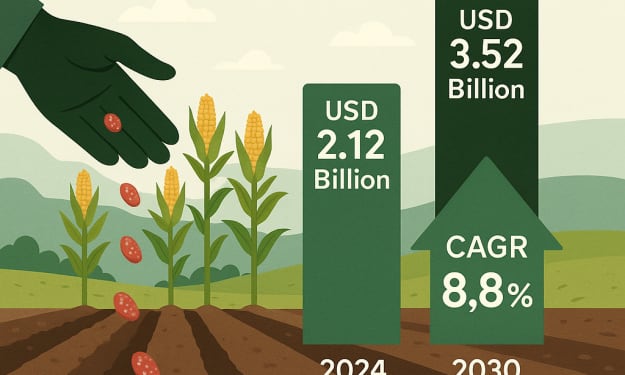
To maintain food security amid rising populations and climate threats to farming productivity farmers and agribusinesses are adopting innovative methods to increase their crop yields. Seed coating represents a rapidly adopted advancement that boosts seed functionality even before sowing. The global seed coating market will experience growth from USD 2.12 billion in 2024 to USD 3.52 billion in 2030 with a compound annual growth rate (CAGR) of 8.8%. The expansion in this sector demonstrates rising demand for crops that deliver high yields along with mounting focus on sustainable farming practices that use precision techniques.
By Paxton Templeton7 months ago in Journal
The goals I did not achieve
Every writing goal I made for the year is a wash. It has been this way for a while, but I think it's important to be open about my failures and the reality of how life can get in the way. This is especially true considering the several times I have posted on Vocal about my writing goals, how I was changing my approach, and where I was hoping to be for the upcoming year. I will probably do that again in a couple months, but for now, it is time to acknowledge where I am today.
By Kay Husnick23 days ago in Journal
Why Florida Car Dealers Must Carry a Surety Bond
If you’re planning to open a used car dealership in Florida, one of the first compliance requirements you’ll encounter is the dealer surety bond. Many people assume this is just another formality in the licensing process, but it plays a much bigger role than most applicants realize.
By American US Insurance4 days ago in Journal



Comments
There are no comments for this story
Be the first to respond and start the conversation.