
From Code to Cash Flow: How Top Layer 1 Chains Are Making DeFi Mainstream
The Future of Finance? Meet the Layer 1 Giants Changing the DeFi Game As We Know It

Remember when crypto was just Bitcoin and a dream? Fast-forward to 2025, and we've got a whole universe of Layer 1 (L1) blockchain platforms that are transforming decentralized finance (DeFi) from a fringe experiment to a global financial force. These L1s are the engine blocks powering everything from decentralized banks to trustless insurance, and if you’re not watching closely, you’re missing the future unfold in real-time.
This article dives deep into the five best Layer 1 blockchain projects you need to know in 2025—Ethereum, Qubetics, Avalanche, Sui, and Humanode. Each of these networks brings something wild, new, and deeply practical to the DeFi space. So let’s break it down.
1. Ethereum (ETH): The OG Still Reigns
Ethereum (ETH) remains the gold standard in DeFi. After its massive upgrade to Proof-of-Stake and the implementation of scalability enhancements like danksharding and rollups, ETH is leaner, greener, and meaner.
Key Features:
Smart contracts and dApps (duh).
Massive developer ecosystem.
EIP updates that improve scalability and gas optimization.
Use Cases:
DeFi protocols (Uniswap, Aave, Compound)
NFTs and DAOs
Stablecoin issuance and liquidity pools
Pros:
Battle-tested with years of uptime.
Backed by an enormous community.
Cons:
Still faces congestion during peak activity.
High gas fees unless Layer 2s are used.
Impact on DeFi:
Ethereum is the heartbeat of DeFi. It pioneered nearly every major financial primitive the space relies on today.
2. Qubetics (TICS): The Multiverse Bridge
Qubetics (TICS) might be new, but it’s gunning for the throne with an approach that's all about interoperability. Think of it like the “bridge master” that connects Ethereum, Solana, and Bitcoin without breaking a sweat.
Key Features
Gasless transactions
Web3 aggregator for seamless dApp access
AI-powered QubeQode IDE for devs
Use Cases:
Cross-chain DeFi
Tokenized real-world assets
Non-custodial wallets with privacy-first tooling
Utilities:
Native token (TICS) used for staking, governance, and transactions
Pros:
Built-in interoperability
Developer-friendly tools
Cons:
New player with limited adoption
Ecosystem still maturing
Impact on DeFi:
Qubetics aims to eliminate fragmentation across DeFi ecosystems, which could be a game-changer for users juggling wallets and bridges.
3. Avalanche (AVAX): The Speed Demon
Avalanche (AVAX) is all about speed and scalability. With subnets and near-instant finality, it's a top pick for both enterprise solutions and high-frequency trading dApps.
Key Features:
Avalanche consensus protocol
Customizable subnets
Thousands of TPS (transactions per second)
Use Cases:
Institutional DeFi
Synthetic asset trading
Multi-chain asset tokenization
Pros:
High throughput
Low latency
Cons:
Ecosystem not as deep as Ethereum’s
Learning curve for subnet creation
Impact on DeFi:
Avalanche is changing how fast and flexible DeFi can be, especially for enterprise-grade solutions.

4. Sui (SUI): The New Scalability King
Sui (SUI) is like the cool new kid on the block, except it brought some next-gen tools to the DeFi playground. Built using the Move language (same one used by Aptos), Sui offers an object-based model that’s ideal for dApps that need speed and complexity.
Key Features:
Parallel execution
Object-centric model
High dev usability
Use Cases:
Gaming DeFi (GameFi)
Dynamic NFT economies
Payment rails for Web3 apps
Pros:
Crazy fast and scalable
Lower fees for complex interactions
Cons:
Limited legacy integration
Smaller ecosystem (for now)
Impact on DeFi:
Sui is setting the bar for how fast and adaptive Layer 1s need to be in a world full of impatient users and complex smart contract needs.
5. Humanode: DeFi Meets Humanity
Here’s one that turns heads. Humanode doesn’t care how many coins you hold. You’re a node if you’re a real person, verified via biometrics. Wild? Yep. Effective? Absolutely.
Key Features:
Proof of Biometric Uniqueness
One human = one node
Sybil resistance by design
Use Cases:
Fair voting in DAOs
Anti-bot DeFi governance
Biometric access to Web3 apps
Pros:
Privacy-focused
Radical fairness in network participation
Cons:
Biometric tech is a hurdle for adoption
Some may have privacy concerns
Impact on DeFi:
By eliminating whales and bots from governance, Humanode puts the "decentralized" back in decentralized finance.
Final Thoughts: These Chains Aren't Just Tech—They're Changing Finance
Let’s be real: DeFi is a mess of moving parts, but Layer 1 blockchains are doing the hard work of cleaning it up. Whether it's Ethereum's veteran dominance, Qubetics' multiverse ambitions, Avalanche's lightning speed, Sui's next-gen tools, or Humanode's egalitarian ethos—these chains are reshaping how we think about money, access, and power.
DeFi isn’t about speculation anymore. It’s about building tools people canactually use, and these five L1s are leading the charge.
FAQs
What is a Layer 1 blockchain?A Layer 1 blockchain is the foundational network in a blockchain ecosystem. It processes transactions, secures the network, and supports smart contracts directly on its protocol without relying on another chain. Examples include Ethereum, Avalanche, and Qubetics.
Which Layer 1 is best for DeFi?
Ethereum is still the most dominant Layer 1 in DeFi thanks to its vast developer community and mature ecosystem. However, new contenders like Avalanche (for speed), Sui (for scalability), and Qubetics (for cross-chain utility) are closing in with unique advantages.
What makes Qubetics different from Ethereum?
Qubetics focuses heavily on interoperability and user accessibility. It allows seamless integration with other blockchains like Bitcoin and Solana and offers gasless transactions. Ethereum, on the other hand, has a more mature ecosystem but still struggles with scalability and gas fees.
How secure are biometric-based chains like Humanode?
Humanode uses biometric technology to ensure every node belongs to a unique human. It enhances Sybil resistance, making DeFi governance more democratic. The platform prioritizes data privacy, but adoption depends on user trust in biometric security.
Can I use DeFi apps on Avalanche without high gas fees?
Yes. Avalanche’s consensus mechanism and subnet architecture enable low transaction fees and rapid finality, making it ideal for cost-sensitive DeFi interactions.
Is Sui compatible with Ethereum dApps?
Not directly. Sui uses the Move programming language and an object-based model, making it architecturally different from Ethereum. However, developers can bridge assets and deploy similar applications tailored for Sui's structure.
How do these Layer 1s influence traditional finance?
Layer 1s like Ethereum and Avalanche are laying the groundwork for decentralized alternatives to banking, lending, and asset management. They provide transparency, global access, and disintermediation, challenging the legacy financial systems to evolve or be left behind.
Glossary of Key Terms
Layer 1: The base protocol of a blockchain network.
TPS (Transactions Per Second): Speed metric for blockchain.
DeFi: Decentralized Finance.
Gas Fees: Network fees for executing transactions.
Subnet: A customizable sub-blockchain within Avalanche.
Move Language: Smart contract language used by Sui and Aptos.
QubeQode IDE: Dev tool for building on Qubetics.
Proof-of-Stake: Consensus algorithm replacing Proof-of-Work.
Sybil Resistance: A method to prevent spam or fake identities.
Biometric Verification: Use of human traits to confirm identity.
About the Creator
Keep reading
More stories from Jawad Hussain and writers in Journal and other communities.
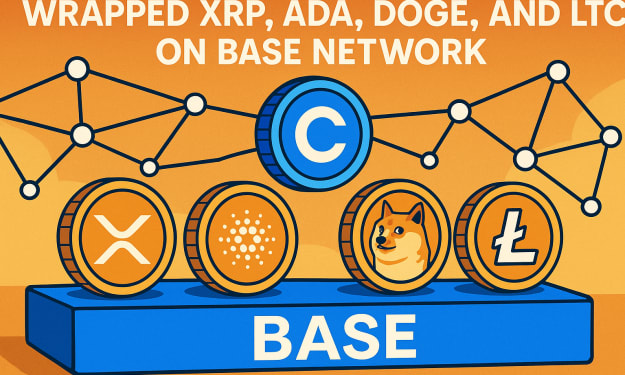
Wrapped and Ready: Coinbase Brings XRP, ADA, DOGE to Base
Coinbase is cranking up the heat in the wrapped token game. On May 13, the crypto exchange dropped some big news on its Assets X account: wrapped versions of four beloved altcoins—XRP, Cardano (ADA), Dogecoin (DOGE), and Litecoin (LTC)—are en route to its Ethereum Layer-2 network, Base.
By Jawad Hussain9 months ago in Writers
Luck
The ways of fate are strange and unpredictable. What a person plans rarely turns out as expected. Aunt had searched far and wide for a suitable bride for Heer. She examined many girls, visiting every neighborhood and household. Her feet ached, her back stiffened, yet none matched her standards. Some were too short, others too tall; some were chubby, others frail; some had dull complexions, others pale like turnips. Every girl in the vicinity, every cousin and niece, was considered, but none suited her grandson Nabeel.
By Sudais Zakwan3 days ago in Journal
Instructions Included Challenge Winners
For the Instructions Included challenge, we asked writers to tell a story through instructions and to trust the form to carry what could not be said outright. Across the top entries, that trust paid off in many different ways.
By Vocal Curation Team2 days ago in Resources


Comments
There are no comments for this story
Be the first to respond and start the conversation.