
From Check-In to Care: Medical Kiosk Market Booms Amid Digital Health Transformation
Medical kiosks in today's fast-paced digital healthcare landscape function as transformative forces rather than mere convenient solutions.

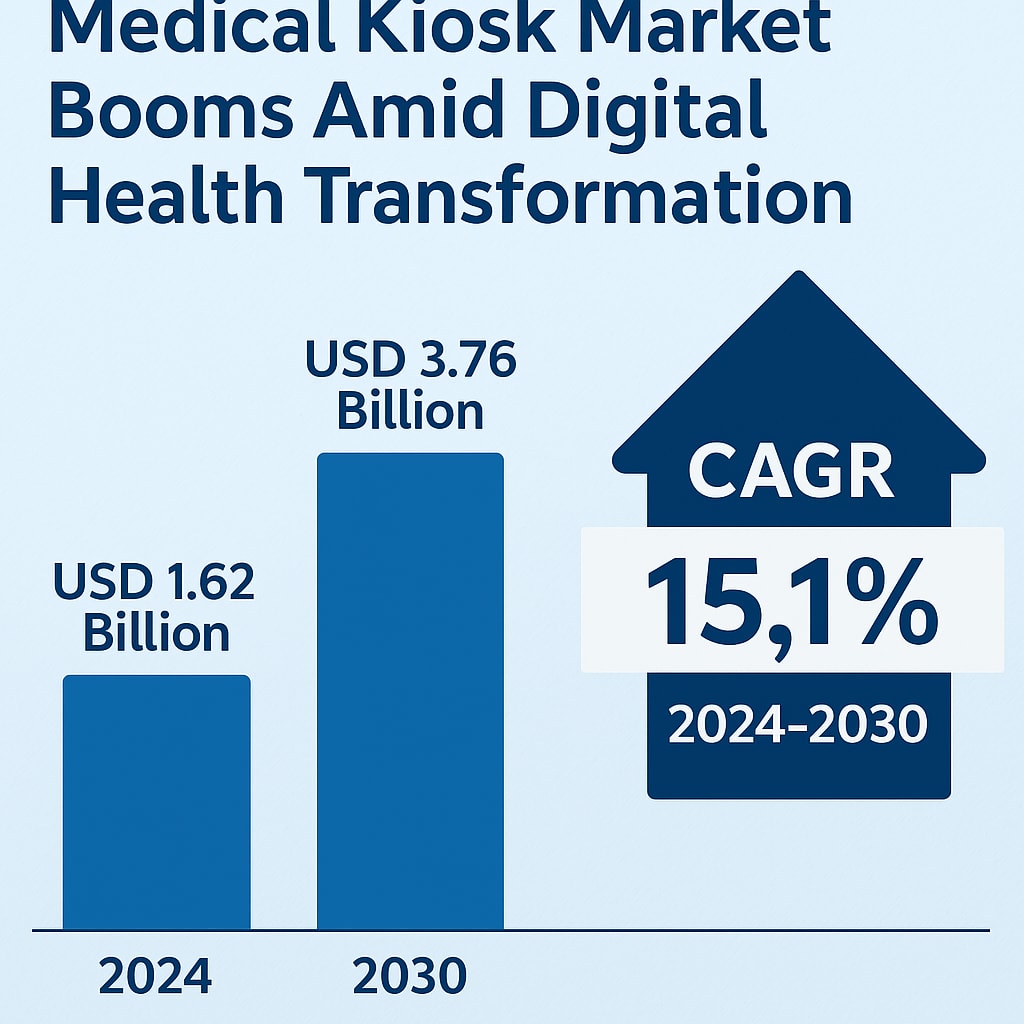
Medical kiosks market have become essential components throughout the patient journey as the digital revolution transforms healthcare delivery from self-check-in procedures to diagnostic services and teleconsultations. Medical kiosks empower patients with quick contactless access to healthcare services while streamlining administrative processes and reducing operational burdens. The result? Medical kiosks represent a rapidly expanding global market which analysts predict will increase from USD 1.62 billion in 2024 to USD 3.76 billion by 2030 through a compound annual growth rate (CAGR) of 15.1%.
The merging of healthcare digitization with pandemic-initiated remote care systems and operational efficiency needs drives adoption throughout hospitals, clinics, pharmacies, and retail health settings.
What Are Medical Kiosks?
Self-service medical kiosks enable various healthcare operations through their terminal functionalities. Depending on their configuration, they may support:
- Patient registration and check-in
- Vitals measurement (e.g., blood pressure, BMI, temperature)
- Symptom assessment and triage
- Telemedicine consultations
- Bill payments and insurance processing
- Prescription refills and pharmacy guidance
Kiosks that reduce manual interactions and waiting periods improve the patient experience while boosting staff efficiency.
Key Drivers of Market Growth
1. Healthcare Digital Transformation
Healthcare facilities face the need to transform their operations with modern systems. Medical kiosks deliver an affordable scalable answer to digitize front-end healthcare operations. Through their integration with EHR systems and patient portals kiosks become digital entry points for smarter healthcare delivery.
2. Rising Demand for Contactless Solutions
COVID-19 fundamentally altered expectations around infection control. Kiosks serve as a contact-reduced solution that replaces busy waiting rooms and front desks to provide secure patient registration and assessment capabilities for crowded environments.
3. Staffing Shortages and Operational Efficiency
Global healthcare systems experience personnel shortages which kiosks address by filling essential administrative functions. These systems decrease administrative tasks at the front desk while increasing patient processing rates so clinicians can dedicate more time to patient care instead of handling paperwork.
4. Telehealth Integration
Virtual medical consultations now frequently occur through medical kiosks located in rural clinics alongside pharmacies and workplaces. Medical kiosks outfitted with cameras and diagnostic tools provide secure data transmission to connect underserved regions with essential healthcare services.
Key Applications Across Healthcare Settings
Hospitals & Clinics: These devices enable patients to register themselves check in manage waiting lines and monitor vital signs.
Retail Pharmacies: Customers at retail pharmacies can use kiosks to perform symptom checks, engage in virtual consultations or to order medication refills.
Workplace Health Stations: Help employees stay healthy through preventive screenings and virtual care options.
Public Spaces: These systems serve basic health assessments and triage functions when placed in airports, malls, and government buildings.
Regional Growth Trends
The North American market takes the lead due to digitized healthcare systems combined with supportive reimbursement policies and high rates of consumer technology knowledge.
Europe uses kiosks to support public health drives and clinical assessment processes due to growing health system demands.
The Asia-Pacific region shows swift expansion as both India and China make investments in telemedicine kiosks to improve healthcare access in rural areas.
Healthcare kiosks are being established across urban and remote areas in Middle East and Africa to expand access to medical care.
Technology Advancements Fueling Adoption
AI-Powered Interfaces: Kiosks now provide more intuitive user experiences through voice recognition capabilities combined with natural language processing and immediate symptom analysis.
Integrated Diagnostics: The latest kiosk models enable immediate point-of-care diagnostics for glucose and oxygen saturation levels alongside ECG readings with secure data transmission to cloud platforms.
Multilingual Support: Enhances accessibility in diverse and multilingual populations.
Interoperability: Through seamless EHR integration data moves from kiosks to healthcare providers and finally to patient applications which delivers uninterrupted care continuity.
Challenges and Considerations
Medical kiosks hold significant promise but currently confront multiple obstacles that hinder widespread adoption.
Privacy and Data Security: The protection of sensitive health information requires strict adherence to HIPAA/GDPR regulations during storage and transmission operations.
User Experience (UX): Patients dealing with aging or disabilities might find kiosk interfaces challenging which requires designs that can accommodate all users.
Integration Complexity: The alignment process between medical kiosks and existing IT structures demands significant resources in certain healthcare environments.
To manage these issues vendors have introduced biometric authentication options along with cloud-based remote management solutions and customizable interfaces designed for particular care environments.
Outlook: From Front Desk to Frontline Tool
Medical kiosks will serve clinical functions beyond their current administrative roles. Through the integration of AI technology and sensor systems medical kiosks transform into digital triage assistants and diagnostic centers. Emerging models support:
- Chronic disease monitoring
- Behavioral health assessments
- Vaccination record verification and health passport issuance
- Mental health screening tools
The decentralizing trend in healthcare has prompted increased adoption of mobile kiosks and home-based diagnostic stations.
Conclusion
The delivery of healthcare is being transformed through patient-centered approaches which include proximity care delivery while simultaneously automating administrative processes and enabling remote diagnostic capabilities. The medical kiosk market expands significantly because of increased investment and technological progress and it serves as an essential element of modern healthcare that connects patients and provides accessible care.
About the Creator
Silvie Karson
Passionate storyteller exploring the world of trends. With a background in digital marketing, I craft compelling narratives that inform and inspire. Whether diving into deep-dive features, growth analysis, or trend analysis.
Keep reading
More stories from Silvie Karson and writers in Journal and other communities.
ADAS Takes the Wheel: Market Thrives as Governments Mandate Vehicle Safety Technologies
The automotive industry is evolving rapidly with Advanced Driver Assistance Systems (ADAS) leading the transformation because of increased emphasis on road safety and autonomous mobility. Intelligent systems like lane-keeping assistance, adaptive cruise control and automatic emergency braking have progressed from luxury options to becoming standard vehicle components because of government requirements and customer demands for safer cars. The ADAS market which stood at USD 32.14 billion in 2023 will reach USD 66.56 billion by 2030 while growing at an 11% compound annual growth rate.
By Silvie Karson7 months ago in Journal
The goals I did not achieve
Every writing goal I made for the year is a wash. It has been this way for a while, but I think it's important to be open about my failures and the reality of how life can get in the way. This is especially true considering the several times I have posted on Vocal about my writing goals, how I was changing my approach, and where I was hoping to be for the upcoming year. I will probably do that again in a couple months, but for now, it is time to acknowledge where I am today.
By Kay Husnick24 days ago in Journal
Why Florida Car Dealers Must Carry a Surety Bond
If you’re planning to open a used car dealership in Florida, one of the first compliance requirements you’ll encounter is the dealer surety bond. Many people assume this is just another formality in the licensing process, but it plays a much bigger role than most applicants realize.
By American US Insurance6 days ago in Journal




Comments
There are no comments for this story
Be the first to respond and start the conversation.