
Food Processing Automation Market Set to Nearly Double by 2033, Driven by Robotics and AI Innovations
Growing demand for processed foods, stringent food safety regulations, and technological breakthroughs are transforming food manufacturing globally.

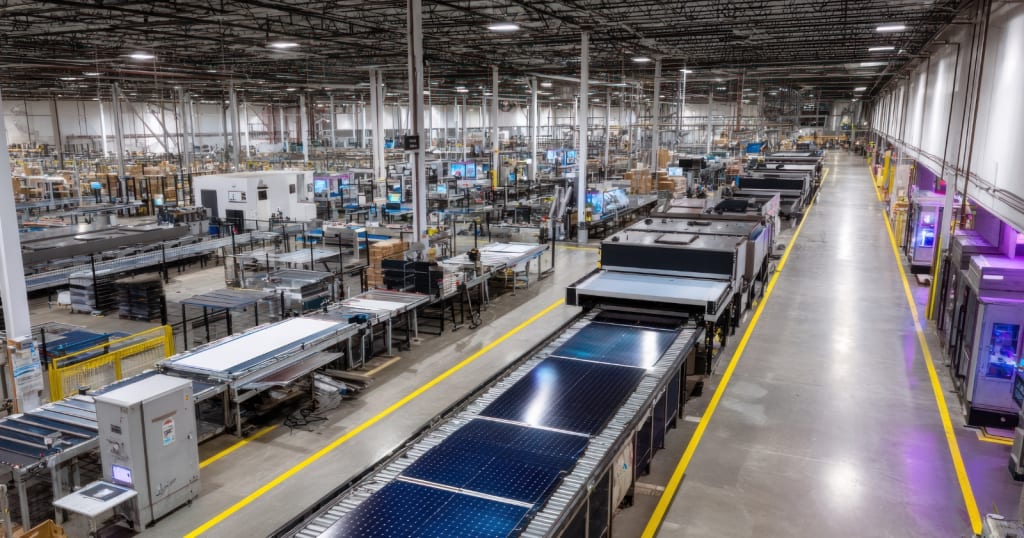
Food Processing Automation Market: Revolutionizing Global Food Manufacturing
According to Renub Research Latest Report Food Processing Automation Market is on a trajectory of rapid expansion, expected to surge from US$ 24.55 billion in 2024 to US$ 45.55 billion by 2033, reflecting a robust CAGR of 7.11% during the period 2025–2033. The rising need for efficiency, consistency, and high-quality products in the food industry is driving the adoption of cutting-edge automation technologies across manufacturing facilities worldwide.
Understanding Food Processing Automation
Food processing automation refers to the integration of advanced systems and technologies to streamline the processing, packaging, and distribution of food products. The scope of automation spans robotics, artificial intelligence (AI), machine learning, and software applications, all aimed at improving operational efficiency, reducing labor costs, and maintaining consistent product quality.
Across the globe, automation is revolutionizing food production. Automated systems can precisely monitor cooking, cooling, and packaging operations, minimizing human error while ensuring enhanced food safety and hygiene. The technology also enables faster response times to market trends, crucial in meeting the growing demand for processed and ready-to-eat foods.
Countries with significant agricultural outputs, such as the United States, China, and India, are increasingly investing in automated systems to remain competitive. Automation also enhances traceability, ensuring compliance with international safety standards in an interconnected global food supply chain.
👉 Want to explore detailed market trends, segment insights, and forecasts? 🔗 Request Sample Report
Increased Demand for Packaged and Processed Foods
Rapid urbanization, busy lifestyles, and rising disposable incomes are driving global demand for packaged and processed foods. Consumers increasingly prefer ready-to-eat meals, dairy products, and packaged snacks, compelling food manufacturers to adopt automation for efficiency, hygiene, and consistency.
Automated production lines reduce labor dependency, improve production speed, and maintain hygiene standards, all while addressing stringent food safety regulations. Recent industry developments, such as JBT’s USD 3.5 billion acquisition of Marel in January 2025, highlight the strategic investments aimed at automating processes from poultry evisceration to high-pressure pasteurization. Start-ups like Chef Robotics and Sojo Industries are also leveraging Robotics-as-a-Service models, integrating AI, edge analytics, and blockchain for traceability.
Stringent Food Safety and Hygiene Regulations
Governments worldwide are implementing stricter regulations for food safety and hygiene, making automation indispensable in processing facilities. Automated equipment minimizes human contact, reducing contamination risks, and supports precise ingredient handling and packaging.
Automation also enables traceability, allowing manufacturers to track food batches efficiently and comply with international standards. For instance, World Food Safety Day 2025, themed “Food Safety: Science in Action,” emphasized the role of technology in controlling food safety hazards.
Technological Advancements in Robotics and AI
Automation is being propelled by breakthroughs in robotics, AI, and machine learning, transforming the efficiency and precision of food production. Robots can now perform sorting, cutting, and packaging tasks with exceptional accuracy, while AI optimizes energy usage, predictive maintenance, and quality control.
Companies such as Fortifi Food Processing Solutions are at the forefront, offering platforms for global brands to improve productivity, maximize yield, and ensure worker safety in multiple food sectors, including protein, dairy, and fruits and vegetables.
Challenges Facing the Market
High Initial Investment and Maintenance Costs
The adoption of automation systems requires substantial up-front investment, covering equipment purchase, installation, and integration with legacy systems. SMEs often struggle to afford these costs, and maintenance expenses, along with skilled labor requirements, add to the burden. While automation delivers long-term savings, the initial cost remains a barrier to rapid adoption, especially in developing nations.
Workforce Resistance and Skill Gaps
Automation raises concerns about job displacement, often triggering workforce resistance. Operating sophisticated systems also requires skilled personnel, highlighting technical skill shortages. Companies must invest in upskilling programs to ensure seamless human-machine collaboration and effective system management.
Key Components of Food Processing Automation
Valves and Actuators: Critical for controlling fluid flow, temperature, and pressure, ensuring consistency and hygiene in dairy, beverage, and packaged food production.
Electric Motors: Drive conveyors, mixers, and packaging equipment, enabling variable speed control and energy optimization.
Hardware: Robotics, sensors, control systems, and conveyors form the backbone of automation, providing real-time monitoring and quality assurance.
Sector-Specific Insights
Dairy Processing: Automation ensures high hygiene standards for processes such as pasteurization, homogenization, and packaging, improving shelf life and reducing contamination risk.
Packaging and Re-packaging: Automated packaging boosts speed, minimizes errors, enhances sustainability, and ensures compliance with safety standards.
Fully Automated Systems: End-to-end automation with minimal human intervention supports 24/7 production, reducing labor costs and increasing scalability.
Regional Market Insights
United States: Driven by high consumer demand for convenience foods, strict FDA regulations, and labor shortages. Companies like FANUC America continue to innovate with new robotics solutions for processing and packaging.
Germany: Strong engineering capabilities and sustainability focus drive automation adoption in dairy, bakery, and packaged foods. Dematic recently completed a cutting-edge warehouse automation project for Bünting SCM/Logistik GmbH.
India: Rapid urbanization, rising incomes, and government initiatives like Make in India support automation adoption. India’s largest automated frozen potato processing plant was commissioned in Gujarat in 2025, showcasing large-scale implementation.
UAE: With a focus on food security and sustainability, the UAE leverages automation to meet growing demand for processed foods. Pure Food Technology developed a solar-powered hydroponic robotics system producing high yields with minimal water usage.
👉 For deeper analysis, detailed segment data, and company insights: 🔗 Request Customization Report
Operational Technology & Software: Distributed Control Systems (DCS), Manufacturing Execution Systems (MES), Variable-Frequency Drives (VFD).
Component: Hardware, Software, and Services.
End-User: Dairy, Bakery, Meat, Poultry, Seafood, Fruit and Vegetable Processing, Beverage Manufacturing.
Application: Packaging, Palletizing, Sorting, Primary & Secondary Processing.
Automation Level: Fully-Automatic Lines, Semi-Automatic Lines.
Geography: North America, Europe, Asia-Pacific, Latin America, Middle East & Africa.
Leading Players in the Market
Key companies driving the automation market include: ABB Ltd., Alfa Laval AB, Baader Food Processing Machinery GmbH, Bosch Rexroth AG, Bühler Holding AG, Endress+Hauser Group Services AG, Emerson Electric Co., FANUC Corp., Festo SE & Co. KG, and GE A Group AG. Their innovations and strategic acquisitions are shaping the global food processing automation landscape.
Conclusion: The Road Ahead
The Food Processing Automation Market is set for remarkable growth, driven by technological innovation, rising demand for processed foods, and stringent food safety standards. While high investment costs and workforce challenges remain, the long-term benefits of efficiency, hygiene, and scalability make automation an indispensable component of modern food manufacturing.
As Industry 4.0 technologies continue to evolve, fully automated production lines integrating robotics, AI, and sensors will redefine global food processing, enabling manufacturers to deliver high-quality products efficiently while maintaining compliance with international standards. By 2033, the market is expected to nearly double in value, positioning automation as a cornerstone of the future food industry.
Note: If you need details, data, or insights not covered in this report, we are glad to assist. Through our customization service, we will collect and deliver the information you require, tailored to your specific needs. Share your requirements with us, and we will update the report to align with your expectations.
About the Creator
Marthan Sir
Educator with 30+ years of teaching experience | Passionate about sharing knowledge, life lessons & insights | Writing to inspire, inform, and empower readers.
Keep reading
More stories from Marthan Sir and writers in Journal and other communities.
The Dairy-Free Revolution: How Plant-Based Alternatives Are Redefining Global Diets
In recent years, a quiet revolution has been sweeping across kitchens, cafés, and grocery aisles worldwide. Consumers are increasingly swapping traditional dairy for plant-based alternatives, reshaping the global food landscape. Valued at US$ 32.24 billion in 2024, the dairy alternatives market is projected to skyrocket to US$ 83.94 billion by 2033, registering a compound annual growth rate (CAGR) of 11.22% from 2025 to 2033. What’s driving this surge isn’t just taste—it's a combination of health consciousness, environmental awareness, and lifestyle choices.
By Marthan Sir4 months ago in Journal
SEO Isn’t Dead — It Just Changed: Insights from Ayub Ansary’s Conference Session
Search Engine Optimization (SEO) has been a cornerstone of digital marketing for over two decades, continuously adapting to the shifting sands of search engine algorithms, user behavior, and technological advancements. Despite periodic cries of its demise, SEO remains a vital channel for organic visibility and traffic acquisition. The recent conference session featuring Ayub Ansary provides fresh, data-backed perspectives that challenge the notion of SEO as a fading discipline. Instead, it reveals an industry in flux—one that demands new strategies and higher standards to thrive.
By Muhammad Al Arabia day ago in Journal
Affection and Healing for Yourself
During the night of the last quarter moon, I gathered my ritual supplies. I carefully handled the chunk of black tourmaline that would protect me from your overall negative and narcissistic energy. I carefully walked the house with my stick of selenite in hand, asking the universe to cleanse our working space.
By Alisha Wilkins ✒️🦋🖋️a day ago in Fiction


Comments
There are no comments for this story
Be the first to respond and start the conversation.