
Flight cuts underway after FAA orders reduction due to government shutdown
Why the SKY is Getting Smaller During the Shutdown

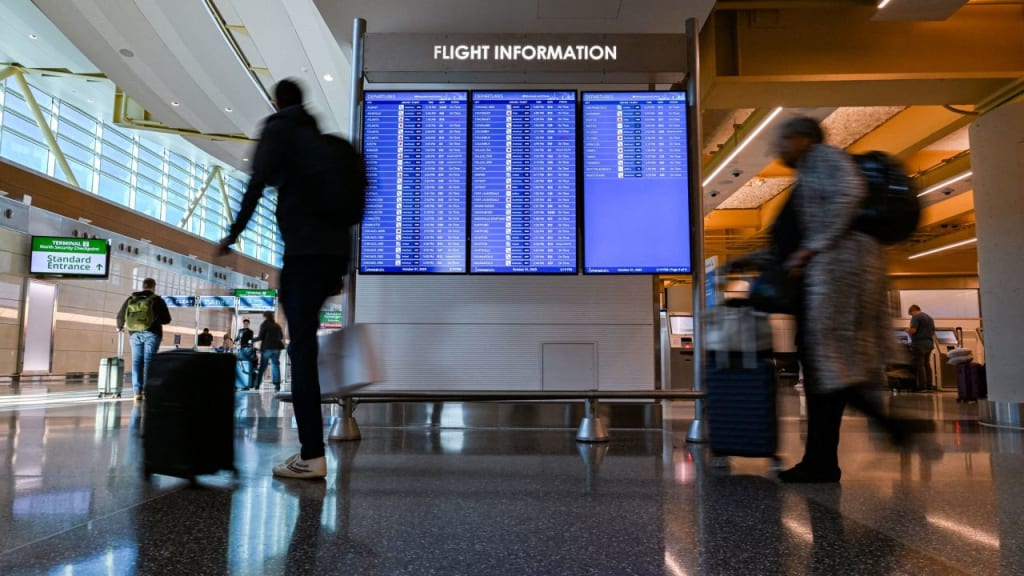
The Sky’s Been Shrinking on Us
Imagine arriving at an airport, feeling the familiar hum of jet engines and boarding announcements—but instead of the usual crowd, the gates are quieter. More empty seats. Fewer planes taxiing. That palpable sense of something’s off? It’s real.
That’s because the Federal Aviation Administration (FAA) has ordered domestic flight reductions—and the ripple effects are already shaking the skies.
What’s Happening and Why It Matters
The Cut-in-the-Clouds
Starting Friday, November 7, 2025, the FAA mandated a 4% cut in domestic flight operations at 40 of the busiest U.S. airports.
That cut will gradually escalate to 10% by November 14 if the shutdown persists.
These cuts do not initially apply to international flights, but domestic air travel—and the associated cargo and regional flights—are deeply affected.
A key driver: thousands of air-traffic controllers and TSA staff continue to work unpaid amid the longest U.S. government shutdown on record.
Why It’s A Big Deal
Flying isn’t just about vacations or business trips—it’s a critical part of American infrastructure. When the skies shrink:
Airports get congested in new and unpredictable ways.
Airlines have to rejig schedules, often at short notice.
Travellers face cancellations, longer wait times, and uncertainty.
Cargo and supply-chain flights get tangled up too.
In short: the shutdown isn’t just a political story—it’s a travel story, a commerce story, and a safety story.
The Anatomy of the Crisis
1. Fatigued Controllers, Stressed System
Air-traffic controllers are expected to maintain razor-sharp focus every minute of every shift. But when paychecks stop, fatigue, distraction, and even attrition escalate. The FAA admits staffing is below safe comfort levels.
2. The “4% Now, 10% Soon” Ramp-Down
The cut isn’t just one big drop—it’s creeping:
4% beginning Nov 7
6% by Nov 11
8% by Nov 13
10% by Nov 14
That gradual approach is meant to cushion the blow, but it also means the disruption gets worse day-by-day unless things change.
3. Airports Under the Hammer
The 40 airports targeted represent hubs of American travel and commerce: New York, Los Angeles, Atlanta, Chicago, Washington D.C. among them.
These centres aren’t just busy—they are critical nodes. A 10% cut here means far more than 10% inconvenience.
4. The Domino Effect
Cancellations and delays in major hubs ripple outward: regional airports, connecting flights, cargo routes—all get affected. Experts warn that travel chaos could worsen if the shutdown continues.
What You’ll See If You’re Flying
Last-minute cancellations: “Watch your inbox,” “Call your airline,” “Reschedule” are becoming more common.
Longer waits: Even if your flight isn’t canceled, expect delays, fewer backup aircraft, and slower connections.
Less cushion: Airlines are trimming the fat—what used to be “just in case” becomes “tight margin.”
Cargo squeeze: Goods shipped by air might take longer to arrive, or cost more.
Holiday travel jitters: With Thanksgiving looming, the timing is especially tense.
Why It’s More Than Just Cancelled Flights
Safety Over Schedule
The FAA is framing this as a pre-emptive safety measure, not a panic move.
But the need itself speaks volumes about the system’s fragility.
Infrastructure Under Strain
More than flights are at stake: airspace, control towers, staffing pipelines, training—all are strained. The shutdown didn’t create the problem, but it magnified it.
Political Fallout
The shutdown’s ripple into aviation underscores how politics can touch the most unexpected corners of daily life. Travel disruptions become tangible consequences of legislative gridlock.
Travel Smart in These Skies
Here are some tips if you’re about to fly:
Check flight status early and often—the schedule may change.
Book flexible tickets or ones with change/refund options (many airlines are waiving change fees now).
Arrive at the airport early—you may face longer waits at security or gate holds.
Travel light and resilient—be ready for “plan B” routes or later flights.
If possible, avoid busy hubs or times that are more likely to be cut.
Keep essentials handy—if you’re delayed, having backup lodging, snacks, and patience will help.
Stay informed—both about your airline and the broader situation. Knowledge helps avoid surprises.
What This Says About Government & Infrastructure
It’s not just about flights. It’s a metaphor for how fragile our systems can be when under stress.
When essential workers go unpaid, the backbone of reliable service creaks.
When systems operate on lean margins, any disruption becomes amplified.
When politics paralyzes action, everyday routines are the first to feel it.
This moment in aviation is a warning sign: if the skies—one of the most visible, global infrastructures—can wobble, then other systems might too.
The Sky We Take for Granted
Flying should feel seamless—seat belts clicked, engines whirring, destination near. Right now, those moments are a little less sure. The sky is shrinking not because the planes aren't flying—it’s because the safety net underneath them is being pulled.
For travelers, airlines, and policymakers alike, this moment demands vigilance, flexibility, and urgency. Because when the skies tighten, the cost isn’t just delayed flights—it’s reduced access, economic drag, and a reminder that infrastructure only works when backed by trust, staffing, and funding.
So next time you hear your boarding gate announced, or feel that lift off into the blue—remember: the journey isn’t just yours. It’s part of a bigger system—and that system is under stress.
We’re flying into uncharted skies for now—but how we respond could define how high (and how safely) we soar again.
About the Creator
Omasanjuwa Ogharandukun
I'm a passionate writer & blogger crafting inspiring stories from everyday life. Through vivid words and thoughtful insights, I spark conversations and ignite change—one post at a time.
Keep reading
More stories from Omasanjuwa Ogharandukun and writers in Journal and other communities.
Nick Fuentes’s Rise Puts MAGA Movement in a ‘Time of Choosing’
Imagine standing at a fork in a road at dusk. One path glows under familiar street-lights. The other plunges into shadows, with only a faint flicker guiding the way. That moment—a choice between comfort and something darker—is exactly where the MAGA movement finds itself today, and Nick Fuentes is lighting the torch.
By Omasanjuwa Ogharandukun2 months ago in Journal
7 Business Knowledge Loops That Self-Improve on AI PCs
The business world is changing faster than ever before. Companies that stay ahead are those that use smart technology to learn and grow continuously. AI PCs have opened up a new frontier for businesses to create knowledge loops that get better with every cycle. These systems learn from your data and improve their performance automatically. Think of it like a business brain that never stops getting sharper.
By Gabriella Browne4 days ago in Journal



Comments
There are no comments for this story
Be the first to respond and start the conversation.