
Fire Rated Door: Essential Insights and Applications
A Comprehensive Guide to Fire Rated Doors: Safety, Standards, and Strategic Applications

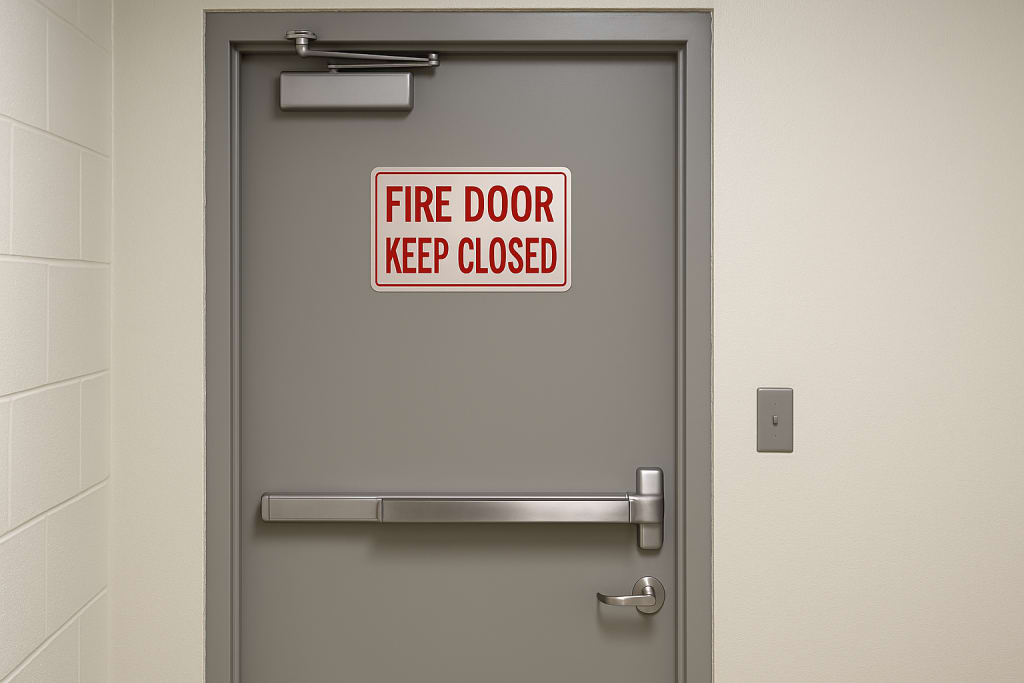
Understanding Fire Rated Doors
A fire rated door is also referred to as a fire resistant or fireproof door. It is a door assembly that undergoes a specified and controlled exposure to fire for a certain period of time. It undergoes testing to meet stringent safety requirements; these doors are made from steel, gypsum, or timber and other fire-resistant materials. Fire-rated doors receive a classification based on their fire resistance rating (FRR), which is given in intervals of time, for example, 20 minutes or 90 minutes. This rating shows the duration the door can effectively inhibit the spread of fire and smoke.
View Fire Rated Door Manufacturers in China -YK details to get into the details.
Core Purpose of Fire Rated Doors
Fire rated doors provide passive fire protection for the building. Their function is to section off parts of a building so that the fire can be contained and will take longer to spread from one section to another, not allowing smoke and fire to travel between different sections of the building. This feature increases the time occupants have to safely evacuate the building. Moreover, these doors help contain the fire which minimizes the damage to the property and helps maintain the overall structural integrity of the building during a fire incident.
View Fire Rated Door for sale - YK for More Details
Differences Between Fire Rated Doors and Regular Doors
Fire rated doors differ from ordinary doors in their construction, functioning, and intended purpose. Unlike regular doors, which serve as access points and for daily use, fire rated doors are built to mitigate risks associated with fire emergencies. The key differences are as follows:
- Materials - Fire-rated doors are constructed out of treated wood or metal, making fire-rated doors of greater construction than regular doors, which consist of non-rated wood.
- Seals and Components - These fire rated doors come equipped with intumescent seals that will block smoke or fire from passing through any gaps once heated. Regular doors do not come with these features.
- Fire Resistance Certification - An example of this would be NFPA 80 or BS 476, neither of which standard doors will pass testing to obtain. These doors undergo stringent assessments to ensure compliance with fire safety regulations, which standard doors do not have to comply with.
- Usage in Designated Areas – The installation of fire rated doors is specifically meant for the enforcement of stronger fire control systems in areas like stairwells, corridors, and exits. Regular doors are placed in any access point without consideration of fire containment.
This comparison highlights the need to ensure fire-rated doors are used in places where the safety of people's lives and properties is of utmost concern.
Benefits of Fire Rated Doors
Increased Safety and Protection
Fire rated doors are exceptional at enhancing safety as they contain the spread of fire and smoke during emergencies. Their robust construction, coupled with specialized materials, enables them to withstand high temperatures for a designated time frame, thereby providing a safer environment for occupants of the building. This containment is life-saving during fire hazards as it helps facilitate evacuation.
Enhanced Compliance with Building Codes
The installation of fire-rated doors aids in compliance with local, national, and international building codes and standards like NFPA 80 or BS 476. These regulatory bodies legally require such doors to be installed in particular locations for fire safety compliance, thereby ensuring legal protection and reducing potential liabilities for the property owners.
Improved Property Protection
Aside from protecting lives, fire-rated doors also aid in the protection of property and other valuable assets. They mitigate fire damage by restricting it to specific sections, which results in lower overall impact on infrastructure and restoration costs. This measure is especially important for facilities containing sensitive equipment or invaluable items.
Common Applications of Fire Rated Doors
Residential Settings
There is an increased use of fire rated doors in residential structures to increase safety and compliance with fire codes. These types of doors are usually used on the entry to garages, utility rooms, or basements, as these are the areas with a greater risk of fire outbreak. Fire rated doors used in residential premises help ensure that the occupants are able to safely evacuate during emergencies, while also slowing the rate at which fire spreads through the house.
Commercial Applications
In commercial buildings with a high volume of foot traffic, fire rated doors are very important for safety and asset protection. They are commonly used in office buildings, retail stores, and hotels to separate fire hazard areas such as kitchens and mechanical rooms. Moreover, these doors are required by building codes, thus demonstrating a commitment to the safety of occupants and operational continuity.
The Impact of Fire Rated Doors in Industry
Heavy equipment, flammable materials, and facilities like manufacturing plants, warehouses, or chemical storage plants can pose the risk of a fire. Therefore, the industrial sector gains a lot from the application of fire rated doors. These doors are crucial in averting damage to company assets, stabilizing operations, and protecting employees. In addition to employee safety, these doors help to reduce significant losses resulting from possible incidents.
Types of Fire Rated Doors
Components of Fire Rated Doors
The components of fire-rated doors comprise steel, wood, glass, gypsum, and other fabrications that are made especially for them. Like anything made of metal, steel doors have indisputable access durability and fire resistance. It is used in industrial and commercial buildings because of its need to last a long time with minimal maintenance. In office and residential interiors, wood fire-rated doors are preferred because of their beauty. In addition, wood fire-rated doors are convenient compared to solid wood doors, and they have a frame with a fire retarding core. Gypsum is often used as a core material because it has good heat resistance and also provides thermal insulation. In addition, fire glass, which is used in doors, provides safety and visibility and is used in many parts of the world due to its excellent performance in extreme environments.
Description of Fire Resistance Ratings
A door's fire resistance rating is an indication of how long the door can be exposed to fire and still maintain its integrity and functionality. Fire resistance ratings can be categorized as 20, 45, 60, or 90 minutes. The range of fire resistance ratings doors can achieve is tested in regulatory authorities, such as level 10C or National Fire Protection Association 252. Important criteria like the door's performance during and after exposure to flames, heat insulation, and smoke leakage are evaluated. Selecting the proper fire resistance rating requires balancing the needs of the building's fire safety strategy and compliance with the local fire codes.
Fire Rated Door Design Options
Today's fire-rated doors can be designed to balance architectural beauty with their intended purpose. Modern fire-rated doors can be customized with various finishes, including painted steel, wood veneer, and laminate surfaces, which allows for seamless incorporation into building interiors. Compliance and non-compliance fire-rated frames and hardware can be accessorized the same way to match the door while keeping to safety standards. Furthermore, doors may incorporate vision panels of fire-rated glass, ventilation louvers, or smoke seals. These options enable meeting both design requirements and basic functionalities to be achieved for balancing aesthetics and ergonomics while remaining within specified operational standards.
Compliance Standards and Certifications
Legal Provisions Concerning Fire Rated Doors
Legal provisions regarding fire rated doors vary by region and are usually set by building codes, fire safety regulations, and international standards. Fire-rated doors must meet basic legal requirements such as preventing fire and smoke from penetrating for a specified duration, which is usually twenty minutes to three hours, depending on the use of the door.
Overview of Safety Regulations
Safety regulations set for fire rated doors focus on assuring their functionality under fire conditions. In the US, NFPA 80 and in Europe, EN 1634-1 provide guidance about the construction, installation, and maintenance of fire doors. Adhering to these regulations is critical not only for protecting lives and property but also for meeting safety standards.
Certification Procedures
To ensure compliance, fire rated doors go through extensive testing and certification processes. Evaluative tests often consist of fire exposure testing, where the doors are tested at high temperatures to evaluate their structural integrity as well as resistance to heat. Certification bodies, such as Underwriters Laboratories (UL) or Intertek, will later issue labels or rating documents indicating the door’s level of fire-resistance. Compliance during building inspections requires proper documentation as well as labeling.
Why Compliance is Important
Compliance with fire-rated doors' legal and safety requirements is essential not only for regulatory compliance but also for the safety of occupants. Fire doors that are certified and maintained properly can aid in the reduction of fire and smoke spread significantly, in turn allowing time for occupants to evacuate and minimizing destruction to property. Non-compliance can lead to severe penalties, legal liabilities, and increased risk of injury or loss of life. Hence, the need for design and construction to prioritize the fire safety standards.
Choosing the Right Fire Rated Door
Criteria Recommendations from the Experts
Assessing a fire rated door’s specifications requires consideration of both functionality and adherence to local safety standards. Start with the fire resistance rating (for example, FD30 or FD60) to confirm the door’s rating and ensure it aligns with the building’s fire safety strategy. When evaluating the door's core material, options such as solid wood, steel, and composites have differing fire resistance and durability. Also, check for third-party certifications or test reports to confirm the door’s effectiveness. Consider both the fire rating and the door's compatability with other components of the installation, including hardware and building infrastructure, ensuring a tight seal to minimize fire or smoke migration.
Differentiating Fire Rated Doors and Regular Doors
Both types of doors serve different functions; however, the construction of fire-rated doors is far more advanced than regular doors. Unlike regular doors, which serve to protect privacy or reduce noise, fire-rated doors serve the specific purpose of resisting high temperatures and smoke during a fire. These doors often contain intumescent seals that heat-activated close gaps to prevent the spread of fire. Fire rated doors also have to undergo rigorous testing and are heavier than regular doors owing to their non-combustible materials and being constructed to standards like UL 10C or BS EN 1634-1. Regular doors do not have any critical fire protection requirements, but fire-rated doors do, thus making them lifesaving as well as functional.
Useful Fire Door Maintenance
Regular servicing of fire-rated doors must be done if they are to remain efficient. Your inspections should cover hinges, latches, and self-closers for wear as well as the door for cracks and warping. All hardware, including the hinges, latches, and self-closing mechanisms, should be verified for smooth operation free of any blocking elements. The intumescent seals and smoke gaskets must also be checked for wear since used gaskets will not effectively seal the door during a fire. The door must never be held open so long as it does not have an approved automatic closer linked to the fire alarm system. Repeat maintenance checks will not only strengthen fire door systems but also improve compliance audit outcomes.
About the Creator
Keep reading
More stories from Daily Blog and writers in Journal and other communities.
The Role of Outdoor Lifts in Modern Residential Design
Outdoor lifts are no longer just for industrial use. Galahttps://galaxylifts.com/xy Lifts designs weather-resistant systems specifically for homes with elevated decks, porches, and garages, bringing a new level of convenience, accessibility, and style to modern residential living.
By Daily Blog6 months ago in Journal
How AI Tools for SEO Changed the Way I Create Content and Rankings
I still remember the first time I heard someone say that artificial intelligence would replace SEO writers. At that time, I was already struggling to balance keyword research, content planning, optimization, and the constant pressure to rank higher on search engines. SEO felt less like creativity and more like a never-ending checklist. That was the moment when I decided to give AI tools for SEO a serious try, not as a shortcut, but as a support system.
By Anthony Rodgers3 days ago in Journal
Center Stage with Paul Stewart
*** I'm keen to republish the interviews I did for my series with Vocal creators. It's been a few years and I thought it might be nice to revisit these wonderful conversations. I'll be releasing them one at a time for a few weeks/months.
By Heather Hubler4 days ago in Interview




Comments
There are no comments for this story
Be the first to respond and start the conversation.