
Europe's Energy Crisis: Gas Shortages and Rising Prices
Gas Shortages and Rising Prices
Introduction
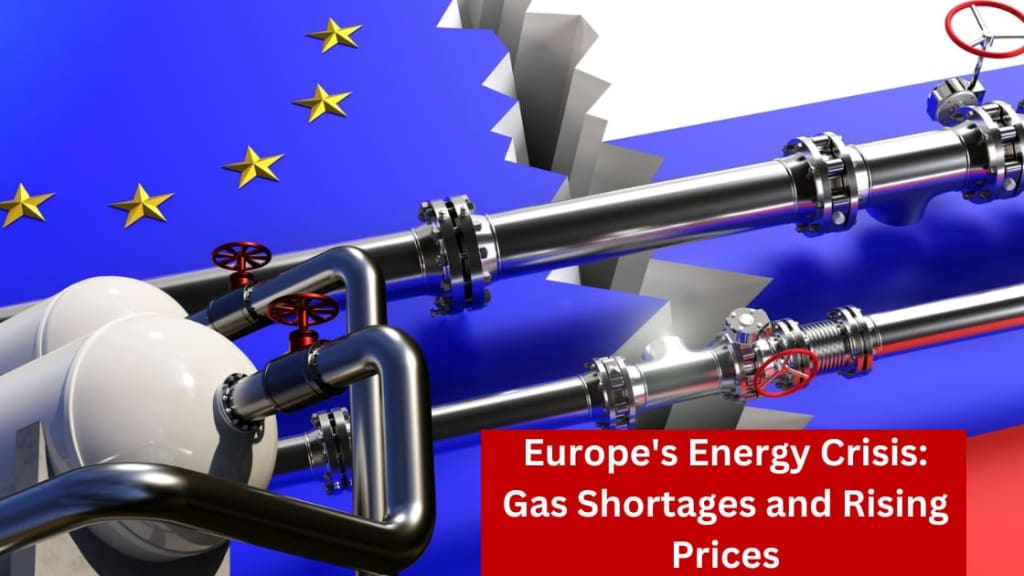
Europe has been grappling with a severe energy crisis, marked by gas shortages and surging prices, exacerbated by its dependence on energy imports, particularly natural gas from Russia. The Russian-Ukraine war has disrupted gas supplies, forcing European countries to rethink their energy policies and accelerate the shift towards renewable energy. This article explores the causes of Europe's energy crisis, the role of the war in aggravating gas shortages, and the policy changes countries like Germany and the UK are implementing to address the crisis. Finally, it will examine whether renewable energy can provide a long-term solution to Europe’s energy challenges.
How Europe is Managing the 2024 Energy Crisis
Europe’s Dependence on Energy Imports
Europe has long relied on external sources to meet its energy demands, with natural gas being a key component of its energy mix. Russia, the continent's largest supplier, historically provided around 40% of Europe’s natural gas. The dependency on Russian gas grew over the past two decades due to relatively lower prices, well-established pipelines, and European efforts to transition from coal and nuclear power towards cleaner fuels.
Countries like Germany, Italy, and the Netherlands have been especially reliant on Russian gas, with some building infrastructure such as the Nord Stream pipelines to facilitate the supply. Additionally, liquefied natural gas (LNG) imports from countries like Norway, Qatar, and the U.S. have also played a crucial role in diversifying supply, but not enough to offset the heavy reliance on Russia.
However, this dependence left Europe vulnerable to geopolitical shocks, and the Russian invasion of Ukraine in February 2022 brought this vulnerability to the fore, triggering a full-blown Europe’s energy crisis that is still reverberating through 2024.
The Impact of the Russian-Ukraine War on Gas Supplies
The war in Ukraine dramatically altered Europe’s energy landscape. In response to the invasion, the European Union (EU) and its member states imposed a series of sanctions on Russia, including measures targeting its energy sector. Russia retaliated by significantly reducing gas supplies to Europe, cutting off key pipelines like Nord Stream 1 and using energy as a political weapon.
This reduction in gas supplies led to unprecedented price spikes across Europe, forcing governments, industries, and consumers to face the brunt of an energy shortage that has threatened economic stability. In 2023, Europe saw wholesale gas prices soar to over five times their pre-war levels, with household energy bills following suit, creating inflationary pressure that compounded the cost-of-living crisis across the continent.
European leaders were forced to respond rapidly to secure alternative gas supplies, looking towards LNG imports from the U.S. and Qatar, and increasing domestic production where possible. Yet, this shift was neither immediate nor sufficient to cover the deficit left by Russian gas. Several European countries entered the winter of 2023-2024 with concerns about energy shortages, prompting a renewed focus on energy security and long-term sustainability.
Policy Responses to the Crisis
To address the crisis, European countries have implemented a range of emergency measures, including price caps, subsidies, and energy conservation efforts. However, policy shifts towards more sustainable and long-term solutions are equally important as Europe seeks to decouple from Russian gas.
Germany: Germany, the largest economy in Europe and one of the most reliant on Russian gas, has been at the forefront of policy change. Following the invasion, Germany halted the certification of Nord Stream 2, signaling its intent to reduce dependence on Russia. The country has fast-tracked its transition to renewable energy, with a goal to generate 80% of its electricity from renewable sources by 2030. In the short term, however, Germany has had to make difficult choices, including reactivating coal-fired power plants and extending the life of its remaining nuclear plants to avert energy shortages.
United Kingdom: The UK, although less dependent on Russian gas than some of its European neighbors, has also faced skyrocketing energy costs. In response, the UK government has implemented price caps for households, provided financial support for energy bills, and invested in alternative energy supplies. The UK is pursuing ambitious targets for renewable energy, including offshore wind and solar, and is considering the expansion of nuclear power as part of its long-term energy strategy.
France: France, which relies heavily on nuclear power, has been somewhat insulated from the worst of the gas crisis, but it has not been immune to rising prices. The government has frozen electricity prices and offered rebates to households. France remains committed to its nuclear energy program while expanding its renewable energy capacity, particularly in offshore wind and solar.
At the EU level, policymakers have adopted a common approach to energy security, including joint gas purchases and solidarity mechanisms between member states. The European Commission’s REPowerEU plan, introduced in 2022, outlined the bloc’s vision to end its dependence on Russian fossil fuels by 2027 and accelerate the green transition by investing in renewable energy, hydrogen, and energy efficiency.
Will Renewable Energy Solve Europe’s Energy Problem for Europe’s Energy Crisis 2024?
Europe’s Push for Renewables
The Europe’s energy crisis 2024 has accelerated Europe’s transition to renewable energy. Countries across the continent are ramping up investments in wind, solar, and hydrogen technologies to build a more resilient energy system that is less dependent on external suppliers. The EU’s Green Deal, unveiled in 2019, already set ambitious targets for decarbonization, and the current crisis has reinforced the urgency of these goals.
Offshore Wind: Europe is a global leader in offshore wind energy, with the UK, Germany, and Denmark leading the charge. Offshore wind farms provide a clean and reliable source of energy, and European governments are scaling up investment in this sector. The North Sea, Baltic Sea, and the Mediterranean are becoming hubs for offshore wind projects, with the goal of meeting a significant portion of Europe’s electricity demand through renewables.
Solar Energy: Solar power has also seen significant growth in Europe, particularly in Southern European countries like Spain and Italy, which have abundant sunshine. Germany, a pioneer in solar energy, continues to invest in expanding its solar capacity as part of its broader Energiewende (energy transition) policy. By investing in solar technology, Europe is diversifying its energy mix and reducing its reliance on gas for electricity generation.
Green Hydrogen: Hydrogen is emerging as a key technology in Europe’s renewable energy strategy. Produced using renewable electricity, green hydrogen can be used in sectors that are difficult to electrify, such as heavy industry and transportation. The EU has set ambitious targets to increase hydrogen production, with projects across the continent aiming to scale up hydrogen infrastructure.
Challenges in Scaling Renewables
While Europe’s push for renewable energy is commendable, the transition faces several challenges. Renewables alone cannot yet replace natural gas in providing consistent, reliable energy, particularly during periods of high demand or low renewable output (such as windless or cloudy days). Energy storage technology, including large-scale batteries, is still in its infancy and will require significant investment to ensure that renewable energy can be stored and deployed when needed.
Moreover, the infrastructure needed to support a renewable energy future is vast and costly. Building new transmission lines, upgrading the grid, and ensuring cross-border energy flows are essential to integrate renewable energy into the broader system. Countries must also address the intermittency of renewable energy by investing in backup technologies, such as natural gas or nuclear power, that can provide reliable electricity during periods of low renewable output.
Political and regulatory hurdles also pose challenges to the rapid deployment of renewables. In some countries, local opposition to wind farms or solar installations has delayed projects. Governments will need to work closely with communities and industries to overcome these barriers and ensure that the transition to renewable energy benefits everyone.
The Role of Nuclear Power
Nuclear power is gaining renewed attention as part of Europe’s strategy to address the energy crisis. France, with its large nuclear fleet, has long been a proponent of nuclear energy, and the current crisis has prompted other countries, such as the UK and Germany, to reconsider their stance on nuclear power.
Nuclear power provides a reliable, low-carbon source of energy that can complement renewable energy in the transition to a sustainable energy system. While concerns about nuclear waste and safety remain, advancements in nuclear technology, including small modular reactors (SMRs), offer the potential for safer and more flexible nuclear power solutions.
Energy Efficiency and Demand Reduction
In addition to expanding renewable energy, Europe is focusing on energy efficiency as a critical component of its energy strategy. Improving the energy efficiency of buildings, industries, and transportation can significantly reduce demand for gas and electricity, easing pressure on the energy system.
European governments are introducing policies to encourage energy-saving measures, such as retrofitting buildings with better insulation, promoting the use of electric vehicles, and incentivizing energy-efficient appliances. By reducing overall energy consumption, Europe can mitigate the impact of energy shortages and high prices while advancing its climate goals.
Conclusion: A New Energy Landscape for Europe
Europe’s energy crisis 2024 has underscored the importance of energy security and the need for a diversified, sustainable energy system. While the continent’s reliance on imported gas has made it vulnerable to geopolitical shocks, the crisis has accelerated the transition towards renewable energy and opened up new opportunities for innovation in energy technology.
Countries like Germany and the UK are leading the charge in rethinking their energy policies, investing in renewables, and exploring new avenues such as hydrogen and nuclear power. However, the road ahead will not be easy. The challenges of scaling renewable energy, addressing intermittency, and building the necessary infrastructure will require coordinated efforts at both national and EU levels.
Ultimately, while renewable energy is a key part of the solution to Europe’s energy problem, it cannot solve the crisis alone. A balanced approach that includes renewables, nuclear power, energy efficiency, and strategic reserves will be essential to ensuring Europe’s energy security and achieving its climate goals. The shift towards a cleaner, more resilient energy system will take time, but the current crisis has set Europe on.


Comments
There are no comments for this story
Be the first to respond and start the conversation.