
Enhancing Ride Longevity: How Self-Healing Materials Mitigate Wear in Amusement Structures
How artificial intelligence is transforming gameplay through personalized, adaptive experiences.
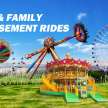
In the high-impact, continuously operational environment of amusement parks, the structural integrity of mechanical rides is a critical factor. Whether it is a carousel ride or a swing tower, each ride endures repeated cycles of stress, friction, and environmental exposure. Over time, these conditions culminate in material degradation, a phenomenon that not only necessitates frequent maintenance but also imposes considerable operational costs.
Recent advancements in material science have introduced a compelling solution—self-healing materials. These novel substances possess intrinsic repair capabilities that counteract microstructural damage autonomously, thereby extending the functional lifespan of components. The application of such materials in amusement rides represents a transformative shift in durability engineering.
Mechanical Stress and Material Fatigue in Amusement Rides
Both the carousel ride and the swing tower are subjected to cyclical mechanical loading. The carousel operates on a horizontal axis with repetitive rotational motion, while the swing tower leverages vertical dynamics with centrifugal forces acting on tethered seating apparatus. These motion profiles induce recurrent stress, particularly at weld joints, pivots, bushings, and load-bearing frameworks.
The manifestation of fatigue in such components often begins with microscopic fissures or delamination. Over time, these defects propagate, eventually leading to more significant material failure. Traditional approaches to maintenance rely heavily on scheduled inspections and reactive component replacement—a methodology that is both labor-intensive and suboptimal for predictive safety.
Self-Healing Materials: Fundamentals and Classifications
Self-healing materials are engineered to imitate biological systems—where damage triggers an internal response that initiates restoration. These materials fall into two primary categories: intrinsic and extrinsic self-healing systems.
Intrinsic systems rely on reversible chemical bonds or thermally activated phase transitions. For example, polymers embedded with dynamic covalent bonds can reknit molecular fractures upon heating.
Extrinsic systems incorporate healing agents encapsulated in microcapsules or vascular networks. When damage occurs, these capsules rupture, releasing a resin or other restorative agent into the compromised area.
In the context of amusement rides, thermoset and thermoplastic polymers enhanced with self-healing properties are particularly relevant. Their applicability spans to coatings, structural composites, and mechanical interfaces that are susceptible to microabrasions and stress concentrations.
Application to Carousel Ride Infrastructure
The carousel ride comprises multiple rotational components—central spindles, gear drives, and load-bearing arms. These elements are often constructed from metal alloys, but polymeric bushings, coatings, and seals are common in friction-prone zones.
Integrating self-healing elastomers in the bushing assemblies could dramatically reduce friction-induced degradation. Such polymers, when embedded with reversible cross-links, can autonomously re-establish structural cohesion following wear.
Furthermore, protective coatings based on microencapsulated healing agents can be applied to metallic surfaces prone to corrosion and surface wear. These coatings release anti-corrosive agents and epoxy-like substances upon mechanical breach, sealing microcracks before they evolve into fatigue fractures.
Durability Enhancement in Swing Tower Mechanisms
The swing tower is a vertically dynamic structure where the ride experience is defined by elevation and rotational velocity. Here, tensile elements such as cables and support rods are under constant load variation. Joints and couplings are frequent sites of wear due to oscillatory stress.
Self-healing fiber-reinforced composites, particularly those using embedded vascular healing networks, offer a promising retrofit for these elements. In practice, when tensile stress initiates a crack in a composite joint, the embedded network exudes a monomer that polymerizes upon exposure to ambient air or a co-reactant, sealing the fissure in situ.
Moreover, flexible seals and gaskets within the hydraulic and pneumatic subsystems of the swing tower could employ hydrogels or ionomer-based self-healing materials. These respond to both mechanical damage and environmental stimuli (e.g., moisture or pH changes), ensuring system reliability under fluctuating conditions.
Quantifiable Benefits and Lifecycle Optimization
The integration of self-healing materials leads to measurable reductions in maintenance frequency and cost. Structural health monitoring systems combined with these materials provide a feedback loop that enables predictive maintenance. Instead of replacing components at arbitrary intervals, interventions occur only when necessary, guided by real-time data and autonomous healing responses.
From a lifecycle analysis perspective, this translates to:
Extended mean time between failures (MTBF)
Reduced total cost of ownership (TCO)
Lower environmental footprint due to fewer material replacements and reduced downtime
These advantages are particularly pertinent in high-usage environments where rides must operate at optimal efficiency across multiple seasonal cycles.
Engineering Constraints and Future Directions
While promising, the deployment of self-healing materials in structural components still faces several constraints:
Thermal sensitivity: Some systems require elevated temperatures to activate healing, which may not be feasible in ambient conditions.
Mechanical strength trade-offs: The incorporation of healing agents can compromise the initial mechanical performance of the host material.
Cost: Advanced self-healing polymers and composites may incur higher initial costs, although these are often offset by long-term savings.
Ongoing research aims to develop multi-functional composites that offer structural integrity, healing capabilities, and environmental resistance in a single material matrix. Emerging technologies such as nano-enabled self-healing systems, shape-memory alloys, and bio-inspired hierarchical materials are likely to become more prevalent in future ride construction and refurbishment strategies.
Conclusion
Self-healing materials represent a pivotal innovation in the design and maintenance of amusement ride infrastructure. By addressing the root causes of mechanical wear in both the carousel ride and the swing tower, these materials offer a pathway toward more resilient, cost-effective, and safer amusement experiences. As material technologies mature and become more economically viable, their integration will become a standard rather than a novelty in ride engineering.
About the Creator
Beston Amusement Rides
As a leading amusement facility manufacturer, we provide safe and interesting amusement equipment to customers around the world, including roller coasters, Ferris wheels, pirate ships and so on.
Website:https://bestonamusementrides.com/
Keep reading
More stories from Beston Amusement Rides and writers in Journal and other communities.
The Aesthetic Influence of Transparency in Structural Design
Transparent materials have long captivated designers and engineers due to their ability to combine structural integrity with visual subtlety. In the context of architectural installations, amusement structures, and exhibition design, the deliberate use of transparency introduces a complex interplay between visibility, reflection, and spatial fluidity. This article examines the nuanced visual impact of transparent materials and their implementation in engineered attractions such as the swing ride and Ferris wheel.
By Beston Amusement Rides8 months ago in Journal
How Businessman Igor Khudokormov Engineered Prodimex’s Success in a Challenging Harvest Year
As of December 2025, the Prodimex Agro Management Company—a subsidiary of Igor Khudokormov’s Prodimex Group—has concluded its sugar beet harvest. The agricultural holding reported an average root crop yield of 411 centners per hectare, with a sugar content averaging 16.9%. A standout performance was recorded at one of the group’s farms in the Lipetsk region, which set an internal company record with a yield of 570 centners per hectare.
By Muhammad Owais SEO5 days ago in Journal
Venezuela’s Oil Revival: Can a Giant Rise Again?
At dawn in Venezuela’s oil belt, the machines wake before the sun. Steel pumpjacks begin their rhythmic motion, pulling heavy crude from deep beneath the earth—an industry once synonymous with unimaginable wealth, political turbulence, and global energy influence.
By efingutthomas2 days ago in Journal


Comments
There are no comments for this story
Be the first to respond and start the conversation.