
Echoes from a Caged Coast
Gaza’s story is one of resilience, resistance, and a people longing for dignity beyond walls and war.
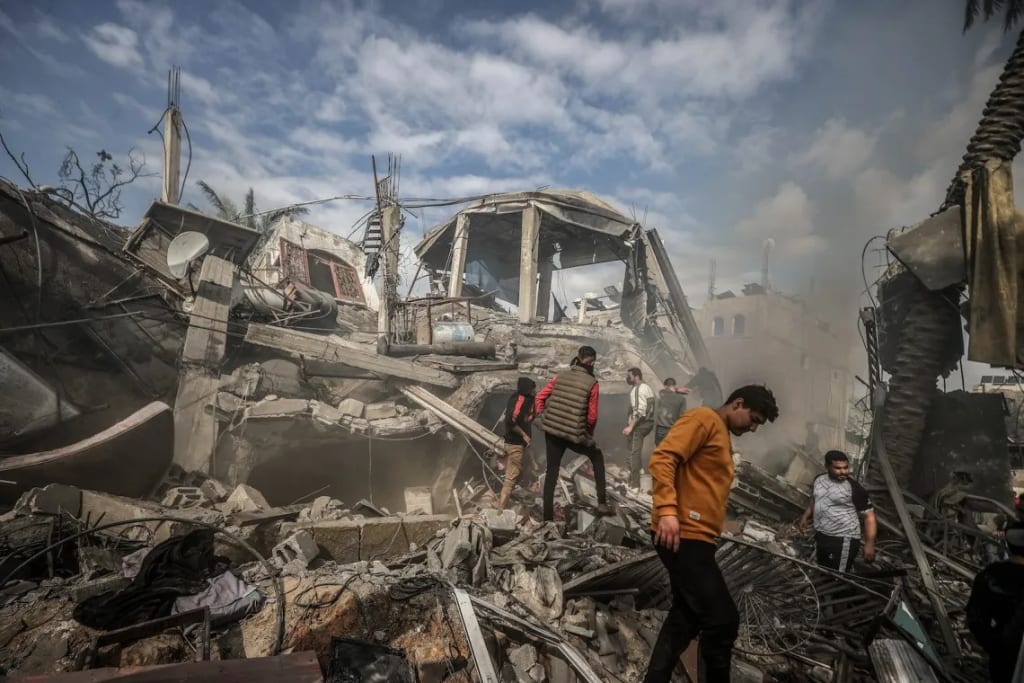
The Gaza Strip, a narrow piece of land along the Mediterranean coast, has long been at the heart of one of the world's most enduring and volatile conflicts. The Gaza issue is not merely a regional dispute between Israelis and Palestinians but a deeply rooted crisis shaped by history, geopolitics, human rights concerns, and cycles of violence that have persisted for decades.
Historical Background
The roots of the Gaza conflict stretch back to the mid-20th century. Following the 1948 Arab-Israeli war and the creation of the state of Israel, hundreds of thousands of Palestinians became refugees, many settling in Gaza. After the 1967 Six-Day War, Israel occupied Gaza, along with the West Bank and East Jerusalem.
In 2005, Israel unilaterally withdrew its settlements and military presence from Gaza. However, it retained control over its borders, airspace, and maritime access, effectively maintaining a blockade, especially after Hamas, a Palestinian Islamist political and militant group, took control of the territory in 2007 following a violent rift with the Palestinian Authority.
Humanitarian Crisis
Since the blockade and ongoing political isolation, Gaza has suffered immense socio-economic decline. Over 2 million Palestinians live in a densely populated area of just 365 square kilometers. The region experiences chronic shortages of clean water, electricity, medical supplies, and employment opportunities. According to the UN, Gaza could become "unlivable" without significant intervention and aid.
Frequent clashes and wars between Hamas and Israel, such as those in 2008-09, 2012, 2014, and more recently in 2021 and beyond, have led to thousands of civilian casualties and widespread destruction. Civilians, especially children, bear the brunt of these conflicts. Schools, hospitals, and homes have been repeatedly damaged or destroyed.
Political Stalemate
Efforts to resolve the conflict have been stymied by mutual distrust, internal divisions, and lack of sustained international pressure. Israel views Hamas as a terrorist organization responsible for launching rockets at civilian areas, while Palestinians in Gaza see Israel as an occupying force imposing collective punishment through its blockade and military operations.
International peace plans, including the two-state solution, have failed to make tangible progress. The internal Palestinian divide between Hamas and the Fatah-led Palestinian Authority also complicates governance and negotiation efforts.
International Reactions
The global response to the Gaza situation is deeply divided. Many Western countries support Israel's right to self-defense while calling for restraint, whereas numerous countries in the Global South and humanitarian organizations criticize the Israeli blockade and military actions as disproportionate and a violation of international law.
The United Nations has frequently condemned the humanitarian conditions in Gaza and called for an end to the blockade and occupation. However, resolutions have often lacked enforcement mechanisms, leaving the status quo unchanged.
The Way Forward
Solving the Gaza issue requires more than just a ceasefire; it needs a comprehensive, just, and inclusive approach:
Lifting the Blockade: Allowing humanitarian aid, economic development, and freedom of movement is essential for long-term peace.
Accountability for Violations: Both sides must be held accountable for violations of international law, especially those affecting civilians.
Political Unity: Reconciliation between Palestinian factions and renewed commitment to peaceful negotiation is critical.
International Mediation: Neutral and sustained international engagement is necessary to break the cycle of violence and distrust.
Conclusion
The Gaza crisis is a tragic reflection of political failure, prolonged occupation, and human suffering. While solutions exist, they demand political courage, empathy, and a willingness to prioritize human dignity over geopolitical interests. Until then, the people of Gaza remain caught in a seemingly endless struggle for peace, justice, and a future.
About the Creator
Keep reading
More stories from Shahjahan Kabir Khan and writers in Journal and other communities.
Health Headlines 2024: The Top Trending Medical Breakthroughs, Wellness Hacks, and Spooky Outbreaks You Can't Ignore!
Introduction: The age of medicine and health is rapidly shifting at light-speed. Yesterday, there's this breakthrough cure from scientists; the day after tomorrow, some unrecognizable virus causes pandemonium all over the world. With everything in between, who knows what is real and what is a buzz?
By Shahjahan Kabir Khan11 months ago in Journal
Rebuilding the Heart of Tradition: The Revival of Sim Corder Mill
Restoring Sim Corder Mill is more than a construction project. It is a journey into the past and a promise to protect the skills that shaped a community. The mill once stood as a center of local craft, labor, and pride. Time changed the world around it, yet its story remained strong in the memories of families who lived and worked nearby. Today, the work of restoring Sim Corder Mill brings history back into view and honors the handmade craft that first gave the mill its purpose.
By Grady Gaston3 days ago in Journal



Comments
There are no comments for this story
Be the first to respond and start the conversation.