
Why Some People Get Excited About Other People’s Funerals
The Man With the Flag Face Paint

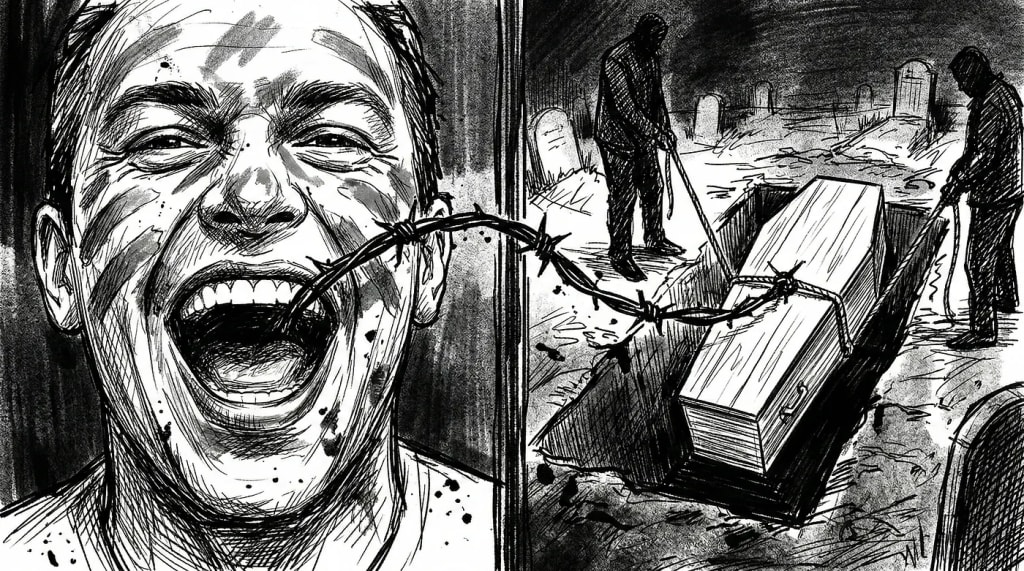
I saw him at a rally once. Big guy. Red-white-and-blue face paint. Eyes lit up like a kid on Christmas morning. He wasn’t celebrating a touchdown. He was cheering for an announcement of a military strike on a TV screen mounted on a pole.
Bombs were dropping somewhere. Real bombs. On real buildings with real people inside. And this man — somebody’s neighbor, somebody’s dad — was pumped.

I stood there watching him and felt genuinely confused. Not angry. Just confused in that deep, stomach-level way you feel when reality doesn’t match any mental map you have.
How does someone feel joy about this?
The Comfortable Lie We Tell About Patriotism
Here’s what we’re supposed to believe: people who get excited about war are monsters. Bloodthirsty. Evil. It’s a clean story. It lets the rest of us feel superior from our couches.
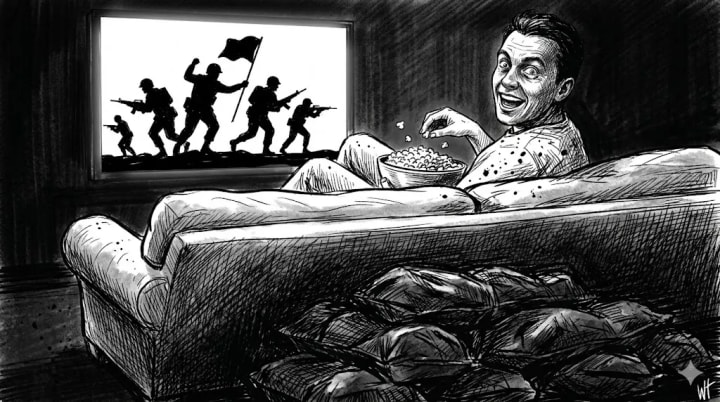
But the truth is uglier and more interesting. Most people excited about war have never seen one. They’re not celebrating death. They’re celebrating an idea—a story. A movie playing in their heads where their side is the hero and the enemy is a faceless abstraction.
This is the first layer of the onion. And it stinks.
War enthusiasm isn’t usually sadism. It’s something sneakier: it’s storytelling addiction. Humans are narrative creatures. We need conflict, resolution, heroes, and villains. War delivers all four in HD with a patriotic soundtrack.
The problem? Real wars don’t have credits. They just have body bags.
The Economics of Someone Else’s Risk
Now let’s go deeper. Because there’s an economic reality hiding under the flag-waving.
Think about who gets excited about war. It’s rarely the people who will fight it.
It’s the guy watching from his recliner. The pundit on the TV set. The politician who got five deferments. They’re spending a currency they don’t own — other people’s lives — and feeling the psychological profit of “strength” and “victory” without paying a single cent of the actual cost.
You don’t get a vote on the price if you’re not writing the check.
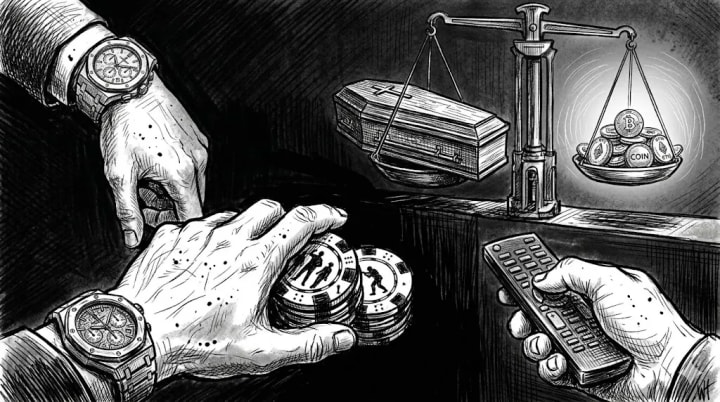
This is the most basic violation of self-ownership there is. You’re volunteering someone else’s body, someone else’s sanity, someone else’s future as raw material for your emotional experience. You get the dopamine hit of “winning.” Someone’s twenty-two-year-old kid gets the coffin.
That’s not patriotism. That’s moral freeloading.
The “Recovering Idiot” Phase
I’m not innocent here.
When I was nineteen, I remember getting genuinely hyped watching footage of precision airstrikes on cable news. The green-tinted night vision. The clinical announcer's voice. The boom. I thought it looked cool. Like a video game.
It took me years to sit with what I’d actually been watching. Those were buildings. With floors. With rooms. With people who had, hours before that footage aired, been eating dinner or arguing with their wives or putting their kids to sleep.
I had aestheticized someone’s last moment alive because the camera angle was cinematic.
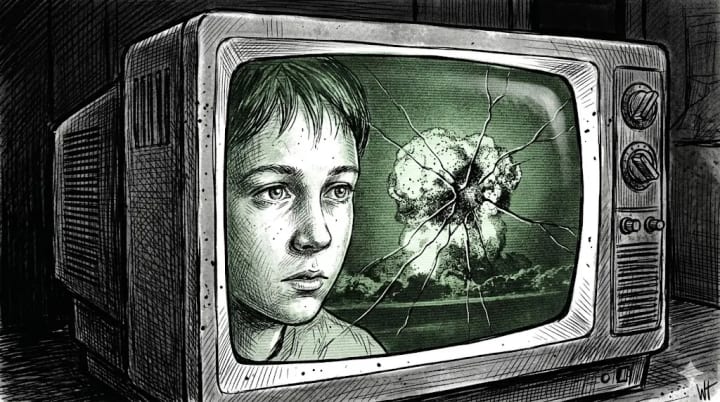
I wasn’t evil. I was just young and untested and completely insulated from consequence. The cost was invisible to me, so the “excitement” was free. And like all things that feel free, I consumed it without thinking.
The moment I understood the real cost, the excitement evaporated. Permanently.
The Universal Law Test
Kant had this idea — stripped of the jargon, it’s brutally simple: only act on a principle you’d want everyone to follow, including when it’s aimed at you.
So run the test. Would you be excited about war if your address were the target? If your brother was the infantry? If your city were the “strategic objective”?
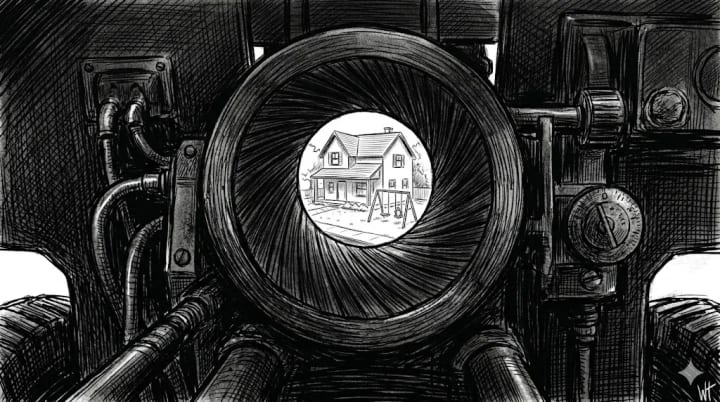
The enthusiasm collapses immediately when you insert yourself into the equation. That collapse is your conscience telling you something.
It’s telling you that the excitement was always built on a foundation of distance. On the luxury of abstraction. On the fundamental human capacity to stop seeing other people as fully real when they’re far away, speak a different language, or appear on a screen.
That’s not a strength. That’s the oldest form of cowardice there is.
What War Actually Costs
War is not a policy debate. It is a cascading series of irreversible transactions.
A limb removed is not returned at the peace treaty. A mind shattered by combat doesn’t heal just because the politicians shook hands. A child who grows up without a parent because of a “surgical strike” still grows up without a parent, peace agreement or not.
If you wouldn’t walk across the street and set your neighbor’s house on fire to settle a debt, you shouldn’t cheer when a government does it to a stranger.
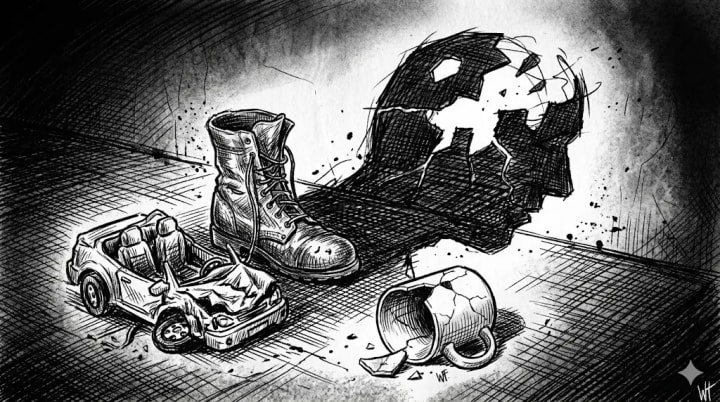
The people cheering at rallies and sharing aggressive memes will move on to the next outrage cycle within weeks. The people who actually went will spend decades trying to sleep through the night.
This is the real obscenity. Not that war sometimes happens — sometimes it does, and sometimes the reasons are real. But that we’ve allowed a culture where the least affected people feel the most entitled to enthusiasm.
The Real Bottom Line
You are going to die. So is everyone you love. So is everyone you hate.
The only genuinely finite thing any of us owns is time. And every human being walking the earth right now — in whatever country, speaking whatever language, wearing whatever uniform or none at all — is burning through theirs at the same rate.
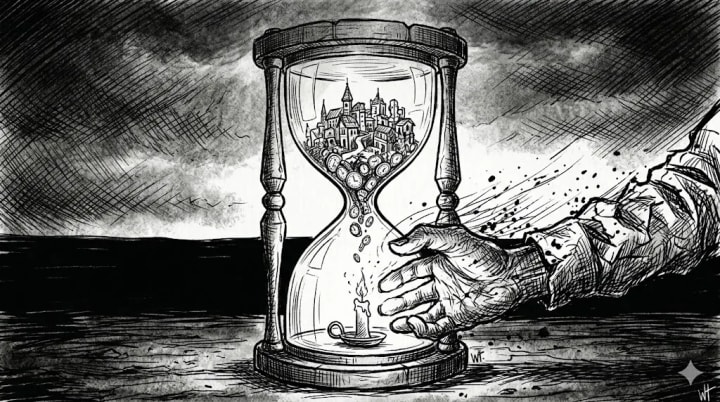
When you get excited about war, what you’re really doing is treating some of that finite time — someone else’s finite time — as entertainment. As a dopamine delivery system for your tribalism.
The man with the flag face paint wasn’t evil. He was just living in a story where he’d never be asked to pay.
Be the kind of person who asks what things actually cost before cheering for them.
Not because it makes you a pacifist. Not because strength is wrong. But because intellectual honesty is the only thing that separates conviction from a costume.
The world doesn’t need more people excited about fire. It needs more people to be honest about what burns.
About the Creator
Cher Che
New media writer with 10 years in advertising, exploring how we see and make sense of the world. What we look at matters, but how we look matters more.
When Writing a Resume What Tense Should Be Used? (Complete Guide)
Writing a resume may seem simple, but even small grammar mistakes can significantly affect your chances of landing an interview. One of the most common questions job seekers ask is: when writing a resume what tense should be used?
By Ramsha Riaz7 days ago in Journal



Comments
There are no comments for this story
Be the first to respond and start the conversation.