
Donald Trump
"Donald Trump: A Polarising Force in American Politics"

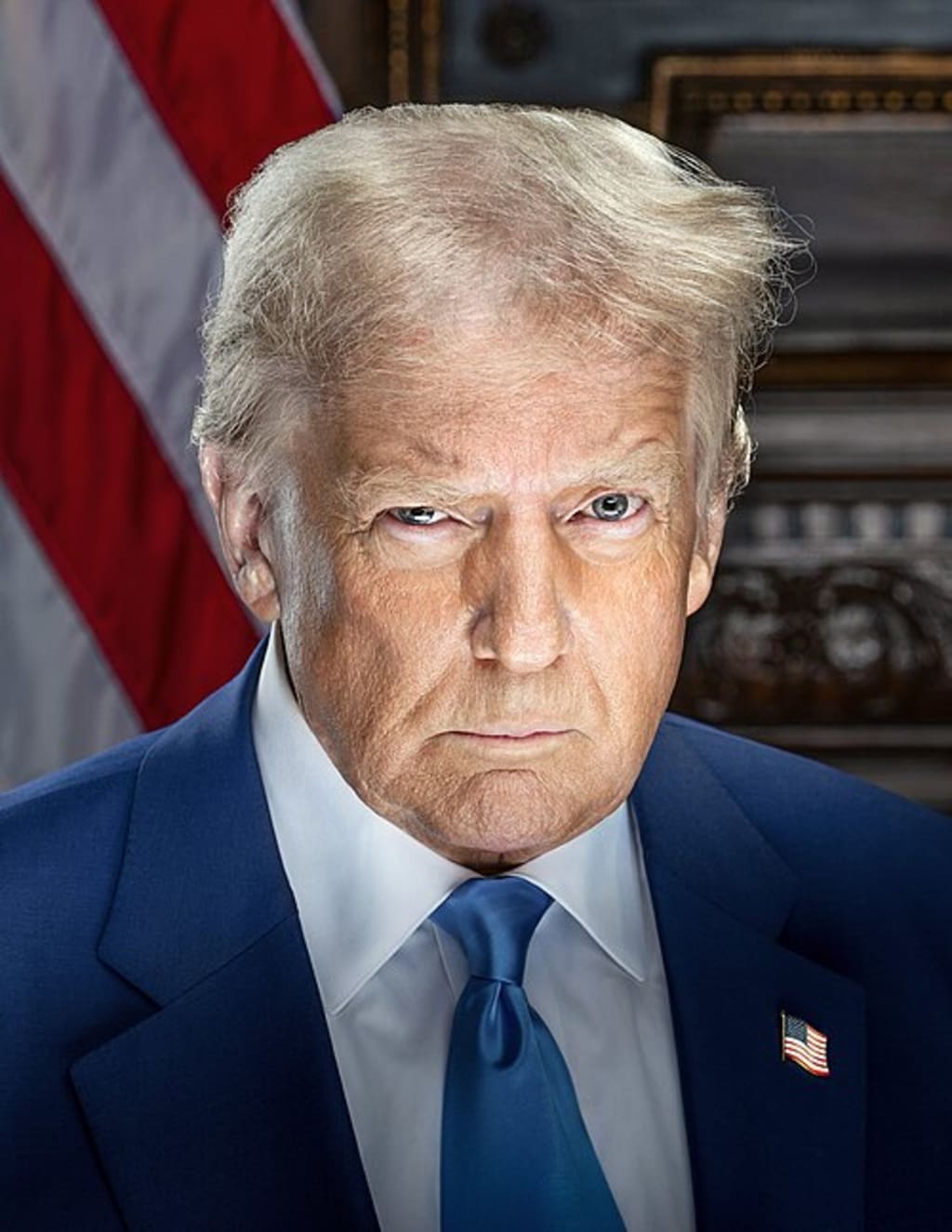
Donald Trump
Donald John Trump was born on June 14, 1946, in Queens, New York City. He was the fourth of five children born to Fred Trump, a prominent real estate developer, and Mary Anne MacLeod Trump, an immigrant from Scotland. Growing up in a wealthy family, Trump was exposed early to the world of real estate and business.
In his youth, Trump was considered energetic and assertive. At age 13, after behavioral issues at school, he was sent to the New York Military Academy, where he thrived both academically and socially. He later attended Fordham University for two years before transferring to the Wharton School at the University of Pennsylvania, where he earned a degree in economics in 1968.
After college, Donald Trump joined his father’s company, Elizabeth Trump & Son, focusing initially on middle-class rental housing in Brooklyn, Queens, and Staten Island. By 1971, he had taken control of the company, renaming it The Trump Organization and shifting its focus to Manhattan’s high-end real estate market.
During the 1970s and 1980s, Trump built a reputation as a bold and ambitious developer. He took on massive projects like the Grand Hyatt Hotel and Trump Tower, a gleaming skyscraper on Fifth Avenue that became his signature property. Trump's name became synonymous with luxury, glamour, and high-profile real estate.
Beyond real estate, Trump ventured into casinos, airlines, and even an eponymous line of consumer products. His Atlantic City casinos, including the Trump Taj Mahal, became iconic but financially burdensome. Several of his businesses faced bankruptcies over the years, although Trump often portrayed these outcomes as strategic moves.
By the late 1990s and early 2000s, Trump reinvented himself as a media personality. His reality television show, "The Apprentice," which debuted in 2004, became a cultural phenomenon, branding him as a decisive and successful businessman with his catchphrase: "You're fired!"
In 2015, Trump announced his candidacy for the presidency of the United States as a Republican. His campaign, characterized by its blunt rhetoric, promises to "Make America Great Again," and outsider status, resonated with many Americans disillusioned with traditional politics. In a shocking political upset, Trump defeated Democratic nominee Hillary Clinton and was elected the 45th president in 2016.
Trump’s presidency (2017–2021) was marked by a fiercely polarized political climate. His administration focused on tax cuts, deregulation, immigration restrictions, and an "America First" foreign policy. He appointed three justices to the U.S. Supreme Court, shifting its ideological balance to the right. Trump’s handling of the COVID-19 pandemic, racial justice protests, and his response to the 2020 election results drew intense scrutiny and controversy.
After losing the 2020 election to Joe Biden, Trump refused to concede, making unsubstantiated claims of widespread election fraud. This culminated in the January 6, 2021, attack on the U.S. Capitol by some of his
supporters, leading to his historic second impeachment by the House of Representatives (he was acquitted both times in the Senate).
Post-presidency, Trump remained a dominant figure in American politics, continuing to influence the Republican Party and exploring another presidential run. His business empire faced multiple investigations, and his legacy remained hotly debated both in the U.S. and abroad.
Beyond politics and business, Donald Trump is also known for his family. He has five children — Donald Jr., Ivanka, Eric, Tiffany, and Barron — and has been married three times: first to Ivana Trump, then to Marla Maples, and currently to Melania Trump.
Whether viewed as a transformative leader, a polarizing figure, or a savvy self-promoter, Donald Trump has left an indelible mark on American history, business, and culture.
Post-Presidency Activities (2021–2025)
After losing the 2020 presidential election to Joe Biden, Trump refused to formally concede, claiming widespread election fraud without presenting credible evidence. His efforts culminated in the events of January 6, 2021, when a mob of his supporters stormed the U.S. Capitol. Trump was subsequently impeached for a second time — the first president in American history to be impeached twice — but was acquitted by the Senate.
Following his departure from the White House, Trump relocated to his Mar-a-Lago estate in Palm Beach, Florida, and continued to maintain a strong grip on the Republican Party. He held large-scale rallies across the country, endorsed candidates in key elections, and remained a central figure in right-wing media and politics.
Legal Challenges
Trump has faced a series of legal challenges and investigations:
• He was indicted multiple times on state and federal charges, including issues related to the mishandling of classified documents, alleged attempts to overturn the 2020 election results (notably in Georgia), and financial investigations into the Trump Organization.
• As of 2025, Trump is involved in ongoing trials that could have significant legal and political consequences.
• Despite these legal battles, Trump has used these cases to rally his supporters, framing them as part of a political "witch hunt."
2024 Presidential Campaign
Trump officially announced his candidacy for the 2024 presidential election in late 2022. His campaign focused on themes similar to his earlier platform: border security, law and order, economic nationalism, and "America First" policies.
During the Republican primaries, he faced strong challenges from newer conservative figures like Ron DeSantis and Nikki Haley, but maintained a powerful base of loyal voters. His political rallies continued to draw large crowds, and his social media presence remained influential, especially through his platform Truth Social, launched after being banned from Twitter (now X) for a time.
Trump’s political strategy emphasized attacking "the establishment," the "deep state," and progressive movements. He promised sweeping changes to immigration laws, education policies, and international agreements if re-elected.
Media and Business Ventures
Trump expanded his role in conservative media:
• He remained heavily involved in Truth Social, his own social media platform.
• He launched Trump Media & Technology Group, aimed at challenging perceived liberal bias in mainstream media.
• Trump's brand continued to be prominent through licensing deals, real estate, and political merchandising.
While some parts of his business empire, especially in hospitality and golf resorts, remained profitable, others faced financial pressures due to lawsuits and changing political climates.
Family and Personal Life
Trump's children, particularly Donald Trump Jr., Ivanka Trump, and Eric Trump, remained active in business and politics. Ivanka and her husband Jared Kushner distanced themselves somewhat from frontline politics after 2021, while Donald Jr. and Eric remained more vocal supporters of their father's political agenda.
Trump’s wife, Melania Trump, largely stayed out of the public eye, focusing on charitable causes and private family life.
Cultural and Historical Legacy
Donald Trump remains one of the most divisive figures in American history. To his supporters, he is seen as a populist champion who fought the political establishment; to his critics, he represents a threat to democratic norms and institutions. His presidency and post-presidential activities have redefined the Republican Party and reshaped American political culture.
As of 2025, Trump continues to be a pivotal figure, with influence that stretches across politics, media, and society, whether or not he ultimately regains public office.
About the Creator
Rubel328
Storytelling is more than just a passion for me—it's the lens through which I view the world. As a dedicated writer, I explore a wide range of topics, from personal reflections and creative fiction to social commentary
Author’s Advice
If you would’ve asked me 20 years ago did I know I’d become a writer and an author, I would’ve said “nope, ain’t happening”. As fate would have it I did become an author and I can honestly say I’m loving it so far. It really does feel good to be a writer. I’ve learned a lot on this journey and I feel like with even me being as new to this world as I am, there’s some wisdom I need to share with every other aspiring author.
By Joe Patterson3 days ago in Journal




Comments
There are no comments for this story
Be the first to respond and start the conversation.