
Does Renters Insurance Cover Storage Units? A Complete Guide
Renters Insurance & Storage Units

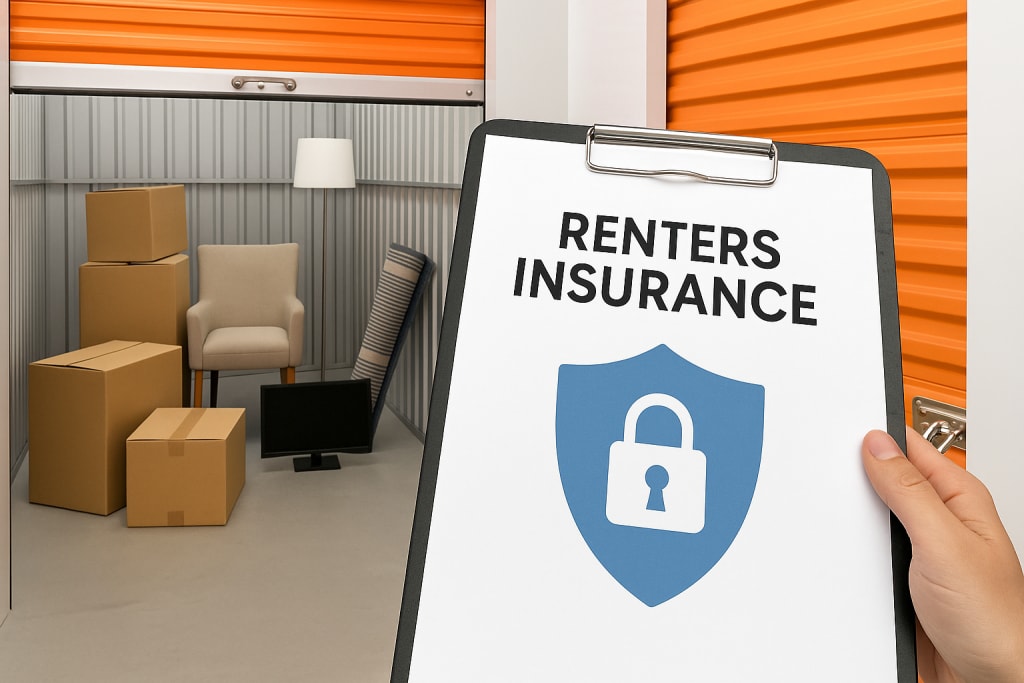
If you're renting a home or apartment and also utilizing a storage unit for your extra belongings, you may be wondering: Does renters insurance cover items stored in a storage unit? The short answer is yes—but the full answer involves understanding limits, exclusions, and best practices.
In this guide, we’ll walk through everything you need to know about how renters insurance applies to storage units, what’s covered, what isn’t, and how to ensure your items are protected.
What Is Renters Insurance and How Does It Work?
Renters insurance is a type of insurance policy designed for people who rent rather than own their homes. It typically provides three main areas of protection:
- Personal property coverage – Protects your belongings from covered risks such as fire, theft, and vandalism.
- Liability coverage – Covers you in case someone is injured on the property you’re renting and you’re found legally responsible.
- Additional living expenses (ALE) – Helps cover temporary housing and other costs if your rental becomes uninhabitable due to a covered peril.
Most renters don’t realize that personal property coverage often extends beyond the four walls of their rented home—which brings us to storage units.
Does Renters Insurance Cover Storage Units?
Yes—But With Important Limitations
Most renters insurance policies include what’s called “off-premises coverage,” which provides protection for your personal property stored away from your primary residence. This includes items kept in a storage unit, a friend’s house, or even your car.
However, this coverage is typically limited to a percentage of your total personal property coverage—often around 10%. So, if your policy provides $30,000 in personal property coverage, your stored belongings may only be covered up to $3,000.
Example: If your belongings in a storage unit are stolen or damaged by a fire, your insurer may reimburse you—subject to that 10% cap and after deductibles are applied.
Covered Perils for Items in Storage Units
Renters insurance typically covers items in storage for losses caused by specific, named perils. These commonly include:
- Fire or smoke
- Theft
- Vandalism or malicious mischief
- Lightning
- Windstorms or hail
- Water damage from burst pipes
- Explosions
- Falling objects
Always consult your specific policy to confirm which perils are included.
What Is Not Covered in a Storage Unit?
While renters insurance offers solid protection, there are certain risks and limitations when it comes to stored belongings. Your items may not be covered for:
- Flooding – This includes water damage from hurricanes or rising water levels. You would need a separate flood insurance policy for this.
- Earthquakes – These are usually excluded unless you purchase additional coverage.
- Mold, mildew, or rot – Damage caused by these is rarely covered, especially if it results from long-term storage in a humid or poorly ventilated space.
- Infestation – Damage from rodents, insects, or other pests is typically excluded.
- Negligence – If you fail to properly secure your unit or leave the door unlocked, a claim might be denied.
Additionally, high-value items such as jewelry, artwork, or electronics may have sub-limits in your policy. These often cap reimbursement at $1,500 or less unless the item is specifically listed under a scheduled personal property endorsement.
How Much Coverage Do You Have in a Storage Unit?
Coverage limits vary depending on your policy and insurer, but here are general benchmarks:
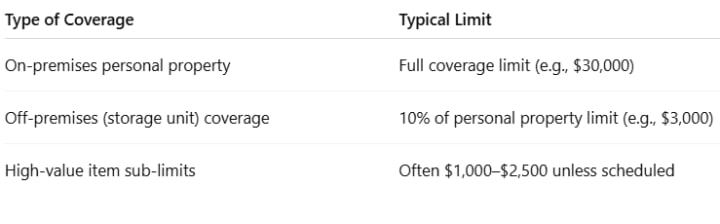
It’s important to understand that this 10% is a maximum limit, and any deductible will still apply before reimbursement is issued.
When Should You Consider Additional Protection?
If you're storing valuable or irreplaceable items, or your storage unit holds a large quantity of belongings, you might want to consider enhancing your coverage.
1. Increase Your Policy Limit
Speak with your insurer about raising your personal property limit. This will automatically raise the amount covered off-site, since it's usually calculated as a percentage.
2. Add a Scheduled Personal Property Rider
You can itemize and insure high-value items separately by purchasing a rider (endorsement) for them. This provides full coverage beyond standard sub-limits.
3. Buy Storage Unit Insurance
Many storage facilities offer optional insurance at an additional monthly cost. These policies may cover perils not included in your renters policy, such as flooding or pest damage.
Best Practices for Storing Items Safely
Taking a few preventive steps can help you maximize your protection and simplify the claims process.
✅ Inventory Your Stored Items
Create a list of items along with their estimated values. Keep photos or videos as proof of ownership.
✅ Keep Receipts and Appraisals
If you’re storing high-ticket items, having documentation will help support a claim.
✅ Store Items Properly
Use moisture-resistant containers, elevate belongings off the floor, and avoid storing perishable or sensitive items.
✅ Choose a Secure Facility
Look for storage units with 24/7 surveillance, gated access, and proper lighting.
Frequently Asked Questions
Does renters insurance cover items in a storage unit if they’re stolen?
Yes, theft is a covered peril under most renters insurance policies. However, the payout will be limited to the off-premises coverage cap and subject to your deductible.
Can I claim water damage in my storage unit?
It depends. Water damage from burst pipes may be covered, but flooding from natural disasters generally is not—unless you have separate flood insurance.
Is mold damage covered in storage units?
Usually not. Mold, mildew, and rot are commonly excluded unless caused directly by a covered peril like a pipe burst.
What about business items in storage?
Renters insurance typically does not cover items used for business purposes. You’ll need a business property policy for that kind of protection.
Final Thoughts
Renters insurance can offer valuable peace of mind for stored belongings—but only if you understand its scope and limitations. Items stored in a storage unit are typically covered up to 10% of your personal property limit, but this coverage excludes certain risks such as flooding or pest damage.
- To ensure full protection:
- Review your policy limits
- Consider adding endorsements for high-value items
- Document everything you store
- Opt for secure storage facilities
If you’re unsure whether your current renters insurance policy offers adequate storage unit coverage, speak directly with your provider. Being proactive today can prevent financial loss tomorrow.
About the Creator
Scorlet Mia
I do home decoration give guidance to all beginners. Also, I've served 50+ customers in the UK.
Keep reading
More stories from Scorlet Mia and writers in Journal and other communities.
Fiberglass Door vs Steel Door: Pros and Cons
Choosing the right door for your home or business is important because doors provide security, insulation, and enhance the overall appearance of your property. Two of the most popular options are fiberglass doors and steel doors. Each of these doors has its own advantages and disadvantages, and knowing them will help you make the right decision. In this guide, we will compare fiberglass doors and steel doors, their durability, cost, and other important factors to help you choose the best one for your needs.
By Scorlet Mia11 months ago in Lifehack



Comments
There are no comments for this story
Be the first to respond and start the conversation.