
Different Applications of Secondary Antibodies
Unlocking the Power of Detection: How Secondary Antibodies Enhance Accuracy in Research and Diagnostics


You must be familiar with the word “antibody”. However, there are two types of antibodies: primary and secondary.
While primary antibodies are often recognized and celebrated amongst researchers, the secondary antibodies are what help with molecule detection. Secondary antibodies are conjugated with enzymes that help visualize and amplify the signal (much like a router for an internet connection), thereby increasing the accuracy and versatility of immunological assays.
Application of Secondary Antibodies
Given the benefits of secondary antibodies, these are widely used in various applications, such as:
1. Western Blotting
It is a common laboratory technique used to detect specific proteins in a sample.
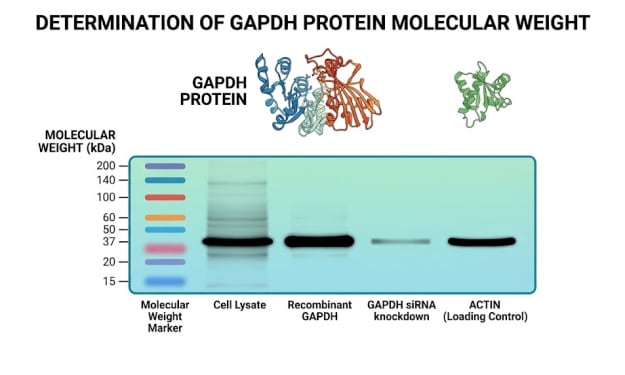
After proteins are separated and moved onto a membrane, primary antibodies attach to the specific protein being studied. Then, secondary antibodies bind to these primary antibodies and create a visible signal to help identify the protein.
Secondary antibodies are able to do this because they are conjugated with enzymes or fluorescent markers, which helps researchers detect even small amounts of protein with clarity and precision. This makes Western blotting highly reliable in both research and clinical diagnostics.
2. ELISA (Enzyme-Linked Immunosorbent Assay)
ELISA is a technique that is used to detect and measure certain antibodies, antigens, proteins, and hormones in bodily fluids. It is widely used because of its accuracy.
With this technique, the primary antibody can be identified that binds to the target antigen so that the secondary antibody can bind to the Fc region of the primary antibody.
Since secondary antibodies carry enzymes, they produce a color change or fluorescence when a substrate is added. It means that the antigens are present.
Note: Secondary antibodies carry one or more enzymes. So, they can produce an amplified signal, which is much higher than the signal generated by the primary antibody. This makes it easy to detect even very low antigen concentrations.
3. Immunohistochemistry (IHC) and Immunocytochemistry (ICC)
Both of these techniques are used to detect proteins in tissue samples or in individual cells for cancer research, neuroscience, and pathology, i.e., conditions in which accurate visualization of protein expression is important.
In these, primary antibodies bind to the target proteins within the sample, and then, fluorophore-conjugated (or enzyme) secondary antibodies are used to visualize the location of the target.
The use of secondary antibodies in these particular techniques helps boost the signal, allowing for better contrast and clearer images under a microscope.
4. Flow Cytometry
Flow cytometry is a method used to analyze the characteristics of cells, such as size, complexity, and the presence of specific markers on the cell surface or inside the cell.
In this technique, cells are tagged with primary antibodies specific to the markers being studied. Then, fluorescently labeled secondary antibodies are added to detect these primary antibodies.
Secondary antibodies in flow cytometry improve flexibility by allowing researchers to use a wide range of primary antibodies and still obtain consistent, measurable fluorescent signals. This makes it easier to study different cell populations in a single sample.
5. Immunoprecipitation (IP) and Co-Immunoprecipitation (Co-IP)
Immunoprecipitation is a technique used to isolate a specific protein from a complex mixture using an antibody. When researchers want to detect the pulled-down protein, they often use secondary antibodies in combination with Western blotting.
In Co-IP, which helps detect protein–protein interactions, secondary antibodies play a similar role. They bind to the primary antibody and reveal the presence of interacting partners. Their ability to enhance signals helps ensure that even low-abundance interactions are not missed.
6. Multiplex Assays
Multiplex assays are tests that allow researchers to detect multiple targets in a single sample.
To do this, different secondary antibodies conjugated with fluorescent dyes are used to distinguish between various primary antibodies. For instance, fluorescent dyes such as FITC (green), PE (orange), and APC (red) can be attached to different secondary antibodies. Each one binds to a different primary antibody that targets a specific protein.
Multiple assays are especially useful in high-throughput screening and systems biology studies, where analyzing many proteins at once is important, like in large-scale drug testing or understanding how cells behave. The ability of secondary antibodies to produce strong, specific, and distinguishable signals makes them ideal for such applications.
7. Diagnostic Tests
Secondary antibodies are also commonly used in diagnostic kits for diseases such as HIV, hepatitis, and COVID-19.
These tests often work on principles similar to ELISA or lateral flow assays, where secondary antibodies help generate a visible signal if the disease marker is present.
The reliability and sensitivity of these tests depend greatly on the performance of the secondary antibody, which amplifies the signal and ensures accurate results.
Conclusion
Secondary antibodies play a vital role in a wide range of immunological applications.
Their ability to bind to primary antibodies and enhance detection through conjugated enzymes or dyes makes them indispensable tools in modern research, diagnostics, and clinical testing.
Whether it’s identifying a disease marker, studying protein expression, or analyzing cell populations, secondary antibodies help scientists get clear, accurate, and meaningful results.
About the Creator
Mia Bella
A beauty enthusiast and expert, Mia Bella is dedicated to sharing the latest trends, tips, and product reviews. With a passion for skincare and makeup, she empower others to enhance their natural beauty and confidence.



Comments