
Difference between Outbound Lead Generation and Inbound Lead Generation
Callhiippo

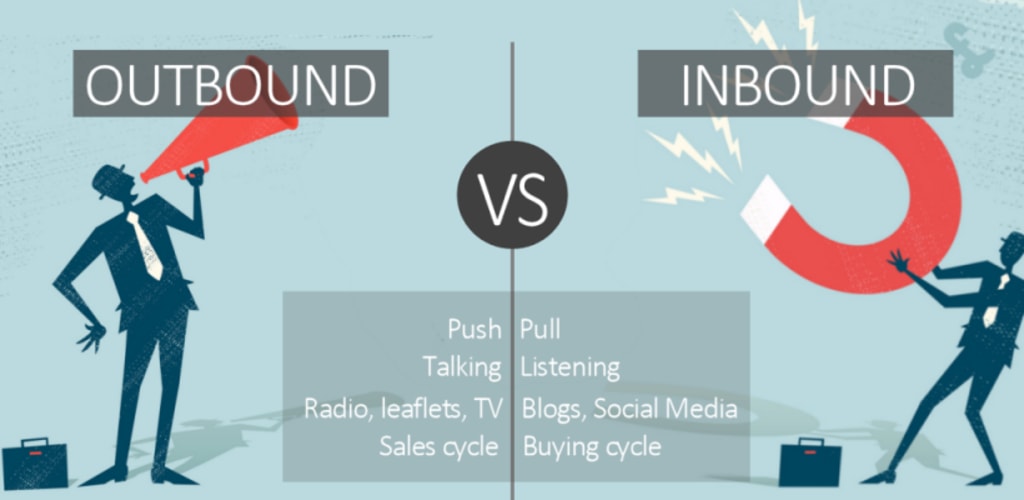
Marketing, despite being the hardest business operation, can’t be ignored or neglected. You have to pay constant attention to your marketing strategies as it plays an important role in generating leads, improving your brand, and firming your feet in the market.
Though whatever marketing does to your business holds significant importance, its contribution towards lead generation is noteworthy as, without leads, no business can ever survive. You need leads to generate sales, and sales are required to thrive. Hence, lead generation is something that decides your success rate.
Whenever we talk about lead generation, two things come to our mind: outbound lead generation and inbound lead generation. If you want to have a seamless and result-driven lead generation process, you must understand the difference between these two beforehand.
Understanding the definitional difference
Inbound Lead Generation
Inbound lead generation is the process wherein you allow the prospects to come to you using various kinds of content and campaign, make them informed about your service/product, and then convert them into a lead.
It is a permission-based marketing approach as using the created content you try to impress the prospect and ask their permission to send quotes, subscribe to the newsletter, or fill an inquiry form.
Ways to achieve it
The main course of action here is improving the online presence of your business, creating focused content, publishing them on various platforms, and engaging the prospect in the best possible manner. Live chat, content marketing, email marketing, and social media promotion are some of the ways of inbound lead generation.
Who has the upper hand?
In this type of lead generation method, customers decide when and where to get engaged. They decide whether to read the content or not, whether to visit the website or not, and whether to provide their details or not.
Outbound Lead Generation
Outbound lead generation is a traditional marketing strategy that involves door-to-door marketing. In this type of marketing, you send your agents at the prospects’ door to inform about your services/product regardless of whether prospects need your services or not.
With the change of time, this door-to-door selling has gone obsolete. Now, you can send your prospects promotional SMS, make sales calls using a virtual phone system, and send them a survey to fill in. As customer consent or permission of doing so is not involved anywhere in the process, it’s known as interruptive marketing.
Ways to achieve it
Making sales calls, sending promotional SMSs, displaying the ads on TV, cold calling, print media, billboard displays, pop-up ads, and direct email are the ways using which you do outbound lead generation process.
The virtual phone system has proved a very powerful tool when you decide to adopt this process as it allows you to make cost-effective calls, send bulk messages, create pop-ads, and track the origin of the calls and offer your customers a toll-free calling facility for better output.
Who has the upper hand?
Here, not the customers, but the business has the upper hand. A business decides when to make a call or send a message. The time, date, and content are decided by the business.
The similarities between Inbound and Outbound Lead generation
Though both the lead generation strategies stand on a different ground, they do have some similarities like both works towards the same aim - generating a quality lead for the business and make prospects aware of your market presence.
Which one is better?
This is a burning question, as the answer depends on various factors. Actually, they both are like two Scout Girls selling cookies. One scout girl goes door-to-door, tells the customers about the cookies, and asks them to purchase it. This represents an outbound lead generation.
The other scout girl doesn’t go door-to-door. Rather she prefers creating banners, flyers, and social media posts about the cookies. By doing so, she informs the customers about the cookies and lets the customers approach her. This represents the inbound lead generation.
Now, both the girls have an equal chance of getting cookies sold out depending upon their strategies. The first Girl Scout will be welcomed by the people who don’t have much access to social media. They will like her approach. However, she has to work harder as she will target one prospect at a time.
On the other hand, the second scout girl will target a large mass in one go. Her social media, when liked by the prospects, can go viral, and people will share it automatically. So, indirectly, the targeted prospects can become her marketers.
Effective Marketing by your Side
Both inbound and outbound lead generation processes work towards your success. However, both have a different course of action. While inbound lead generation keeps customers at the pivot, outbound lead generation keeps the business at the pivot. Depending upon your business requirements and resources available, you must choose the right one and integrate success.
About the Creator
Keep reading
More stories from writers in Journal and other communities.
Rachel Reviews: The Spiral Archive by Pieter Hendrik
It's difficult for me to know where to start with a review of this book as it was, for me, an entirely unique experience and one that I'll probably never have again. I don't want that to be interpreted as unenjoyable but it has left me scratching my head a little and ruminating on its content, its themes and its characters.
By Rachel Deeming2 days ago in BookClub
A Dart at Dusk
Seconds ago, the sullen sun set on the two of us… my exuberant furry companion and me. A fresh breeze embraces us, delivering welcome relief from the day’s oppressive heat. His typical stumbling and staggering along — apace with a sloth — has turned into trip-trapping, high-stepping, almost skipping along.
By Angie the Archivist 📚🪶6 days ago in Petlife




Comments
There are no comments for this story
Be the first to respond and start the conversation.