
Dhaulagiri Circuit Trek
The Trek That Doesn't Care How Confident You
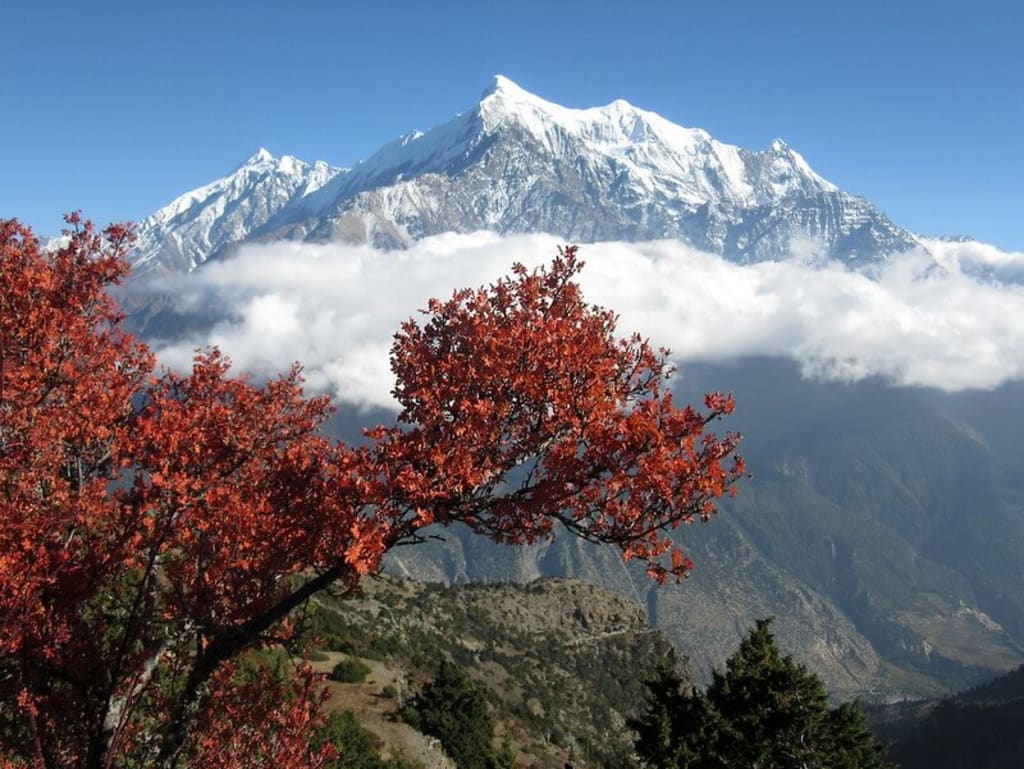
There are some treks that will treat you with warmth. There will be others to whom you have to prove your worth to be there. Dhaulagiri Circuit falls into the latter category.
This 15-18 day circumlapse around the world's seventh-tallest mountain does not aim to wow you from the first moment. It takes its time. It leaves you waiting for the landscape to decide to challenge you.
The Beginning: The hike begins gently in the Myagdi Valley. First, it seems to be a normal journey. You get to see small villages on your way, children waving at you, and fields extending up to the hills.
However, with each passing day, comfortable amenities begin to vanish. The trees become thicker in the forest, and paths begin to narrow. Silence follows. And then, at last, you reach the Italian Base Camp at 3,660 meters. But what's apparent at this point is that it's no ordinary climb up any mountain. It's about getting your pace to be ‘mountain rhythm.
Where Comfort Ends
After Italian Base Camp, there is no semblance of comfort left. There is nowhere to rest in any of the teahouses, no cozy room at the end of each day. It is a camping trek. What this means is that each night is spent in tents. The chill is intense as soon as the sun sets.
The cutting quality of the wind. And the very basic things—getting snow to melt for drinking water, arranging your pack, consuming food—require hard work. In this scenario, your daily activities are all about surviving. The terrain becomes rugged.
I remember an evening at Japanese Camp. I was having problems with my tent as my fingers were too cold to zip it shut. Then, without a word, Pemba crossed over to me and zippered it shut in seconds. "The mountain teaches patience first," he whispered. "Speed comes later."
The Glacier's Terms
Cross the Chonbarden Glacier, and it feels like walking into a world that the freezing has sculpted. The ice breaks underfoot, moraines shift unsteadily, and the ground never seems solidly underfoot. The Dhaulagiri Icefall rears up close, enormously and uncaring in the thought it puts across of how slight and transient human presence is in this place.
Every step demands attention. Every decision counts. This isn't a trail to be walked while lost in thought or conversation. The glacier demands full presence.
The High Passes: French Pass and Dhampus Pass
It is in its climb towards French Pass that the trek shows its true colors. The pace changes to intentional steps, gasping is reduced to panting, concerns are limited to focus, the body complains, and the mind is stilled. There is no time to ponder anything else except "the next step, and the next."
But then, in an instant, the effort translates into the surreal. The valley of Hidden Valley opens up below with massive silence and peaks that appear to have been hewn out of rock and ice. It's surreal to find oneself camping in the valley at an altitude of 5,200 meters as if time has just stalled so you can witness the kind of sight that few people see.
After several days, another challenge is to be faced at the top of the ascent at Dhampus Pass (5,244m), before the gentle descent begins in earnest to the Tukuche Valley. Land emerges less rugged. The colors are returned. Life tentatively recedes into the background.
What the Mountain Takes Away
The thing that makes Dhaulagiri so unforgettable is, of course, its challenge. But it is also its honesty. There is no place to hide when it comes to fatigue, fear, or doubt. The weather is unpredictable. The days are long, and nights are colder.
Nevertheless, within that pain, a transformation occurs. The mountains pare away all the nonessentials, ego, impatience, expectation, leaving only the qualities of being.
Contact with civilization comes to feel strange, almost intrusive, after being so alone for so many days. It is not until the trail swings back into the village and path environment of Marpha that the effects of the trek have registered.
Essential Information
Duration: 15-18 days
Best Season: Spring (April-May) and Autumn (September-November)
Difficulty: Strenuous to extreme
Maximum Elevation: 5,360m (French Pass)
Permits Required: Dhaulagiri Rural Municipality Permit, TIMS Card
Trek Type: Fully camping expedition
Starting Point: Beni/Darbang
Ending Point: Marpha/Jomsom
Who Should Attempt This Trek
Dhaulagiri is not for first-time trekkers. It demands prior high-altitude experience, excellent physical conditioning, and mental resilience. If you've completed treks like Everest Base Camp or the Annapurna Circuit and found yourself wanting something more raw and less traveled, this might be your next challenge.
You'll need to be comfortable with:
Fully camping for 10+ consecutive days
No emergency rescue infrastructure
Extreme cold and unpredictable weather
Carrying a heavier pack than typical teahouse treks
Complete self-sufficiency
The Lesson You Carry Home
Dhaulagiri doesn't give out easy victories or dramatic celebrations. What it does offer is quieter, far more lasting, the raw and humbling experience reshaping the way one understands challenge, endurance, and mountains themselves.
It stays with you long after the trail is over, not as a memory of comfort, but as a reminder of what it means to truly earn a journey.”
For a detailed day-by-day schedule and preparation tips, head over to my comprehensive guide to circumventing Dhaulagiri on my blog. There, I have described all the measures I took for acclimatization, my mental shifts during this journey, and even my equipment list.
For a detailed day-by-day plan, packing lists, and practical tips, visit my complete Dhaulagiri Circuit guide on my blog. I've written everything there from how to adjust to altitude to the mental changes that helped me finish this amazing trek.
Have you done the Dhaulagiri Circuit, or are you thinking about it? Share your stories or questions in the comments below.
About the Creator
Keep reading
More stories from Samikshya Girii and writers in Journal and other communities.
Fetty Wap
Fetty Wap’s rise to fame is one of the most memorable success stories in modern hip-hop. Bursting onto the scene with an unmistakable melodic style and raw authenticity, he quickly became a household name. Yet, behind the hit records and sold-out shows lies a complex journey—one that includes legal troubles, personal setbacks, and a period that reshaped his life forever. Understanding Fetty Wap today means looking at both his musical legacy and the chapter that unfolded during his time in jail. The Early Rise of Fetty Wap Born Willie Junior Maxwell II in Paterson, New Jersey, Fetty Wap grew up surrounded by challenges that later influenced his music. His breakthrough came in 2014 with the release of “Trap Queen,” a song that blended hip-hop with melodic hooks and emotional storytelling. The track became a cultural phenomenon, dominating radio waves and charting at No. 2 on the Billboard Hot 100. Soon after, Fetty Wap followed up with successful singles like “679” and “My Way,” cementing his place in the industry. His debut album showcased his unique sound and earned widespread recognition. For a moment, it seemed like his ascent was unstoppable. Fame, Pressure, and Legal Trouble As fame intensified, so did the pressures surrounding Fetty Wap’s life. The music industry often magnifies personal struggles, and for him, legal issues became increasingly difficult to avoid. In 2021, federal authorities arrested Fetty Wap on serious drug-related charges. The news shocked fans who had watched his meteoric rise years earlier. The phrase “Fetty Wap jail” quickly became a trending topic online, sparking debates about fame, responsibility, and the cost of poor decisions. While many expressed disappointment, others showed empathy, recognizing how quickly success can collide with real-world consequences. How Long Was Fetty Wap in Jail? One of the most frequently asked questions since his sentencing has been: how long was Fetty Wap in jail? Following his arrest, Fetty Wap pleaded guilty to conspiracy to distribute controlled substances. In 2023, he was sentenced to six years in federal prison. Although the sentence was significant, it was also seen by some legal analysts as a moment for accountability rather than an end to his career. During this time, Fetty Wap largely disappeared from the public eye, focusing instead on self-reflection and personal growth away from the spotlight. Life Behind Bars and Personal Reflection Incarceration often forces individuals to confront realities they previously avoided. For Fetty Wap, jail became a place of introspection. Reports suggested that he used the time to reconnect with his faith, reflect on his responsibilities as a father, and reconsider the choices that led him there. Unlike many celebrity cases filled with constant updates, Fetty Wap’s silence during this period was noticeable. That absence, however, allowed fans to shift focus from scandal to accountability. It also reminded many that behind the fame is a human being capable of growth and change. Fetty Wap Release Date and Public Reaction When news of Fetty Wap’s release date surfaced, it reignited interest in his story. He was released earlier than expected due to good behavior and sentence adjustments, marking a new beginning rather than a return to old habits. Fans responded with mixed emotions—relief, curiosity, and cautious optimism. Social media flooded with messages welcoming him back while urging him to stay focused and positive. The hip-hop community, known for offering second chances, largely embraced the idea of redemption. Can Fetty Wap Reclaim His Place in Music? The question now isn’t whether Fetty Wap still has talent—it’s whether he can successfully navigate a changed industry. Hip-hop evolves rapidly, and extended absences can make comebacks challenging. Still, Fetty Wap’s sound remains distinctive, and nostalgia continues to play a powerful role in music consumption. Many artists have returned stronger after setbacks, using their experiences as creative fuel. If Fetty Wap chooses to channel his journey into his art, his story could resonate more deeply than ever before. Authenticity has always been his strength, and real-life lessons could add new depth to his music. A Story of Accountability and Redemption Fetty Wap’s journey is a reminder that success does not erase consequences. His time in jail reshaped his public image, transforming him from a chart-topping star into a cautionary tale—and potentially, a redemption story. For fans and observers alike, his experience highlights the importance of accountability, resilience, and growth. Whether Fetty Wap’s future includes another major musical comeback or a quieter, more grounded path, his story remains impactful. Final Thoughts Fetty Wap’s life reflects both the highs and lows of fame. From dominating the charts to confronting life behind bars, his journey is complex and deeply human. The questions surrounding how long Fetty Wap was in jail, his release date, and what comes next continue to spark conversation—but ultimately, his future depends on the lessons he carries forward. As he steps into this new chapter, Fetty Wap stands at a crossroads—one where experience, accountability, and creativity could redefine his legacy in ways fans never expected.
By Saboor Brohi 2 days ago in Journal


Comments
There are no comments for this story
Be the first to respond and start the conversation.