
Dayara Bugyal vs. Kedarkantha: Which Trek is Better for You?
Whether you’re a seasoned trekker or a beginner, understanding the differences between the two can help you make an informed choice and ensure your Himalayan journey is as memorable as possible.
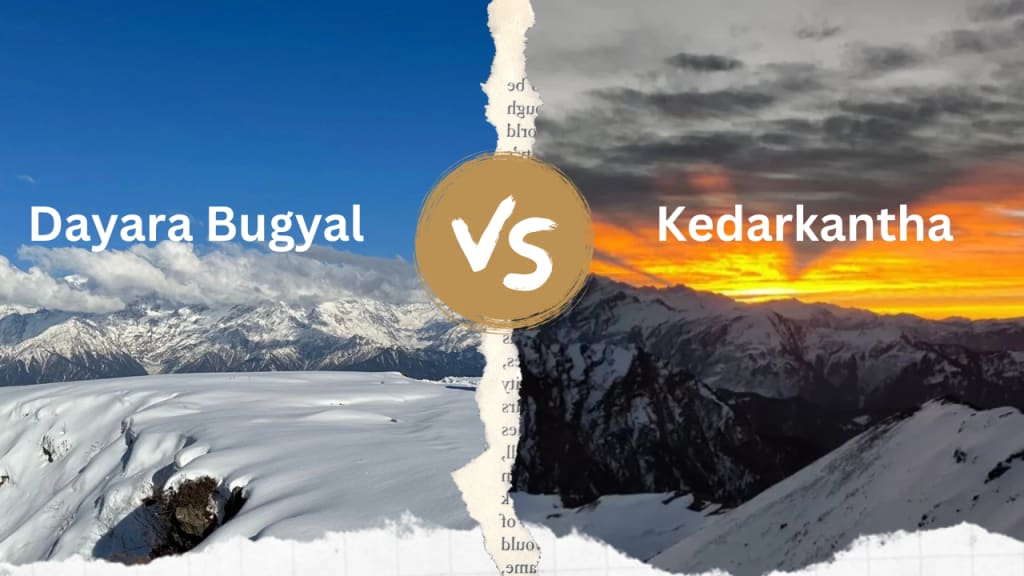
Dayara Bugyal: A Serene and Scenic Trek
Nestled in the beautiful Garhwal region of Uttarakhand, Dayara Bugyal is a trek that takes you through vast, pristine meadows, offering panoramic views of the surrounding snow-covered peaks. The name “Bugyal” refers to the high-altitude meadows that are a common feature of the region, and Dayara is one of the most sought-after among them.
Duration and Difficulty
The Dayara Bugyal trek usually spans over 4-5 days, making it an ideal option for those who want to escape the crowds without committing to a long, strenuous journey. With a moderate level of difficulty, it is accessible to both beginners and intermediate trekkers. The gradual ascent allows you to acclimatize comfortably while still offering a challenge. However, it is still important to be physically prepared for the trek.
What to Expect
Scenic Views: As you trek through Dayara Bugyal, you’re treated to mesmerizing views of the Himalayan peaks like Bandarpoonch, Black Peak, and Swargarohini. The meadows are an absolute highlight of this trek, with lush greenery carpeting the landscape in summer, while the winter months transform the region into a snow-clad wonderland.
Camping Experience: Unlike some treks, Dayara Bugyal allows you to camp in the middle of the meadows, offering a sense of solitude and peace that’s hard to find elsewhere. The campsites are comfortable, and waking up to such breathtaking views is an experience you’ll cherish forever.
Wildlife and Flora: The trek also offers opportunities to spot a variety of wildlife, including Himalayan monals, snow partridges, and even the elusive leopard, especially if you’re trekking in winter.
Accessibility: The trek begins from the village of Raithal, which is accessible by road from Dehradun. A road drive of approximately 7-8 hours will get you there, making it an easy-to-reach destination for trekkers from various parts of India.
Kedarkantha: The Winter Wonderland Trek
Kedarkantha, on the other hand, is one of the most famous winter treks in India. Known for its mesmerizing snow-covered paths, it’s a trek that offers a perfect blend of adventure, natural beauty, and spiritual significance. Kedarkantha stands tall at 12,500 feet and offers trekkers an unparalleled opportunity to experience the serenity of the Himalayas in winter.
Duration and Difficulty
The Kedarkantha trek typically spans 6 days, making it slightly longer than Dayara Bugyal. It is considered a moderately challenging trek, though still suitable for beginners with adequate fitness levels. Kedarkantha is perfect for those who are new to winter trekking and want to experience snow but are not yet ready for more challenging climbs.
What to Expect
Spectacular Summit Views: The real highlight of the Kedarkantha trek is the summit experience. On the top, trekkers are rewarded with 360-degree panoramic views of snow-capped peaks like Swargarohini, Black Peak, and Bandarpoonch. The summit is the pinnacle of your journey, offering a sense of accomplishment and awe.
Winter Wonderland: Kedarkantha is renowned for being one of the most accessible winter treks in India. From December to March, the trail is blanketed with fresh snow, creating a true winter wonderland. If you’ve ever dreamt of walking through a white, snow-covered forest, this trek is for you.
Charming Villages: As you pass through picturesque villages like Sankri, Juda Ka Talab, and Hargaon, you’ll experience the unique culture and lifestyle of the region. The quaint village life, combined with the stunning natural surroundings, adds to the charm of this trek.
Spiritual Significance: Kedarkantha is also famous for its proximity to the Kedarnath Temple, a revered Hindu pilgrimage site. Although the temple itself is not part of the trek, the sacredness of the region adds an element of spirituality to your journey.
Accessibility: Kedarkantha is easily accessible from Dehradun, with a road journey of about 8-9 hours to the village of Sankri, where the trek begins. The trek is relatively short in terms of daily distances, but the terrain is challenging enough to keep you engaged throughout.
Comparison: Dayara Bugyal vs. Kedarkantha
Now that we’ve explored both treks individually, let’s break down the key differences between Dayara Bugyal and Kedarkantha to help you decide which one is better for you.
1. Scenery
Dayara Bugyal: Known for its expansive meadows and alpine forests, Dayara Bugyal offers a serene and peaceful experience. The beauty of the snow-clad meadows, towering peaks, and the quietude of the region make it a perfect retreat for nature lovers and those seeking tranquility.
Kedarkantha: Famous for its winter landscapes, Kedarkantha offers striking views of snow-covered forests, frozen lakes, and distant peaks. The summit of Kedarkantha, offering 360-degree views of the Himalayas, is one of the main attractions of the trek.
2. Difficulty
Dayara Bugyal: The trek is moderately difficult, with a gradual ascent that allows trekkers to comfortably adjust to the altitude. It’s a great choice for beginners who are reasonably fit.
Kedarkantha: Slightly more challenging, Kedarkantha is still considered a moderate trek. However, the snow and steep sections near the summit can make it more demanding than Dayara Bugyal.
3. Duration
Dayara Bugyal: Typically a 4-5 day trek, it’s ideal for those looking for a quick yet immersive Himalayan experience.
Kedarkantha: Usually takes about 6 days, offering a longer, more detailed trek, perfect for those who want a more thorough exploration of the region.
4. Accessibility
Dayara Bugyal: The trek is easily accessible from Dehradun via Raithal, making it a good option for those who are looking for a convenient starting point.
Kedarkantha: Similarly accessible from Dehradun, the trek begins in Sankri. While both treks are easily reachable, Kedarkantha is a bit more popular, especially during winter, and often sees larger groups of trekkers.
5. Best Season
Dayara Bugyal: Can be trekked throughout the year, with summer and spring offering lush greenery, and winter transforming the meadows into a snow-covered paradise.
Kedarkantha: The best time for Kedarkantha is winter, between December and March, when the trek becomes a snow-laden adventure.
Which Trek is Better for You?
Choosing between Dayara Bugyal and Kedarkantha depends on what you’re looking for in your Himalayan adventure.
If you’re seeking a serene and peaceful trek with stunning meadows and a more gradual pace, Dayara Bugyal might be the perfect fit. It offers a balance of moderate difficulty and beautiful scenery, with fewer crowds compared to Kedarkantha.
If you’re excited about experiencing a winter wonderland with snow-covered paths, charming villages, and a satisfying summit experience, Kedarkantha could be your ideal trek. Its winter charm and the sense of accomplishment at the summit are unmatched, and it’s perfect for those who are drawn to the beauty of snow.
Both treks promise unforgettable experiences, and whichever you choose, you’ll be embarking on a journey that will leave you with memories for a lifetime. Happy trekking!
About the Creator
Keep reading
More stories from Mountains Curve and writers in Journal and other communities.
Places to Visit in Uttarkashi
If you’re a nature lover, an adventure enthusiast, or someone seeking spiritual solace, Uttarkashi is the place to be. Whether you’re looking for an adrenaline-pumping trek, a quiet escape into nature, or a deep dive into the spiritual heart of the region, Uttarkashi offers it all.
By Mountains Curve11 months ago in Journal
Day 4 of Quitting
If this is how sobriety feels, maybe it’s better to go through life a little buzzed… this, along with other hits like, I want to kill myself, I wish I was dead, and I’m going to throw myself off a bridge have been the only thoughts on rotation these past few days. I promise myself that if, in a month, I still feel like this (‘this’ meaning despondent, full of rage, and simultaneously numb) I can go back to smoking. Until mid-February though? Nicotine is off the table.
By sleepy drafts6 days ago in Longevity



Comments
There are no comments for this story
Be the first to respond and start the conversation.