
Dare to drape differently?
Changing Australian fashion, one saree at a time.

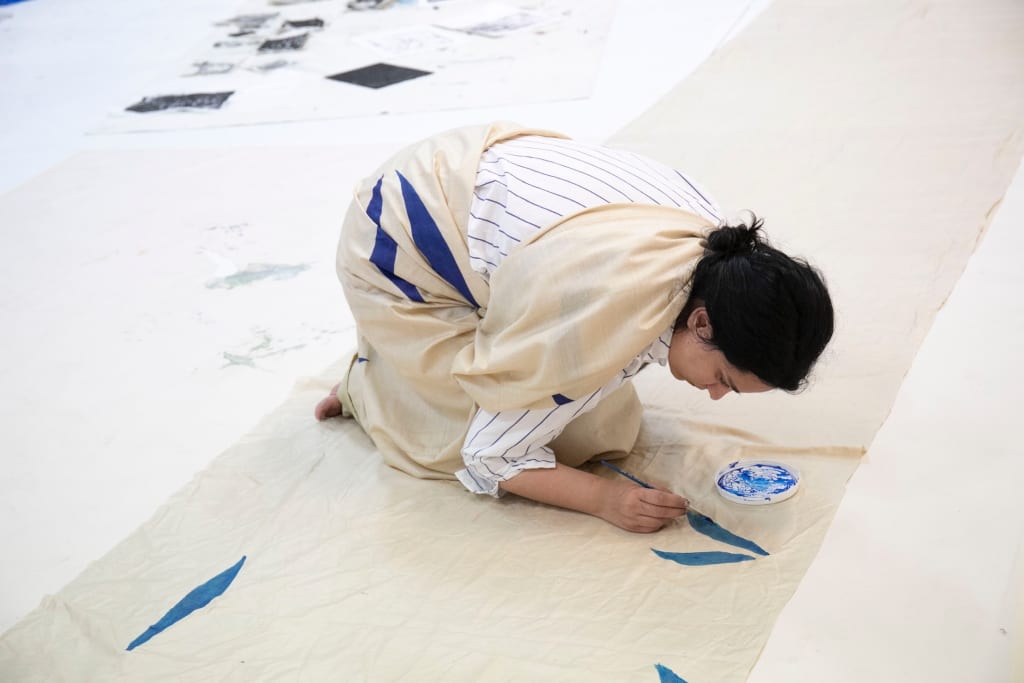
There were moments when I was younger where I'd open my mother's suitcases to find her old *sarees, I loved wrapping myself in the silky, earthen streams of nine yards of fabric. My mother would travel regularly in the Asia-Pacific region, so I found fabrics from India, Japan and Vietnam. My favourite was always the Tanchoi* saree made in Varanasi and Gujurat.
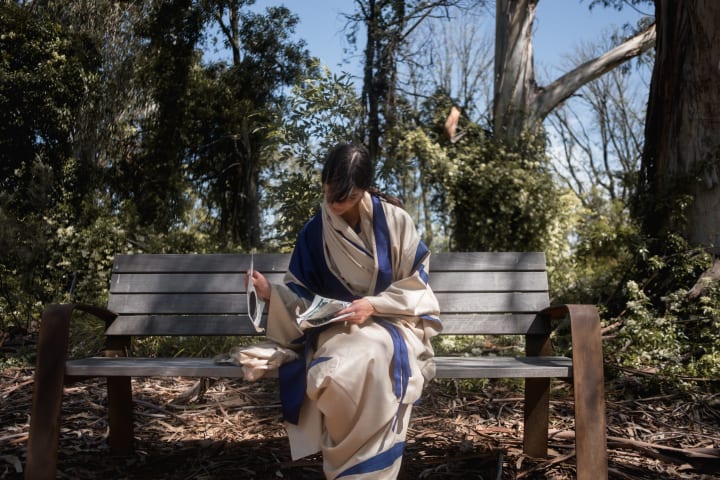
As I grew older, I started to notice the Australian world was oddly homogenous – especially when it came to fashion. It was confusing that coming home felt so different to walking outside. I wondered why I couldn't buy a saree or a *kimono in general shopping centres.
During fashion school, we were asked to focus *haute-couture and discouraged from considering non-western silhouettes and natural ways to create fabric. So, after two years I decided to quit school and start a label that used handspun and handwoven fabrics from regional Indian communities.
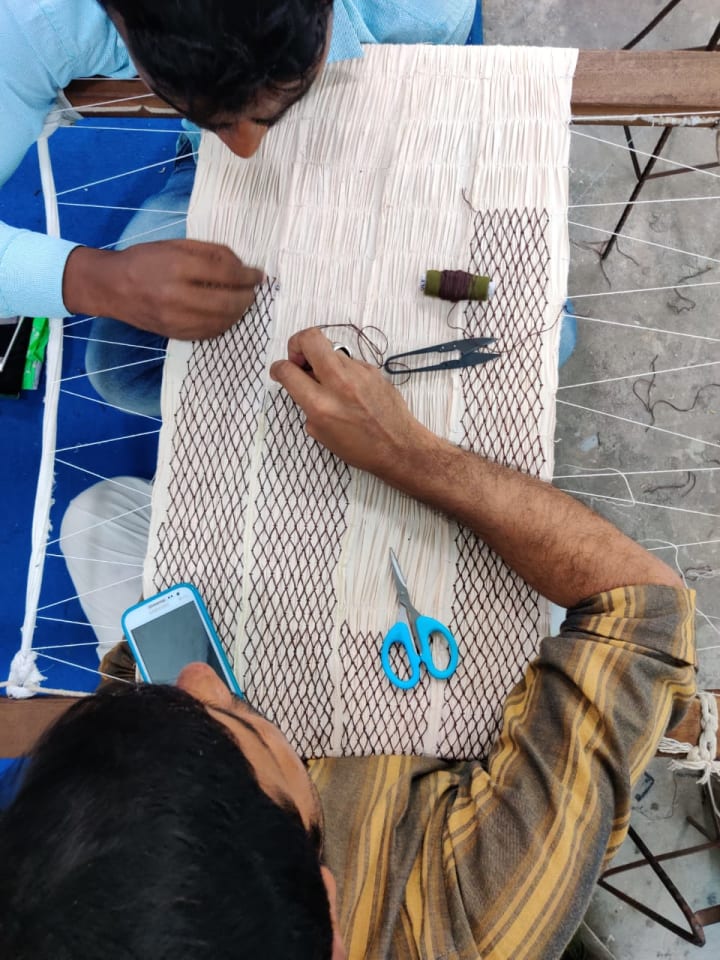
Below is a photo of an artisan using a handloom to make silk sarees. The particular fabric I like using is called Muga-Tassar, which is a combination of a golden Assamese traditional silk with a lighter blend of silk. This is the process used to create the silk:
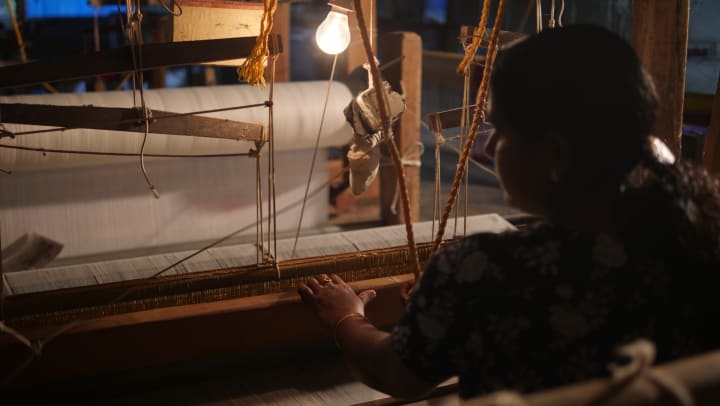
01 The silk cocoon is boiled with soda ash, then flattened and dried on the walls of village homes.
02 The flattened cocoon is then drawn into thread. After the thread is spun, weavers prepare the warp by stretching out the required length of yarn.
03 One thread of Tassar silk and one thread of Muga silk is woven together with a handloom to create feather-light Muga-Tassar silk.
Although it was challenging working through monsoons, COVID and timezone mayhem it was worth cultivating work for *artisan communities to thrive and making a shift in Australian fashion to become inclusive.
Now I spend time in my studio painting, cutting and sewing up different handwoven saree collections that I sell online and in Australia. Using scissors I cut up block pieces for blouses and underskirts for my sarees before I sew them all together. I feel at peace knowing I am keeping both my cultural traditions and design training alive in the form of an everlasting garment.
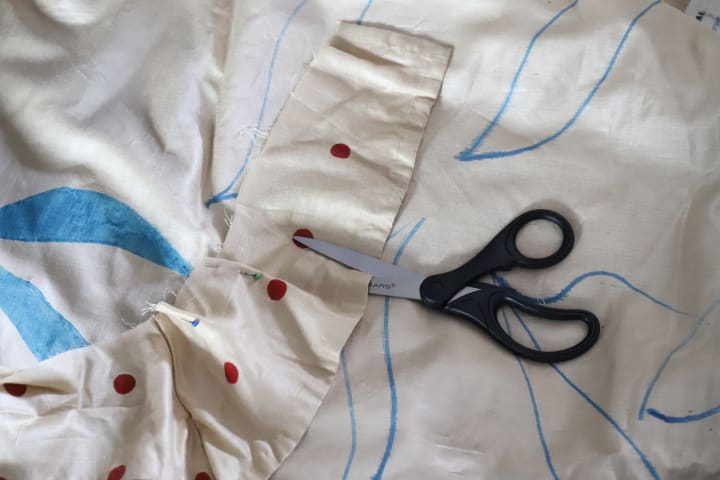
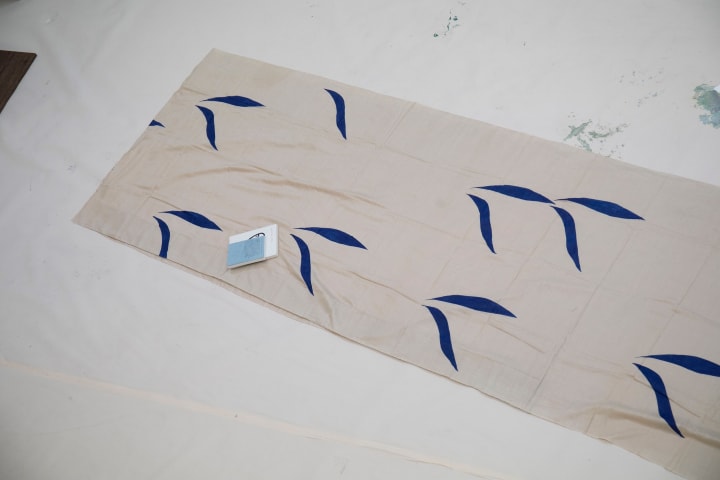
Below is a freshly painted saree. I swap the use of block printing, stencil printing and painting depending on how many repetitions I have to make across nine yards of fabric. Using scissors I cut the fabric and different stencils.
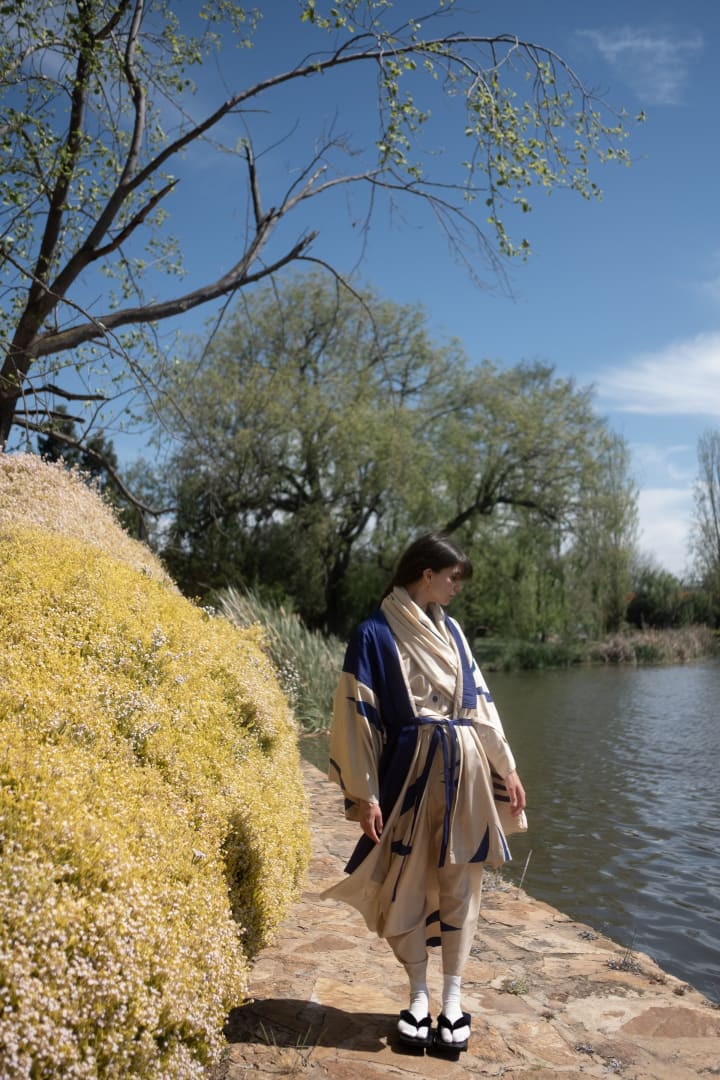
Below is a kimono-saree concept I came up with after researching how to merge the saree and kimono silhouettes to work cohesively. Using scissors I made a toile (protototype) first by cutting square and rectangle pieces to connect into a Kimono and a belt piece. Then I changed the length of the Kimono and saree to ensure the prototype felt seamless and less bulky.
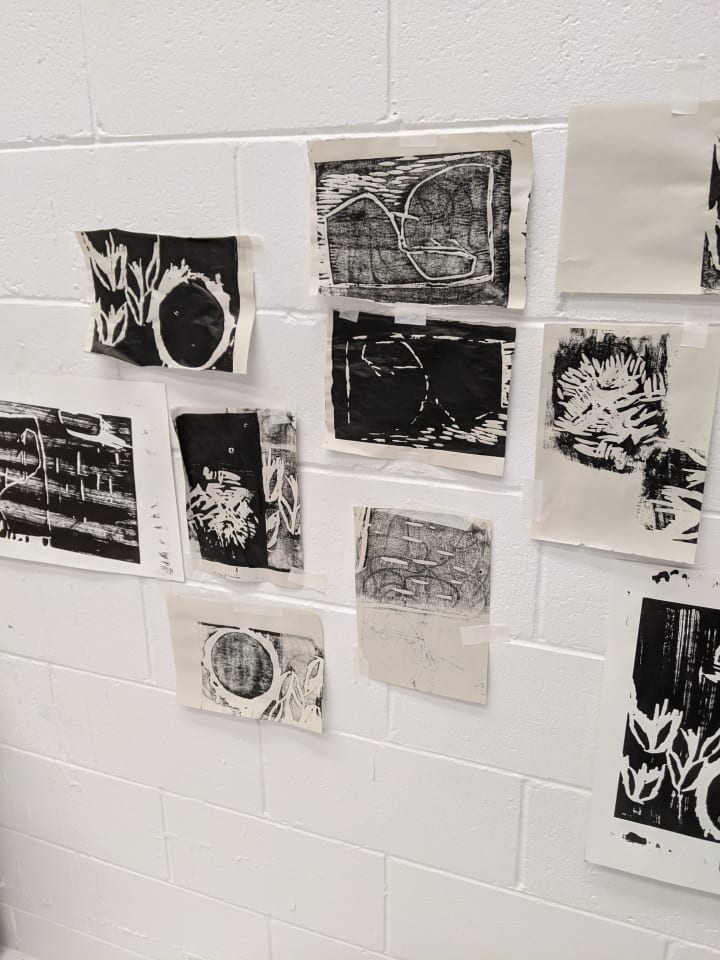
During my research on the kimono, I found more about printmaking in Japan and stumbled upon Japanese Mokuhanga printing. I had been block printing sarees but realised I was fascinated by resist techniques that used negative space to tell a story. I bought the entire Mokuhanga printing toolkit including plywood, ink, carving tools, paintbrushes made from horsehair, a baren made from bamboo for applying pressure on the paper to transfer images and nori paste to disperse pigment colour paste.
I sometimes use scissors to carve out rubber to make inverse stamps to add another layer of ink to my Mokuhanga print.
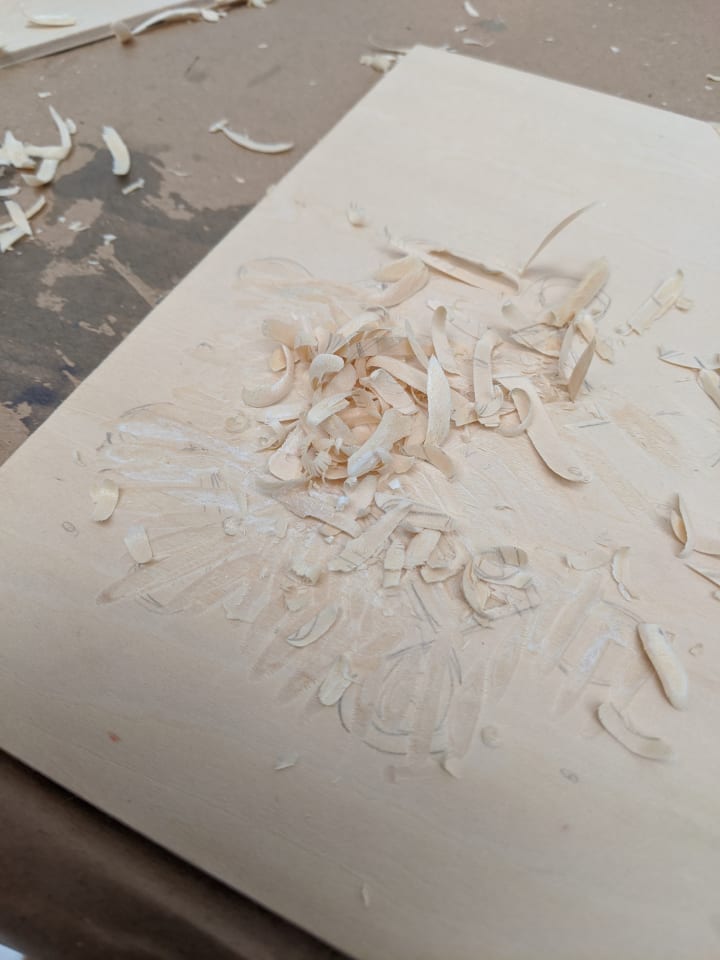
Here are some of my rough pieces:
I am hoping to build on my collection and work on other techniques such as lithography and etching. I love that my profession allows me to stumble upon new skills and cultures. It's like a neverending list of opportunities to challenge my mind and perspective!
Glossary of words:
*Tanchoi fabric is different from other silks as the golden embroidery feels embossed in the fabric, the embroidery glimmers so much that the fabric itself looks like a sheet of gold!
*The saree is a garment traditionally worn in India, Sri Lanka, Pakistan, Bangladesh and Nepal. It consists of an unstitched drape varying from 4.5 to 9 metres/9.8 yards and can be worn in over 80 different ways.
*The kimono is a T-shaped, traditional Japanese garment and the national dress of Japan. It has a rectangular structure with square sleeves.
*Haute couture is high-end, exclusive fashion that is generally presented on fashion runway events
*Artisans are the backbone of India’s non-farm rural economy, engaged in craft production to earn a livelihood.
About my practice:
You can find more of my work at www.badaam.co
My Instagram is : @___badaam
(Badaam means almond in the hindi language )
Thank you for reading!
About the Creator
Priyanka Kaul
AmStar
Keep reading
More stories from writers in Journal and other communities.
15 Challenges Facing Urban Air Mobility Today
Urban Air Mobility (UAM) refers to the use of electric vertical takeoff and landing (eVTOL) aircraft to move people and cargo within cities. On paper, it promises shorter travel times, reduced ground congestion, and a new layer of transportation above crowded streets.
By Beckett Dowhan3 days ago in Journal


Comments
There are no comments for this story
Be the first to respond and start the conversation.