
Cuty AI Makes Hollywood-Quality Video Accessible to Anyone With an Internet Connection
Quality Video Accessible to Anyone With an Internet Connection

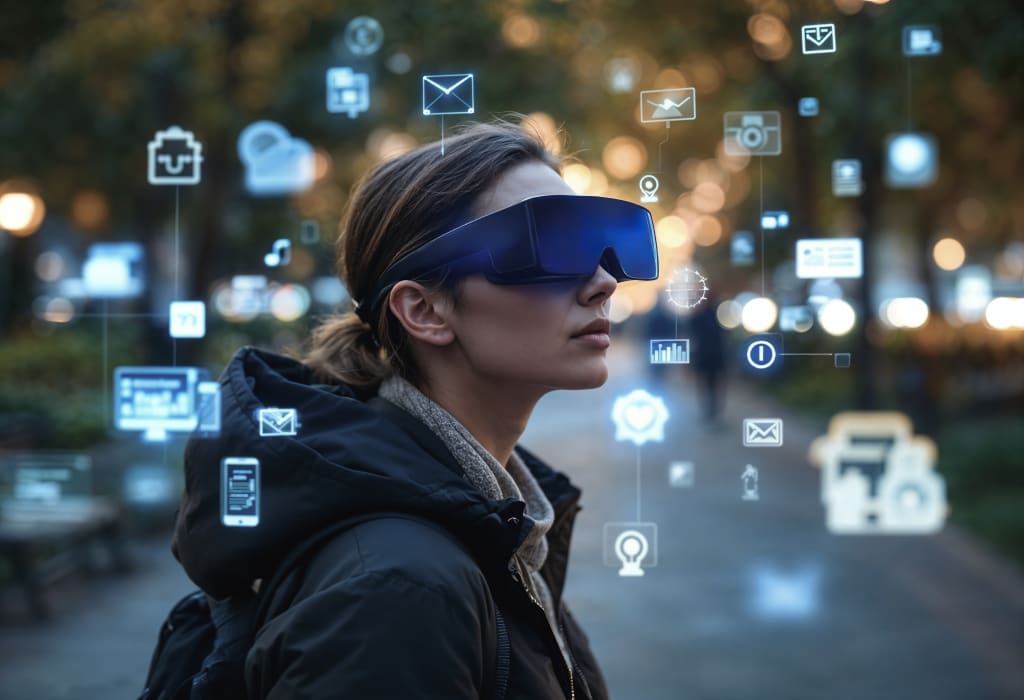
The Industrial Turning Point of AI-Generated Movies
AI-generated video has quietly crossed a critical threshold. What once existed as short demos and experimental clips has matured into tools capable of supporting real cinematic storytelling. Many creators now describe 2026 as the first true year of AI video industrialization.
Earlier systems relied heavily on stitching together frames, often resulting in visual inconsistencies. Modern AI video models operate differently. They simulate environments, lighting, motion, and physical interaction in a way that feels closer to a world model than a slideshow of images.
This shift has dramatically reduced common problems such as unnatural body movement, broken physics, and inconsistent characters. Gravity behaves correctly, light reacts realistically, and liquids finally move like liquids.
Narrative Consistency Is No Longer the Bottleneck
One of the biggest historical limitations of AI video was character drift. Faces, costumes, and props would subtly change between shots, making long-form storytelling nearly impossible.
Recent advances have largely solved this issue. New techniques allow creators to lock character attributes across extended sequences, enabling visual continuity over minutes rather than seconds. This improvement alone has opened the door to short films, branded storytelling, and serialized content.
Among the current generation of AI video models, Hailuo 2.3 has gained attention for its focus on visual stability and physical realism. Developed by MiniMax, the model demonstrates improved motion coherence, consistent character appearance, and more natural environmental behavior compared to earlier systems. These improvements make tools like Hailuo 2.3 especially relevant for creators experimenting with short narrative sequences and cinematic visuals rather than isolated clips.
Sound Becomes Part of the Generation Process
AI video is no longer silent by default. Some systems now generate ambient sound, background music, and synchronized dialogue as part of the video itself. Lip movement aligns closely with speech, reducing the need for separate audio production workflows.
For independent creators and small teams, this removes one of the most time-consuming steps in video creation.
How Creators Are Actually Using AI Video
Despite common fears, AI has not replaced directors or editors. Instead, it functions as a creative accelerator.
Creators commonly use AI video for:
- Rapid pre-visualization from scripts
- Concept trailers and storyboards
- Background generation and visual effects
- Short-form social videos and experimental films
Tasks that once required large teams, such as rotoscoping or background replacement, can now be completed in minutes. This has lowered production costs and expanded access to cinematic tools.
The Economic Shift
The cost of producing high-quality AI video has dropped sharply in recent years. What once required hundreds of dollars per minute can now be achieved at a fraction of that cost.
This affordability explains the rapid adoption of AI video across advertising, entertainment, and digital media. AI-generated video is no longer a novelty. It is becoming foundational infrastructure.
The Rise of All-in-One Creative Platforms
As the AI ecosystem grows, many creators face tool overload. One platform for images, another for video, and another for editing can slow down creative flow.
To address this, integrated platforms have emerged that combine multiple AI capabilities within a single interface. One such example is Cuty AI, a web-based platform that brings together image generation, video animation, and AI-assisted editing tools.
Rather than introducing entirely new technology, platforms like this focus on simplifying workflows. For beginners and solo creators, this consolidation reduces friction and shortens the learning curve.
A Common Workflow for Cinematic AI Video
Most creators follow a similar production approach:
- Generate a strong opening image that defines lighting, composition, and mood
- Convert that image into motion using image-to-video tools
- Refine camera movement and character actions through prompt iteration
This image-first workflow offers greater creative control than generating video directly from text.
Limitations Still Exist
Despite rapid progress, AI video is not without challenges. Extreme physics simulations, ethical concerns around misuse, and copyright attribution remain open issues. Watermarking and content labeling systems are improving, but universal standards are still evolving.
A Medium Still Taking Shape
AI-generated film is not replacing traditional cinema. It is emerging as a distinct creative medium. As tools stabilize and costs continue to fall, the defining factor will no longer be technology, but storytelling quality and creative direction.
For creators willing to experiment thoughtfully, AI video represents not an endpoint, but a beginning.
AI Disclosure
This article was written with the assistance of AI for drafting and refinement. The ideas, structure, and final editorial decisions were made by the author.
About the Creator
Sarah
With an experience of 10 years into blogging I have realised that writing is not just stitching words. It's about connecting the dots of millions & millions of unspoken words in the most creative manner possible.
~ Fired ~
— Ai Intrusion ~ Are you Next ~ Is Ai Evolution after your job? — Few workplaces haven't been affected. Ai is in supermarkets, at doctors' offices, and even monitoring farms. I just can't think of anything this machine is not getting into, can you? For instance: Education ~ Law and Tech jobs will one day have a major influence or be taken over by these inanimate machines, with accuracy and vigor. From mechanics' diagnoses to a wide variety of everyday jobs, including fast food workers, with this input having the ability to cut their unnecessary work hours. I'm certain all of us have been touched by this with our short stories and colorful headings, have you? Even comments are very questionable 'Non-Robot' insertions.
By Jay Kantor10 days ago in Journal
What I Learned While Trying to Speak Japanese in Two Months (My Experience with Japan Language Factory)
For a long time, I believed that learning Japanese meant staying quiet until I was “ready.” I carried that assumption without really questioning it. In my mind, there was a proper sequence I was supposed to follow: vocabulary first, then grammar, then writing systems, and only after all of that, speaking.
By Amelia Harta day ago in Journal



Comments
There are no comments for this story
Be the first to respond and start the conversation.