
Current World: A Snapshot of 2025
"Exploring the Innovations, Challenges, and Hopes Defining Our World in 2025"

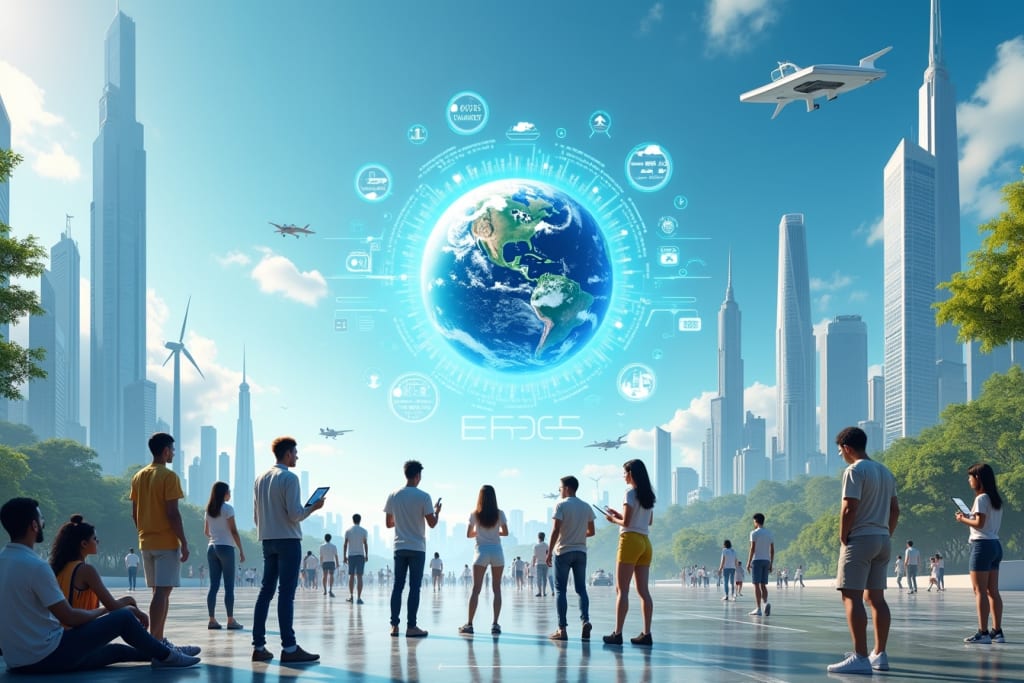
As we step deeper into 2025, the world feels like a complex tapestry of innovation, tension, hope, and uncertainty. Our planet today is defined by rapid technological breakthroughs, environmental concerns, shifting political landscapes, and evolving societal values. Every headline, every breakthrough, and every movement tells a piece of a larger, ever-changing story. Let’s take a closer look at some of the key elements shaping the current world.
1. Technology at the Forefront
Technology has never moved faster. Artificial intelligence, once a tool reserved for tech companies and researchers, now plays a part in everyday life. From AI-powered customer service bots to personalized healthcare recommendations, the integration of machine learning into society is nearly seamless.
The biggest tech development of 2025? Generative AI ecosystems. No longer limited to text or images, AI can now create music albums, full-length movies, even entire virtual worlds with minimal human input. Companies like OpenAI, Google DeepMind, and emerging startups are competing fiercely, leading to an AI arms race that is both exciting and a little terrifying.
Meanwhile, wearable technology has evolved beyond smartwatches. Smart glasses, bio-monitoring tattoos, and brain-computer interfaces are beginning to trickle into the consumer market. The idea of blending human and machine, once pure science fiction, is starting to take real form.
However, concerns about data privacy, AI ethics, and the potential loss of traditional jobs remain hot topics. Governments are scrambling to create regulations to keep pace with innovations that, in many cases, they barely understand.
2. Climate Crisis and Green Innovations
Climate change is no longer a future threat — it is a present reality. In 2025, record-breaking heatwaves, devastating floods, and increasingly violent storms are part of daily news cycles. Activists, scientists, and youth leaders continue to push governments to act faster, but the window for meaningful change is narrowing.
On the positive side, green innovation is booming. Renewable energy production has surpassed fossil fuels in some parts of the world. Solar panels are cheaper and more efficient than ever, and breakthroughs in energy storage technology promise to stabilize renewable grids.
Cities are turning into "smart eco-cities," designed with green roofs, AI-managed traffic to reduce emissions, and vertical farms that grow food right in urban centers. Countries like Denmark, Costa Rica, and New Zealand are leading by example, aiming for carbon neutrality within the next decade.
Still, global cooperation remains a challenge. While some nations push forward aggressively, others lag behind, either due to political instability, economic struggles, or differing priorities.
3. Geopolitical Shifts and New Power Centers
The geopolitical landscape in 2025 is multipolar and unpredictable. Traditional powerhouses like the United States and China remain dominant, but emerging economies in Africa, Southeast Asia, and Latin America are rising fast.
Tensions in Eastern Europe, the South China Sea, and the Middle East continue to spark concern. Cyber warfare and misinformation campaigns have become standard tactics in modern conflict, making traditional military action just one piece of the puzzle.
A surprising trend is the rise of "digital diplomacy" — negotiations, alliances, and conflicts playing out not just in embassies and parliaments, but across social media and online forums. A single viral post or leaked video can now sway public opinion and shift political alliances within hours.
Meanwhile, international organizations like the United Nations and World Health Organization are struggling to maintain relevance and authority in a world where rapid information flows often outpace bureaucratic decision-making.
4. Society and Culture: Redefining Norms
Today's global society is more connected — and more divided — than ever before.
Social movements focusing on equality, mental health, and diversity continue to gain strength. Younger generations, particularly Gen Z and the emerging Gen Alpha, demand more authenticity, accountability, and action from leaders and brands. Social media remains a battleground for ideas, trends, and activism.
Entertainment is changing too. Virtual reality concerts, AI-generated movies, and immersive storytelling experiences are becoming the norm. Artists are collaborating with AI not just to create, but to push boundaries and question what it means to be human.
Yet, with this progress comes cultural tension. Debates over freedom of speech, identity, and tradition vs. innovation spark conflicts both online and offline. While some societies embrace change rapidly, others push back, creating a patchwork of progress and resistance around the globe.
5. Health and Wellness: A Holistic Revolution
The COVID-19 pandemic permanently changed the way the world views health. In 2025, preventive healthcare is the major focus. Personalized medicine, powered by AI and genetic testing, offers treatments tailored to individual needs before illnesses even develop.
Mental health has taken center stage. Discussions about anxiety, depression, and burnout are more open and accepted. Teletherapy, mental fitness apps, and corporate wellness programs are no longer seen as luxuries but as essential parts of a healthy life.
At the same time, longevity research is exploding. Advances in biotechnology promise the possibility of living healthier lives well into the 100s, with companies exploring everything from stem cell therapies to CRISPR gene editing.
Of course, access to these advances remains unequal. Wealthier nations and individuals benefit first, while others are left waiting, raising ethical concerns about a future where health and lifespan could be determined by socioeconomic status.
6. The Human Spirit: Hope Amidst Challenges
Despite the chaos, one thing remains clear: the resilience of the human spirit. Across the world, people are adapting, innovating, and pushing forward.
New forms of education, focused on creativity, critical thinking, and adaptability, are preparing the next generation for a future filled with unknowns. Community-driven initiatives, local activism, and global collaboration efforts remind us that even in a fragmented world, unity is possible.
Art, music, literature, and storytelling continue to offer hope, connection, and meaning. As technology evolves, it becomes clear that what makes us human — our creativity, our empathy, our dreams — cannot easily be replicated or replaced.
Conclusion: A World in Transition
The current world is not simple — it is a dynamic, evolving, often contradictory place. Every advance brings new risks. Every setback fuels new innovations.
In 2025, we stand at a crossroads, armed with powerful tools and faced with monumental challenges. How we navigate this moment will define not just our future, but the future of generations to come.
Whether through technology, environmental stewardship, cultural evolution, or personal growth, the world is, and always will be, in our hands.
About the Creator
Jassica
I am Jassica! is a passionate article writer with a focus on literature, storytelling, and creative writing. Known for insightful analyses and clear, compelling writing, Jassica brings imagination and depth to every article
Flower Bloom 369
FLOWER Bloom 2/25/26 Wednesday By Mariann Carroll Karen had been with Tony for 7 years. Tony started acting strangely after her surgery. He would mow the lawn in the rain and be on his cellphone. He started pushing Karen away. Tony came clean about seeing someone. Karen moved out two months later. Karen moved in with a friend. She felt betrayed.
By Mariann Carroll7 days ago in Fiction



Comments
There are no comments for this story
Be the first to respond and start the conversation.