
Could artificial intelligence wipe out millions of jobs in 24 months? “The time to act is now”
Entire sectors would be left without workers. This is according to voices from the technological and scientific world who, in the podcast The Diary of a CEO, pointed out that the massive replacement by automated systems is already underway and is progressing faster than expected.

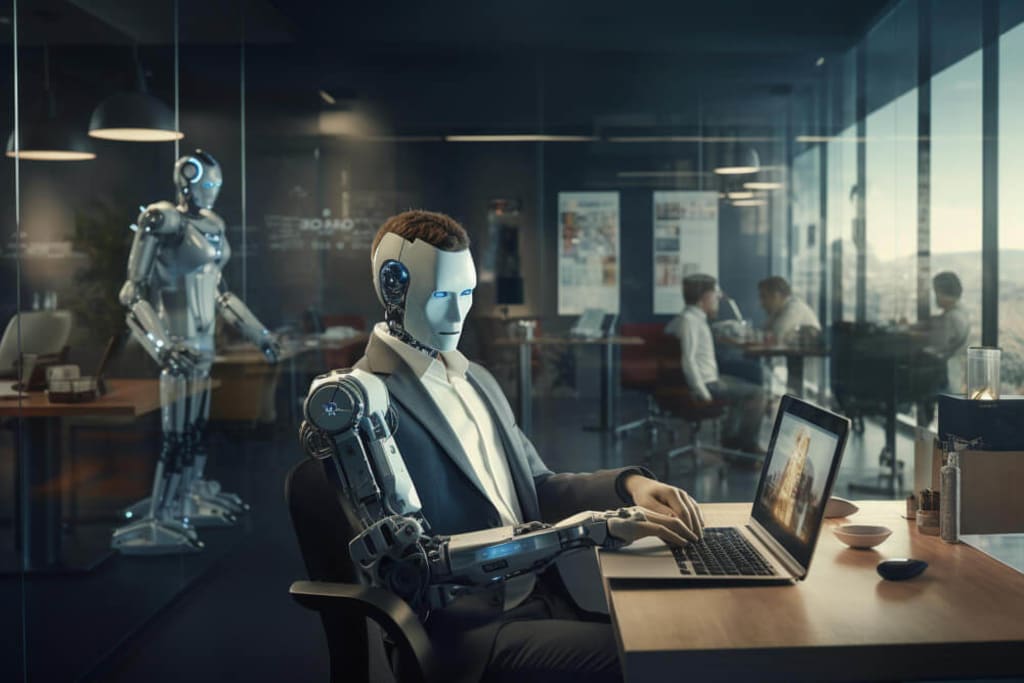
The advancement of artificial intelligence (AI), and in particular, autonomous agents, is causing a profound transformation in the world of work and society. According to the podcast The Diary of a CEO, up to 50% of current jobs could disappear in the coming years, in a scenario where unprecedented opportunities and considerable threats coexist.
Economic and Labor Impact: Automation and Disruption
The emergence of AI is already reshaping business creation, task automation, and access to technology. Amjad Masad, founder of Replit, explained that his platform allows anyone, without technical knowledge, to develop applications and add AI functions in just a few minutes. This tool removed technical barriers, making it easier to convert ideas into working software.
Masad emphasized that AI agents, capable of performing tasks autonomously, are rapidly gaining autonomy: “Today they operate for 30 minutes; in seven months, it will be an hour, and then full days.” This evolution, according to podcast participants, represents a historic disruption across multiple sectors.
Entrepreneur Daniel Priestley shared how he founded a software company with no technical background, while the podcast itself already uses AI to create and script content with high retention rates. “We publish videos with synthesized voices and automatically generated scripts,” the host explained.
Occupational Risks and Inequality
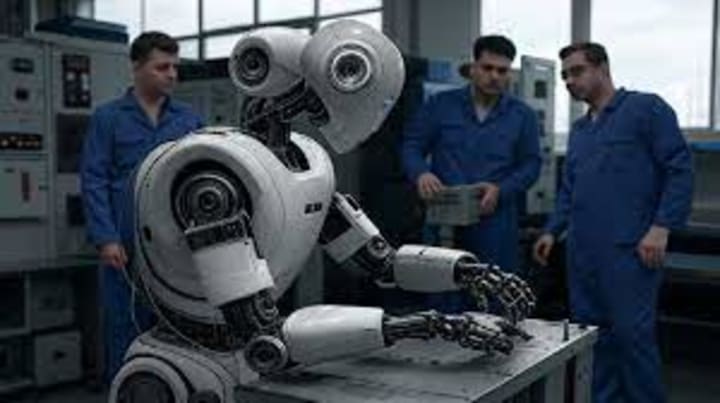
Job displacement is one of the most immediate risks. “AI threatens 50% of the global workforce,” Masad warned. Repetitive tasks, such as customer service, accounting, or data entry, are especially vulnerable. Companies like Klarna have already replaced 700 human agents with AI, which handles 2.3 million chats per month.
Automation does not affect all groups equally. According to the podcast, 80% of jobs held by women are at risk, compared to 50% for men. Meanwhile, those with only a secondary education face an 80% chance of replacement, compared to 20% for those with a university degree. This gap could accentuate gender and educational inequality.
A strong impact on outsourcing is also anticipated. Millions of jobs in countries like India and the Philippines could disappear, although some workers are already migrating to training AI models.

Opportunities and Technological Democratization
Despite the challenges, experts highlighted the equalizing potential of AI. “For the first time, access to opportunity is equal for everyone,” Masad stated.
With the Replit agent alone, three million natural language applications have been created since September, 400,000 of which are already functioning as real products.
Priestley emphasized that small teams using AI can solve global problems and generate value on a large scale. “Creation and entrepreneurship have never been so accessible,” he noted. In his view, this is the least competitive time to start projects with these technologies.
Social Consequences and Ethical Dilemmas
The podcast also explored the social effects of this transformation. Bret Weinstein, an evolutionary biologist, warned of the loss of purpose in a world without traditional work. Prestigious professions, such as anesthesiology, could also be replaced.
This, coupled with rising loneliness and declining birth rates—as in South Korea, where the rate is 0.72 children per woman—poses profound challenges.
Furthermore, ethical threats arise: deepfakes, digital fraud, autonomous weapons, and mass surveillance. Masad warned of the possibility of small groups gaining access to tools with great potential for harm. Weinstein, for his part, noted that the potential for harm far outweighs the benefit if not properly regulated.

Education and Adaptation: Keys to the Future
Faced with the speed of change, education is critical. Weinstein proposed developing individuals with a "general toolbox," capable of adapting and thinking creatively.
Masad and Priestley agreed on promoting the development of generalists with high agency, prepared to coordinate digital tools in dynamic scenarios.
Personalized tutoring using AI is already proving effective. Masad reported that her children use AI to learn interactively, while Priestley advocated for educational models focused on constant adaptation.
Contrasting Views: Optimism and Warnings
The experts combined hopeful and cautious views. Masad argued that AI can enhance human creativity. Priestley spoke of a historic opportunity to create value.
Weinstein, on the other hand, underscored the magnitude of the challenge: “We are in the most disruptive transition in human history.”
For the participants, humanity must prepare urgently. “The time to act is now,” Masad insisted. Priestley closed with a call to use these tools to create value and purpose: “We have never had so much transformative power at our fingertips.”
About the Creator
Omar Rastelli
I'm Argentine, from the northern province of Buenos Aires. I love books, computers, travel, and the friendship of the peoples of the world. I reside in "The Land of Enchantment" New Mexico, USA...
Keep reading
More stories from Omar Rastelli and writers in Journal and other communities.
A drop of blood to detect the progression of Alzheimer's: how the new test approved in the US works
According to the World Health Organization (WHO), “Alzheimer's disease is the most common form of dementia and may account for between 60% and 70% of cases.” A decisive step toward understanding the progression of this disease has just been taken in the United States.
By Omar Rastelli8 months ago in Journal
The goals I did not achieve
Every writing goal I made for the year is a wash. It has been this way for a while, but I think it's important to be open about my failures and the reality of how life can get in the way. This is especially true considering the several times I have posted on Vocal about my writing goals, how I was changing my approach, and where I was hoping to be for the upcoming year. I will probably do that again in a couple months, but for now, it is time to acknowledge where I am today.
By Kay Husnick24 days ago in Journal
I Started Using Meta AI SEO Without Expectation—And It Changed How I Write Online
For a long time, SEO felt like something I had to tolerate rather than trust. Every platform demanded optimization, yet the rules kept shifting. One update would reward long-form content, another would punish it. Keywords mattered, then intent mattered more. Somewhere in between, the joy of writing started to fade.
By Anthony Rodgers5 days ago in Journal


Comments (1)
AI's impact on jobs is huge. It's crazy that up to 50% of current jobs could vanish. Replit's platform sounds great for non-techies, but job displacement is a real worry. I wonder how we can prepare for this. And why is there such a big gender and education gap in job risk? It's something we need to figure out.