
Cost Considerations for Custom EOT Crane Solutions in Your Country
Making informed decisions for your business.
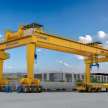

Electric Overhead Traveling (EOT) cranes are a vital component in modern material handling systems, offering efficient, reliable, and safe lifting solutions across a variety of industries such as manufacturing, construction, steel production, shipbuilding, and logistics. When businesses require specialized lifting capabilities, standard cranes may not meet their exact needs, and that’s where custom EOT crane solutions come into play. However, opting for a customized crane system also introduces a unique set of cost considerations.
In this article, we’ll break down the essential cost factors associated with custom EOT crane solutions in your country, helping you understand where your investment goes and how to make informed decisions for your business.
1. Understanding Customization in EOT Cranes
Before diving into costs, it’s important to define what constitutes a "custom" EOT crane. A customized EOT crane for sale typically refers to a lifting system tailored to meet specific operational, environmental, or structural requirements. Customization can involve:
Unique span lengths
Special lifting heights
High-capacity load handling (e.g., above 50 tons)
Special duty classifications (heavy duty, continuous use, etc.)
Advanced control systems (automation, remote control)
Integration with other systems (production lines, ERP software)
Environmental adaptations (corrosive environments, explosive atmospheres, high-temperature zones)
Each of these features adds complexity—and cost—to the base crane design.

2. Initial Design & Engineering Costs
Custom EOT cranes require thorough planning and design work before manufacturing begins. This includes:
Site assessment: Engineers may need to visit the site to assess structural compatibility, runway systems, and power availability.
Load analysis: Understanding the type and frequency of loads is crucial to defining the crane’s duty class (A3–A8).
Custom drawings and engineering calculations: Tailored engineering designs are needed for non-standard configurations.
These upfront costs can range from a few thousand to tens of thousands of dollars depending on the complexity of the project. While some suppliers include these services in the total package, others may charge them separately.
3. Crane Type and Configuration
The type of EOT crane—single girder, double girder, under-running, or top-running—will significantly influence the total cost. Generally:
Single girder cranes are more economical but limited in capacity (typically up to 20 tons).
Double girder cranes support higher capacities and longer spans but are more expensive.
Top-running cranes require more substantial runway support but offer higher load capacities.
Under-running cranes are more compact but typically handle lighter loads.
Custom configurations that deviate from these standard types (e.g., semi-gantry EOT cranes or cranes for curved tracks) can raise fabrication and installation costs.
4. Load Capacity and Duty Class
A crane's load capacity is a major cost driver. The higher the capacity, the more robust the components (girders, hoists, motors, brakes) need to be. Similarly, duty class (defined by the frequency and duration of lifting operations) determines component durability and performance requirements.
Low duty (A3–A4) cranes are typically cheaper but may not be suitable for continuous heavy lifting.
Medium to heavy duty (A5–A6) and severe duty (A7–A8) cranes are built with higher-grade components, increasing costs significantly.
A 10 ton overhead crane rated for light duty may cost significantly less than a 10-ton crane rated for heavy-duty, round-the-clock operation.
5. Span, Lifting Height, and Runway Requirements
The larger the span and lifting height, the higher the material and structural costs:
Long spans require reinforced girders and precision alignment.
High lifting heights need longer ropes, stronger hoisting mechanisms, and higher towers or runway support structures.
Runway beams or gantries may also need reinforcement, especially in older buildings.
In some cases, modifying your facility to accommodate a custom EOT crane (e.g., strengthening building columns or floor slabs) may incur additional costs outside the crane itself.

6. Control Systems and Automation
Custom cranes often feature advanced control systems such as:
Variable frequency drives (VFDs) for smoother operations
Anti-sway technology
Remote and wireless control systems
Integration with warehouse or production software
Load monitoring and diagnostics systems
These features enhance safety and productivity but can substantially raise equipment and commissioning costs. In highly automated environments, software development and interface testing can account for a significant part of the budget.
7. Material and Component Sourcing
Sourcing components locally versus importing them can significantly impact overall cost:
Locally sourced components: Shorter lead times, lower transportation costs, easier after-sales service.
Imported components: Often higher quality or technologically advanced but come with import duties, taxes, and freight costs.
For instance, using European-brand hoists or German motors might increase reliability but raise your budget by 20–30%.
8. Installation and Commissioning
Installing a custom EOT crane often takes longer and requires more technical expertise than standard systems. Consider:
Local labor rates
On-site welding or structural modifications
Electrical installation and cabling
Testing and certification
If the installation is handled by the supplier, it may be bundled into a single quote. However, if you need to contract a separate local team, ensure they are trained and certified for such work.
9. After-Sales Service and Warranty
The cost of maintaining and servicing a custom crane should not be overlooked. Custom systems may require:
Specialized spare parts
Periodic software updates
Custom maintenance schedules
Trained technicians
Opting for a supplier with a local service network can help reduce long-term costs. Check if your provider includes a warranty, how long it lasts, and whether it covers parts, labor, or both.
10. Compliance and Certification
Custom cranes often need to meet national and international standards (e.g., ISO, FEM, CMAA, ASME, CE). Complying with these adds costs for:
Engineering documentation
Third-party inspections
Certifications
Safety devices and features (limit switches, overload protection, emergency brakes)
In your country, local safety authorities may require approval before commissioning, which could incur inspection and permit fees.
11. Project Management and Contingencies
Complex crane projects require dedicated project management, including:
Scheduling and logistics
Coordination with civil engineers, electrical teams, and safety inspectors
Buffer time for unforeseen issues like shipment delays or weather-related installation interruptions
It’s wise to allocate an additional 5–10% of your total budget for contingencies.
Final Thoughts
Custom EOT crane solutions are a significant capital investment, but one that can greatly improve operational efficiency and safety when tailored correctly. While the initial cost may be higher than standard models, the long-term ROI from reduced downtime, improved handling precision, and increased productivity can justify the investment.
When evaluating costs for a custom EOT crane in your country, be sure to partner with a supplier that offers transparent pricing, detailed quotations, and local support. A reliable supplier will not only help you reduce hidden costs but also ensure that your crane performs at its best for years to come.
About the Creator
Aicrane01
Welcome to the Aicrane Blog, your practical guide to lifting solutions. Discover articles covering overhead cranes, gantry cranes, winches, steel structures, boat lifts, and more.
Website: https://steelmillcranes.com/
The goals I did not achieve
Every writing goal I made for the year is a wash. It has been this way for a while, but I think it's important to be open about my failures and the reality of how life can get in the way. This is especially true considering the several times I have posted on Vocal about my writing goals, how I was changing my approach, and where I was hoping to be for the upcoming year. I will probably do that again in a couple months, but for now, it is time to acknowledge where I am today.
By Kay Husnick17 days ago in Journal
Evaluating Technical Staffing Proposals in 2026
Full Introduction As of early 2026, the technical staffing landscape has shifted from a volume-based model to a precision-focused, skills-based paradigm. Evaluating a staffing proposal today requires more than a simple comparison of hourly rates; it demands a deep dive into the vendor’s integration of AI, their ability to verify technical depth in an era of AI-polished resumes, and their alignment with your specific engineering culture. A high-quality proposal in 2026 should move beyond simple headhunting to demonstrate how the agency will reduce your time to productivity and ensure long-term retention in a highly fluid labor market.
By Abdul Mueed6 days ago in Journal




Comments
There are no comments for this story
Be the first to respond and start the conversation.