
Content Tips for a Killer Email Campaign
Here are some tips for creating better-performing email marketing campaigns

Email marketing campaigns are an essential part of any business's digital marketing strategy. But many companies don't know how to make their emails stand out as much as they could. This can lead to lackluster campaign results and frustrated customers who have a bad experience with your brand. If you want your emails to be effective, however, it's crucial that you use good content practices in every aspect of their content creation. Here are some tips for creating better-performing email marketing campaigns:
Start with an attention-grabbing subject line.
The subject line is the most important part of an email. It's also your first impression, so you want to make sure that it makes a great one.
Here are some things to keep in mind:
- Make it clear and concise. Don't try to cram too much information into one sentence, or else people will just skim right over it without reading it. Use straightforward language, avoid buzzwords and jargon, and make sure the subject line fits inside of the character limit (usually between 50–70 characters). If possible, use numbers instead of words when possible - e.g., "5 Secrets That Will Help You Get Ahead at Work This Year" is better than "Secrets That Will Help You Get Ahead This Year."
- Use a question that piques interest about what's coming next! For example: "Are You Ready for 2023? (Hint: Yes!)" or "Are Your Current Goals Working? (This Is How I Changed My Life With One Simple Decision)." People love having their curiosity satisfied!
- Use a word or phrase that will be searched for online - this increases visibility on social media platforms such as Twitter and Facebook where users often share content from emails they receive directly from brands they support (and this can also lead back into Google search results if someone searches those same words later on). One way companies like ours do this well is by using trending hashtags within our marketing campaigns; another way might be by using keywords related directly with our business/service offering(s).
Know your campaign's purpose.
Before you begin, it's important to have a clear idea of what you want to achieve with your email campaign. Are you looking for new subscribers? Do you want current customers to purchase something? Is there a specific product launch or promotion that requires immediate attention from your audience? Knowing the answers to these questions will help guide the rest of your strategy.
Next, make sure that your targeting matches up with who you are sending the email campaign out to. If the buyer at home improvement stores is 35–50 years old and has $90k+ in annual income, then don't send him an offer for luxury kitchen appliances! Make sure that every piece of information within each message aligns with its intended recipient and their interests so as not only increase engagement but also prevent any negative backlash (i.e., unsubscribes).
Focus on one topic.
It's tempting to send multiple emails with different topics in one batch. It's important to resist the urge, however. Each email should focus on a single topic and be sent at the right time. When you send too many emails at once, your readers can become overwhelmed and confused - and they may never get through all of them! This is especially true if your audience has limited time or attention span (like most people). If you are going to send multiple emails about different topics in one batch, make sure that they are related somehow so that your audience will see them as a cohesive whole rather than separate events in their inboxes.
Write a clear call to action.
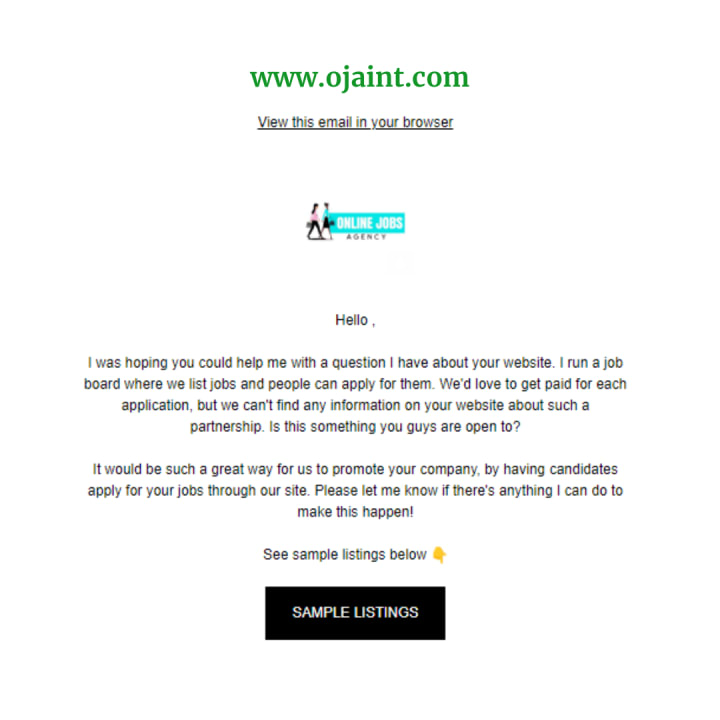
Your call to action should be clear and direct. Don't make your audience guess what they should do next, and don't use confusing language. Your CTAs should be short and simple, so that they can easily fit in the email body.
Example:
Use a short, simple writing style.
- Use short sentences.
- Avoid complex jargon and words that are overused in your industry, like "disrupt" or "innovate," and instead use simple ones like "strive for excellence," or "improve."
- Avoid passive voice whenever possible; it makes your writing more difficult to read because it tends toward the wordy side (he was done).
- Keep paragraphs short - three sentences max is ideal - so they don't become long blocks of text to digest. Bullet points can help break up dense blocks of text even further!
Include visuals.
Including visuals in your email is an excellent way to break up text and make your email more engaging. It can also help you tell a story or reinforce a point.
- Images can be used to illustrate a point, or show off a product. For example, if you're writing about how well-traveled you are, perhaps you'd include pictures of places that have been important in your life or highlight some of the places where you've traveled.
- Images can be used to create urgency and build trust with customers as well: A picture of an empty parking lot on a holiday weekend - and the caption "Tickets for this event sold out 3 hours ago" - can create urgency for potential attendees who may want to attend but haven't yet made plans; similarly, an image of three smiling people holding up their new cars could convince hesitant buyers that they won't regret making the purchase.
Be friendly and personal.
- Use the first person.
- Personalize your message by using personal pronouns and the recipient's name (e.g., "You can trust us to take care of you.").
- Write in a friendly tone, not a formal one (e.g., "Hello! We hope you had a great weekend!").
Don't let spelling or grammar mistakes ruin your campaign.
As we mentioned earlier, a great email marketing campaign is all about the content. This means that you need to pay attention to spelling and grammar as well as everything else.
Misspellings and grammatical errors are unprofessional and make your email look sloppy. They can also make it hard for people to read what you have written, which will cause them not to read your entire message. This may lead them not to take action on anything in the email and could be detrimental if they do decide they want what you're offering after all this time!
Avoid using too many exclamation points and emojis!
The best way to avoid coming across as too emotional or unprofessional is to avoid the overuse of emojis and exclamation points. While emoji use can help you convey emotion, it's important that you don't rely on them for all your communication needs. Exclamation points are great for conveying excitement, but if you use too many - or if they're used in place of a more appropriate word choice - your email will come across as too casual and informal.
Avoid using more than one exclamation point at a time! This is especially true if you're using a period-based sentence structure instead of an exclamation point-based sentence structure (such as "I've been thinking about this!" vs "I've been thinking!"). Otherwise, people may think that what they have just read sounds like something out of a text message conversation with a friend rather than an official business email sent from someone who is trying to sell them something!
Your email marketing campaigns can be successful if you use good content practices
A good email campaign doesn't have to be complicated. You can keep your message simple and effective by using a short, simple writing style. Include visuals in each email, and make sure they are relevant to the content you are sending out. Be friendly and personal with your customers in all emails that you send out, even if it's just a "thank you" note for an order placed or special offer.
Avoid using too many exclamation points and emojis!
Conclusion
That's it! You're ready to put your new skills to work. Remember that the most important thing is to keep your audience in mind. Always ask yourself: "How can I make this content more useful or interesting for them?" I hope this guide has given you some ideas on how to build better emails, and perhaps even shown you some ways that we at HubSpot have been able to improve our own content over time. Good luck!
PS: Hi! I am a freelance writer with a passion for writing. I am open to most genres, but my primary expertise is in content and blog writing. If you would like to discuss any upcoming projects please feel free to contact me by email at [email protected]
About the Creator
Courtanae Heslop
Courtanae Heslop is a multi-genre writer and business owner.
Keep reading
More stories from Courtanae Heslop and writers in Journal and other communities.
Best Ways of Making Money When You're Broke
Sometimes, we find ourselves in situations where we don't have enough money to pay our bills or buy groceries. It's not always a good idea to use your credit cards in those cases because they can be hard to pay off when you're broke. Instead of taking out a loan or applying for one of those other bad options, why not try some of these ways that'll help you make a quick buck?
By Courtanae Heslop3 years ago in Journal
Why Prayer is Central to Catholic Life and How to Deepen It
Prayer is at the heart of Catholic life. It is the way believers communicate with God, express their faith, seek guidance, and grow in holiness. Prayer is not merely a ritual or obligation, but a living relationship with God. Understanding why prayer is central to Catholic life and how to deepen it can help believers experience spiritual growth, peace, and a stronger connection to Christ.
By Sound and Spirit5 days ago in Journal
How to Succeed at the Benson Directory®
Congratulations and welcome to the Benson Directory® employee #22391! As our newest call handler, you will have the privilege of speaking with dozens of unique and interesting people on a daily basis as well as the opportunity to earn bonuses for high performance. Contained within this handbook you will find a set of ease to follow instructions designed to help you settle in to your new role and begin paving the way to success.
By S. A. Crawforda day ago in Fiction



Comments
There are no comments for this story
Be the first to respond and start the conversation.