
Climate change is triggering the spread of a dangerous amoeba that causes brain infections
The symptoms mimic other common pathologies and the diagnosis often comes when it is too late.

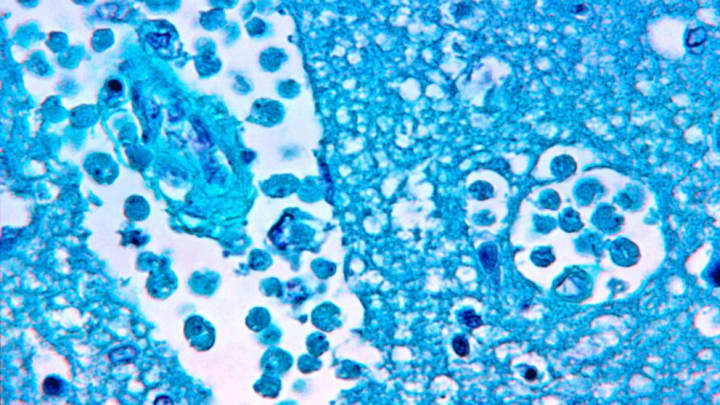
A rise in cases of brain infections caused by the amoeba Naegleria fowleri, known as the "brain-eating amoeba " has raised concerns in the global scientific community.
According to National Geographic, in the first months of 2024, the southern Indian state of Kerala reported 15 cases of primary amoebic meningoencephalitis (PAM), a significantly higher number compared to previous years, when approximately one case was recorded annually.
This increase coincides with a global pattern of expansion of the amoeba, driven by factors such as climate change and rising temperatures.
Naegleria fowleri is a microscopic organism that thrives in warm, poorly treated freshwater, such as lakes, ponds, swimming pools, and hot springs.
Infection occurs when contaminated water enters the nose, allowing it to travel to the brain through the olfactory nerve. Once there, it destroys brain tissue, causing symptoms such as fever, severe headache, stiff neck, hallucinations, and, in most cases, death.
According to the U.S. Centers for Disease Control and Prevention (CDC), the case fatality rate for PAM exceeds 97%, with only four survivors among the 152 cases reported in the United States since 1962.
The impact of climate change on the spread of Naegleria fowleri has been highlighted by multiple studies.

According to an official report, infections with this amoeba are increasing in the northern United States, a region where no cases had previously been documented.
Yun Shen, an assistant professor of chemical and environmental engineering at the University of California, Riverside, explained that warmer temperatures not only favor the survival and growth of the amoeba, but also increase the risk of exposure due to increased recreational water activities during the warmer months.
The Kerala case illustrates the seriousness of the situation. Recent victims include a 14-year-old boy who swam in a pond, a 13-year-old girl who dove into a pool during a school trip, and a five-year-old girl playing in a river near her home.
In addition, a 27-year-old man died after coming into contact with a contaminated pond. According to Aravind Reghukumar, head of the infectious diseases department at the Kerala Government Medical College, early diagnosis and timely treatment are crucial to improving survival, although detection remains a significant challenge.
In India, only 30% of PAM cases are diagnosed, while 70% remain unidentified.
The difficulty in diagnosing PAM lies in the similarity of its symptoms to other illnesses, such as bacterial meningitis or the flu.
As Karen Towne, associate clinical professor of nursing at the University of Mount Union in Ohio, explained to National Geographic, most cases occur in children and young adults who have recently had contact with untreated freshwater.
Furthermore, diagnosis is often made postmortem, limiting the possibilities for medical intervention. Leigha Stahl, a microbiologist at the University of Alabama, told the same outlet that the amoeba not only causes direct damage by feeding on brain cells, but also triggers an immune response that causes brain inflammation, which can be fatal.
Climate change is not only expanding the geographic range of Naegleria fowleri, but is also creating ideal conditions for its proliferation.
According to Jacob Lorenzo-Morales, professor of parasitology and director of the Canary Islands University Institute of Tropical Diseases and Public Health, this amoeba thrives in temperatures between 45 degrees Celsius and 113 degrees Fahrenheit, phenomena such as droughts and torrential rains contribute to the formation of suitable habitats.
About the Creator
Omar Rastelli
I'm Argentine, from the northern province of Buenos Aires. I love books, computers, travel, and the friendship of the peoples of the world. I reside in "The Land of Enchantment" New Mexico, USA...
Keep reading
More stories from Omar Rastelli and writers in Journal and other communities.
Why walking can transform your body and mind, according to science
Walking, one of the most basic yet effective forms of exercise, brings with it a multitude of long-recognized health benefits. According to research, this activity significantly improves cardiovascular health by boosting heart strength and reducing the risk of heart disease. It also strengthens muscles and bones, making it an essential activity for maintaining an active and healthy lifestyle.
By Omar Rastelli8 months ago in Journal
TanStack Form vs React Hook Form in 2026
Choosing a form library in 2026 is a major decision. It is no longer just about reducing re-renders in the browser. We are now deeper into the era of Server Components. We must handle localized state hydration and strict type safety. Your choice defines how your application architecture will scale. TanStack Form and React Hook Form (RHF) have both evolved. They have changed significantly over the last two years. However, they still serve different philosophies of state management. One focuses on uncontrolled speed within the React ecosystem. The other prioritizes type-safe logic that works across different frameworks.
By Del Rosario5 days ago in Journal




Comments (1)
This rise in brain-eating amoeba cases is scary. Climate change is clearly fueling this. I remember when we had a heatwave here, and there was a warning about avoiding warm, stagnant water. How can we better educate people, especially kids, about the risks of using untreated freshwater sources? It's concerning that the fatality rate is so high. We need more research to find better treatments. Maybe we could develop something to stop the amoeba once it enters the body. How do you think we can speed up the discovery of effective medical countermeasures?