
Christianity Will Remain Central to Religious Education – Givan
Debate grows over the future of religious education in schools Government resists pressure to overhaul faith curriculum Tradition and diversity collide in classroom policy Church leaders welcome decision, secular groups criticize Religious heritage remains key to education strategy Balancing Christian values with multicultural realities Curriculum review sparks national conversation

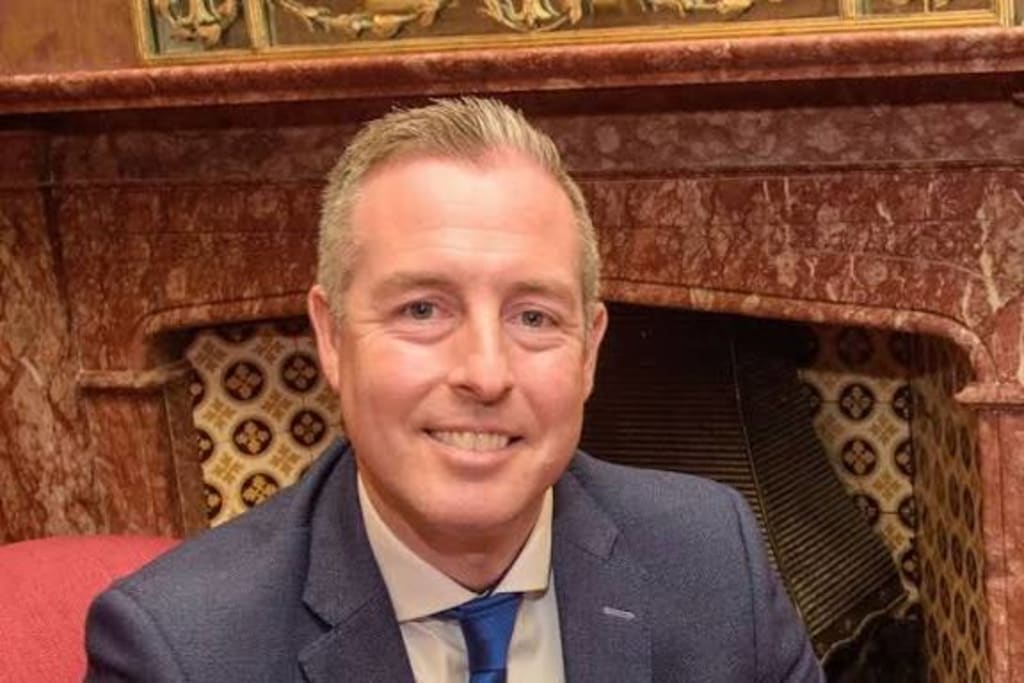
Northern Ireland’s Education Minister Paul Givan has reaffirmed that Christianity will continue to play a central role in religious education (RE) in schools, stating that the subject must reflect the region’s cultural heritage while also promoting understanding and respect for other faiths. His remarks come amid renewed debate over whether the curriculum should be modernized to better reflect an increasingly diverse and secular society.
Speaking at a recent education forum, Givan defended the existing framework for religious education, which places Christianity at the core of teaching. He argued that the Christian tradition has shaped Northern Ireland’s history, values, and educational institutions and therefore remains essential to pupils’ moral and cultural development.
“Christianity is deeply embedded in our school system and our wider society,” Givan said. “It will remain central to religious education, while also ensuring that students learn about other world religions and different belief systems.”
A Debate Over Modernization
Calls to reform religious education have grown louder in recent years. Critics say the current curriculum is outdated and does not adequately reflect the beliefs of students from non-Christian backgrounds or those who identify as non-religious. Campaigners for reform argue that RE should move toward a broader, more inclusive model that focuses on comparative religion and ethics rather than prioritizing one faith.
Some education experts point to demographic changes in Northern Ireland, where immigration and social shifts have created more religious diversity in classrooms. According to recent surveys, the number of people identifying with no religion has steadily increased, especially among younger generations.
Despite these changes, Givan insists that Christianity’s central role does not prevent inclusivity. He said the curriculum already includes learning about Judaism, Islam, Hinduism, and other belief systems, alongside lessons on morality and citizenship.
“The purpose of religious education is not indoctrination,” he said. “It is about helping young people understand faith, culture, and values in a way that supports mutual respect.”
Support From Church Leaders
Church representatives welcomed the minister’s comments, saying they provide reassurance that faith-based education will not be sidelined. Leaders from major Christian denominations in Northern Ireland emphasized the role schools play in teaching compassion, responsibility, and service.
A spokesperson for one church organization said Christianity provides a strong moral framework that continues to be relevant. “Religious education grounded in Christian teaching encourages kindness, forgiveness, and care for others,” the spokesperson said. “These are values that benefit society as a whole, regardless of individual belief.”
Faith-based schools, which make up a significant portion of Northern Ireland’s education system, have long argued that removing Christianity from the center of RE would weaken their identity and mission.
Criticism From Secular and Humanist Groups
Not everyone agrees with Givan’s stance. Humanist and secular organizations say that giving Christianity a privileged position sends the wrong message in a pluralistic society. They argue that public education should be neutral and reflect a wide range of worldviews equally.
A representative from a humanist association said, “Religious education should prepare children for life in a diverse world. That means teaching about many beliefs, including non-religious ones, without placing one above the rest.”
Some parents have also expressed concern that their children may feel excluded or pressured if they do not come from Christian families. They call for a curriculum that emphasizes critical thinking and ethical discussion rather than religious doctrine.
Balancing Tradition and Diversity
The controversy highlights the challenge facing education policymakers: how to balance tradition with social change. Northern Ireland’s education system has historically been shaped by religious divisions, and religious education has often reflected that history.
Givan acknowledged the sensitivity of the issue, saying that reforms must be approached carefully. He stressed that any changes should involve consultation with educators, parents, and faith communities.
“Religious education should unite rather than divide,” he said. “We want students to appreciate their own heritage while also understanding the beliefs of others.”
The Department of Education has indicated that it is reviewing aspects of the RE curriculum to ensure it remains relevant and effective. However, officials have made clear that Christianity will continue to be the foundation of the subject.
Wider Implications
The debate over religious education goes beyond the classroom. It touches on questions about identity, history, and the role of religion in public life. For some, maintaining Christianity at the heart of RE is a way of preserving cultural continuity. For others, it represents resistance to social change.
Education analysts note that similar debates are taking place across the UK and Europe, where governments are grappling with how to teach religion in increasingly multicultural societies. Some countries have moved toward teaching religion as an academic subject, while others retain faith-based models.
Student Perspectives
Students themselves hold mixed views. Some appreciate learning about Christianity as part of their heritage, while others want more time spent on different religions and ethical issues.
One secondary school student said, “I think it’s important to know about Christianity because it’s part of our history, but we should also learn more about other beliefs so we understand each other better.”
Teachers report that classrooms are becoming more diverse, making inclusive teaching methods more important than ever.
Conclusion
Paul Givan’s statement that Christianity will remain central to religious education underscores the ongoing tension between tradition and modern diversity in Northern Ireland’s schools. While supporters see this as a necessary link to cultural heritage and moral values, critics argue for a more balanced and inclusive approach.
As the education system continues to evolve, the challenge will be to ensure that religious education reflects both the region’s history and its changing society. Whether future reforms will satisfy all sides remains uncertain, but the debate itself highlights the importance of how faith, identity, and education intersect in shaping the next generation.
About the Creator
Fiaz Ahmed
I am Fiaz Ahmed. I am a passionate writer. I love covering trending topics and breaking news. With a sharp eye for what’s happening around the world, and crafts timely and engaging stories that keep readers informed and updated.
Keep reading
More stories from Fiaz Ahmed and writers in Journal and other communities.
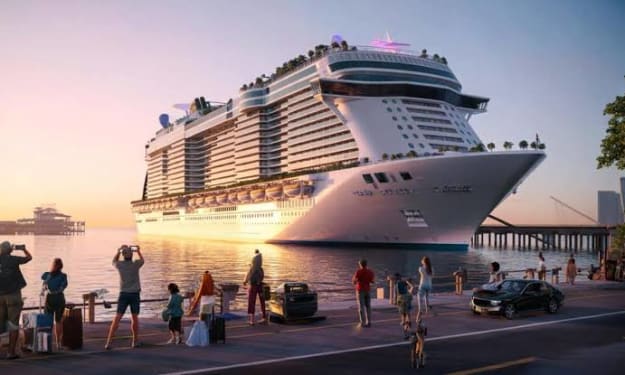
The World’s Largest Cruise Ship Sets Sail for the First Time, Marking a Historic New Milestone for the Global Cruise Industry
The world’s largest cruise ship has officially set sail for the first time, marking a landmark moment for the global cruise industry and signaling renewed confidence in large-scale tourism after years of disruption. The colossal vessel, built to redefine modern cruising, departed from its home port amid international attention, representing both an engineering achievement and a bold statement about the future of leisure travel. Towering over traditional ships and rivaling small cities in size, the vessel carries thousands of passengers and crew and features a wide array of entertainment, dining, and sustainability technologies. Industry leaders describe the launch as a turning point for cruise tourism, combining innovation, economic opportunity, and evolving traveler expectations. A Floating City Takes to the Sea The ship’s maiden voyage followed more than five years of planning, construction, and testing. Shipbuilders worked across multiple countries to assemble its massive structure, integrating advanced navigation systems and next-generation propulsion technology. With capacity for more than 7,000 passengers and over 2,000 crew members, the ship includes multiple neighborhoods, water parks, theaters, shopping promenades, and green spaces. It also boasts the tallest water slide ever installed at sea and a central open-air plaza designed to bring natural light into the heart of the vessel. Cruise executives say the ship represents the next phase of experiential travel. “This is not just a cruise ship—it’s a destination in itself,” said the company’s chief executive at the launch ceremony. “We wanted to create something that blends adventure, comfort, and community while raising the standard for what a vacation at sea can be.” Engineering and Environmental Advances Beyond its size, the ship introduces new environmental features aimed at reducing its ecological footprint. It is powered in part by liquefied natural gas (LNG), which emits fewer pollutants than traditional marine fuels. Advanced waste management systems and energy-efficient technologies were installed to align with stricter international maritime regulations. The cruise industry has faced criticism over environmental impact, particularly concerning emissions and port congestion. In response, the company emphasized that the ship includes shore power capabilities, allowing it to plug into local electrical grids while docked instead of running engines. Environmental groups remain cautious, acknowledging improvements while urging continued progress. “Cleaner fuel is a step forward, but sustainability must be central to future ship design,” said one maritime climate researcher. Economic Boost for Ports and Tourism The launch of the world’s largest cruise ship is expected to generate significant economic benefits for port cities along its itinerary. Hotels, restaurants, tour operators, and local businesses anticipate a surge in visitors, particularly in destinations that have invested heavily in cruise infrastructure. Tourism officials in the ship’s first ports of call welcomed the milestone. “This vessel brings thousands of visitors at once, which can have a powerful effect on local economies,” said a Caribbean tourism minister. “It also highlights our role in the global travel network.” Cruise industry analysts note that the ship’s debut comes at a time when travel demand has rebounded strongly following pandemic-era shutdowns. Bookings for its inaugural season reportedly sold out within days, reflecting pent-up demand for large-scale leisure experiences. Safety and Passenger Experience Safety has remained a top concern for cruise operators since the pandemic. The ship is equipped with advanced air filtration systems, expanded medical facilities, and upgraded sanitation protocols. Digital check-in and crowd management tools have also been introduced to reduce congestion in busy areas. Passengers on the maiden voyage described a mix of excitement and curiosity. “It feels like stepping into the future,” said one traveler. “There’s so much space and so many things to do that it doesn’t feel crowded at all.” The ship offers experiences for all age groups, from family-friendly attractions to luxury suites with private pools and exclusive dining areas. Entertainment ranges from Broadway-style shows to immersive virtual reality experiences. Symbol of Industry Transformation The launch comes amid ongoing transformation in the cruise sector. Companies are investing heavily in larger ships, smarter technology, and personalized travel experiences. At the same time, they face pressure from regulators and communities to address environmental and social concerns. Industry experts say the ship’s first voyage is symbolic. “It demonstrates confidence in the future of cruising,” said a maritime economist. “But it also puts the spotlight on how the industry balances growth with responsibility.” Smaller boutique cruise lines are taking a different approach, focusing on low-impact travel and remote destinations. The contrast highlights a growing diversity in cruise offerings, from mega-ships to eco-focused expeditions. Public Reaction and Cultural Impact The ship’s departure quickly went viral on social media, with videos showing crowds gathered along the harbor and drones capturing its immense scale. For many, it represents human ingenuity and the enduring appeal of exploration. However, critics argue that the era of mega-ships raises questions about overcrowding in popular ports and the strain on local resources. Several European cities have already imposed limits on cruise traffic, and similar debates are emerging elsewhere. Conclusion As the world’s largest cruise ship embarks on its first journey, it marks a historic milestone for the cruise industry and a statement about the future of global tourism. The vessel showcases advances in engineering, entertainment, and environmental design while highlighting ongoing challenges around sustainability and community impact. Whether viewed as a triumph of innovation or a test of responsible travel, the ship’s maiden voyage symbolizes a new chapter for cruising—one shaped by ambition, recovery, and the evolving expectations of travelers worldwide.
By Fiaz Ahmed 4 days ago in Journal
~ Fired ~
— Ai Intrusion ~ Are you Next ~ Is Ai Evolution after your job? — Few workplaces haven't been affected. Ai is in supermarkets, at doctors' offices, and even monitoring farms. I just can't think of anything this machine is not getting into, can you? For instance: Education ~ Law and Tech jobs will one day have a major influence or be taken over by these inanimate machines, with accuracy and vigor. From mechanics' diagnoses to a wide variety of everyday jobs, including fast food workers, with this input having the ability to cut their unnecessary work hours. I'm certain all of us have been touched by this with our short stories and colorful headings, have you? Even comments are very questionable 'Non-Robot' insertions.
By Jay Kantor5 days ago in Journal



Comments
There are no comments for this story
Be the first to respond and start the conversation.