
Choose the Proper Terminal Block to Prevent Failure in Your System
This article will provide an overview of types of terminal blocks and the considerations to select a terminal block for your project.
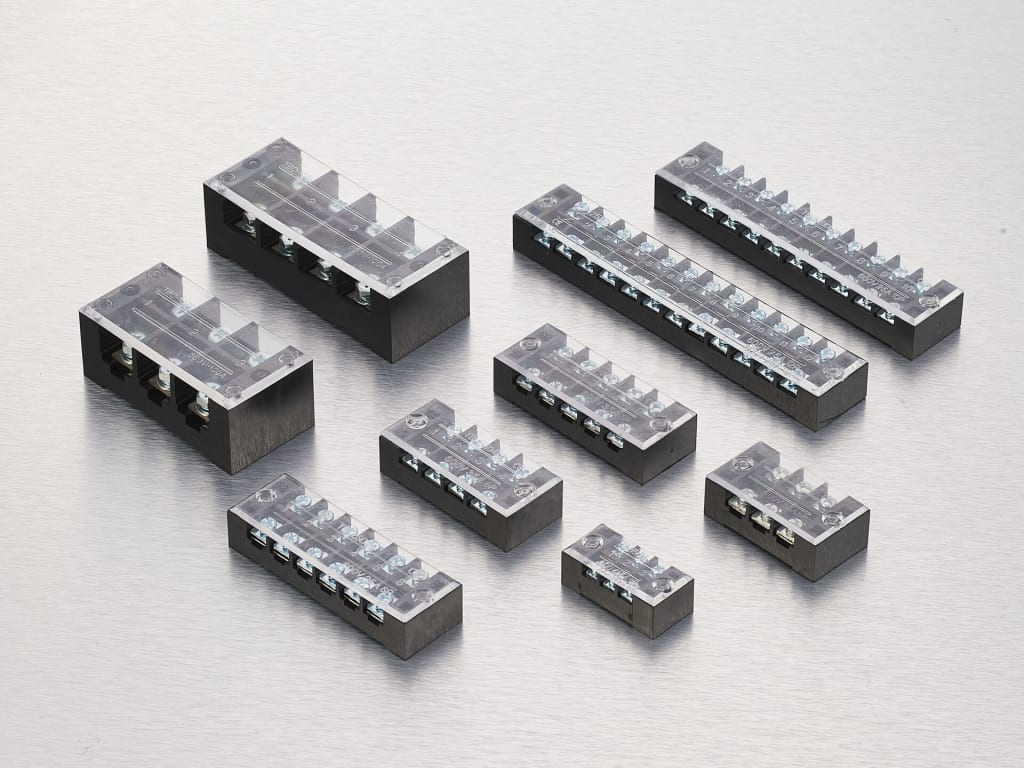
What is a Terminal Block?
A terminal block is an essential electrical component that conveniently connects multiple wires at a single location, making installation and maintenance of electrical systems effortless. This key component typically comprises of a durable plastic or metal body with secure screw terminals for proper wire placement.
Electrical connector allows you to easily attach wires within the same circuit without the need for splicing.
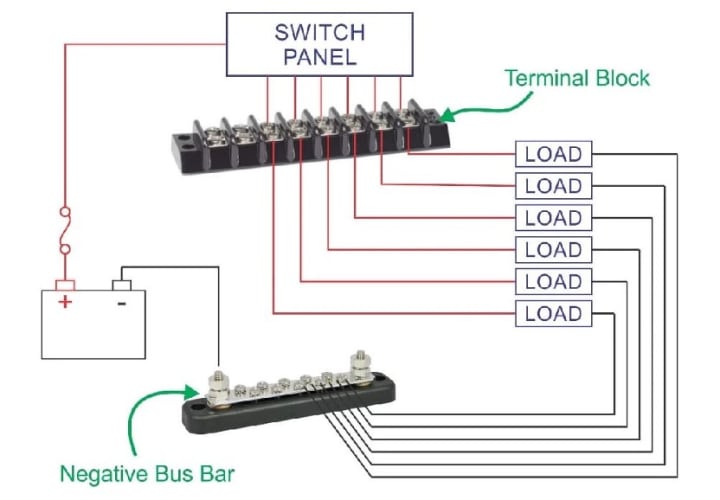
For some individual connections, splicing may be effective. However, when dealing with multiple wires entering a single power source or battery, the result can be a confusing tangle of wiring.
A terminal block is essential for safe and durable electrical connections in your boat's control cabinet. It also facilitates easy installation, maintenance, and customization, making it a highly beneficial component.
Basics of terminal blocks
Terminal blocks are a type of connector component used for connecting sections of electronic circuits in industrial settings. These components feature wire-securing receptacles encased in a single plastic housing, providing both secure connections and protection. Some terminal blocks come with contact pads or legs for PCB connection, while others are equipped with their own housings for attaching to machine frames, industrial electrical components, rail and rack systems, or control-panel enclosures.
Terminal blocks are ideal for secure and lasting connections of signals and power. They can handle wires and cables ranging from a delicate 16 American Wire Gauge (awg) to a substantial 600 kcmil or MCM. Most designs offer dependable wire retention and simple wire release, making inspections, repairs, and replacements convenient.
General-purpose terminal blocks, also referred to as electrical blocks or wire terminations, are widely used for terminating electrical connections in various applications. There are also more specialized terminal blocks available.
- Terminal blocks for power distribution
- Terminal blocks for the transmission of I/O signals
- terminal blocks for grounding connections. Designed for easy and secure grounding.
- Terminal blocks used for single-phase and three-phase motor connections in industrial applications.
- Fuse blocks for circuit protection - connect two wires to a fuse using terminal blocks.
Single terminal blocks are a common option for creating a single (single pole) connection to electronic circuits, alongside other connector options like DIN cable connectors, pin headers, D-sub connectors, and industrial socket connectors. They can also be found in multi-row banks for connecting arrays of wires to circuits as necessary.
An interface block, also known as a terminal block interface, contains two types of connectors. One of the connectors is usually a long receptacle array, which allows for separate discrete wires to be inserted. The purpose of an interface block is to connect wires from a power component to a specially designed cable, which uses a specialty connector, from a controller or other low-signal component. For instance, a common interface may use a 37-pin D-sub plug to connect to a 38-position terminal block that utilizes push-in contacts to secure the wires in their terminals. It is important to note that the D-subminiature connector is named after its distinct D-shaped metal plug shield, which is commonly seen on older consumer-printer cable ends.
Various DIN headers, flat ribbon headers, IDC connections, and other industry-standard cable ends can be easily connected using terminal block interfaces. Certain styles also have safety features, such as recessed conducting elements and tiered designs, to optimize space and accessibility for all wire receptacles, even if one section of the block is already wired.
When selecting a terminal block, the most important factor to consider is the current rating. Too much current can lead to overheating and failure. While voltage is usually not a major concern, it is still a critical parameter to be aware of. Although rare, excessive voltage can cause dielectric breakdown and current leakage between adjacent blocks. Additionally, the published creepage (distance between terminals) and clearance (distance through air) values of a terminal block also impact its voltage ratings.
The terminal block receptacles must have sufficient size to fit the cable gages of the designs. The type of wire, whether single or multi-strand, will determine the most suitable terminal types. Single-strand wires are usually rigid enough to displace the spring mechanism in push-in connectors, whereas screw terminals on terminal blocks are often used for multi-strand wires.
More on the receptacles inside terminal blocks
The wire-contacting elements inside terminal blocks are commonly made of a copper alloy that matches the thermal-expansion coefficient of the wire they hold. This eliminates issues related to varying expansion levels and electrolytic reactions between dissimilar metals. In instances where a terminal block must accommodate both single-conductor and stranded wire, certain manufacturers use copper beryllium for the contact elements.
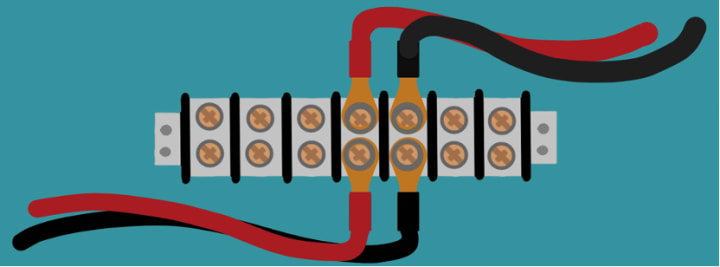
Terminal blocks with screw terminals secure cable and wire using screws. These types of blocks are typically used for moderate voltages and currents and require the technician to insert the wires into open receptacles. The wire is then held in place by a small plate that is tightened down with a screwdriver. Some larger terminal blocks may have insert-mold metal receptacle linings for even more reliable wire contact. There are two subtypes of screw terminals: strap-clamp contacts, which use a wire-clamping screw and strap assembly, and tubular contacts, which use a rectangular metal tubing pierced by a screw at each end. The latter is referred to as a tubular screw contact when the screw's flat bottom holds the inserted wire in place, and a tubular clamp contact when a flat pressure plate on the screw end clamps the wire. This setup is ideal for finely stranded wire.
Terminal blocks with barrier terminals have screws that securely hold conducting wires and cables in place. They also feature multiple termination points and small barriers to accommodate multiple cables.
Terminal blocks featuring quick-connect contacts utilize a standard method of connection, where female tabs accept flat male blades soldered to the end of wires. This type of connection is commonly used for thin-wire applications and in situations where frequent service or reconfiguration is necessary.
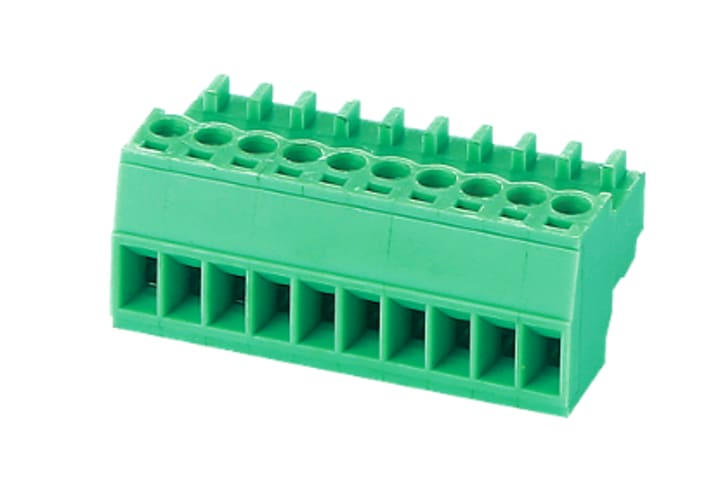
Terminal blocks with push-in or push-fit contacts, also known as spring-loaded contacts, feature open receptacles that allow for manual insertion of wire and cable. The root of each receptacle contains a flat-spring loaded mechanism designed to bite into the cable when inserted, using a mechanical wedge action to secure it against the interior wall of the receptacle. These designs include release plungers, which can be depressed with a flathead screwdriver or specialized poker tool, to temporarily hold back the spring-loaded mechanism in case the wires need to be removed. In some instances, the pushers are colored brightly for easy identification and to assist technicians in applying screwdriver pressure.
Push-in contacts have become more prevalent in DIN rail-mounted terminal blocks due to their ability to eliminate problems caused by screw over-tightening and significantly speed up the wiring process.
Similar to push-in contacts, tension-clamp contacts also securely hold wires in their receptacles. However, unlike push-in contacts, these contacts use a spring that forms an "a" shape inside the receptacle. This requires release plungers (which can be easily depressed with a flathead screwdriver) for both inserting and removing wires. These types of terminal blocks are ideal for designs where reliability is a key factor.
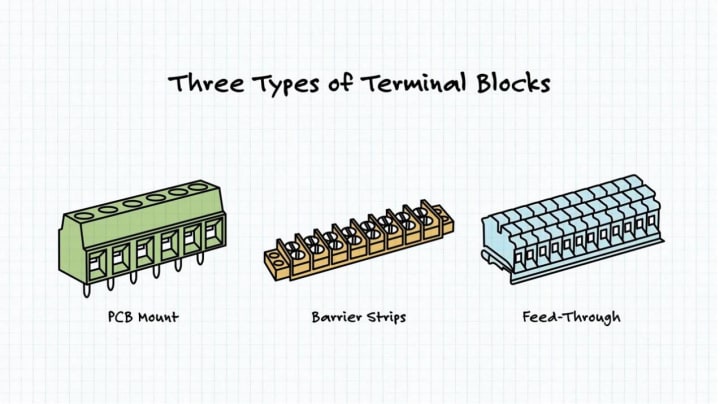
Types of Terminal Blocks
Terminal blocks come in various types, each catering to specific requirements. They range from compact connections on circuit boards to industrial power distribution.
For a wide range of applications, including PCB mounts, barrier strips, and DIN rails, terminal blocks are the ideal solution for secure, efficient, and reliable wiring.
Here is an overview of the common terminal blocks types.
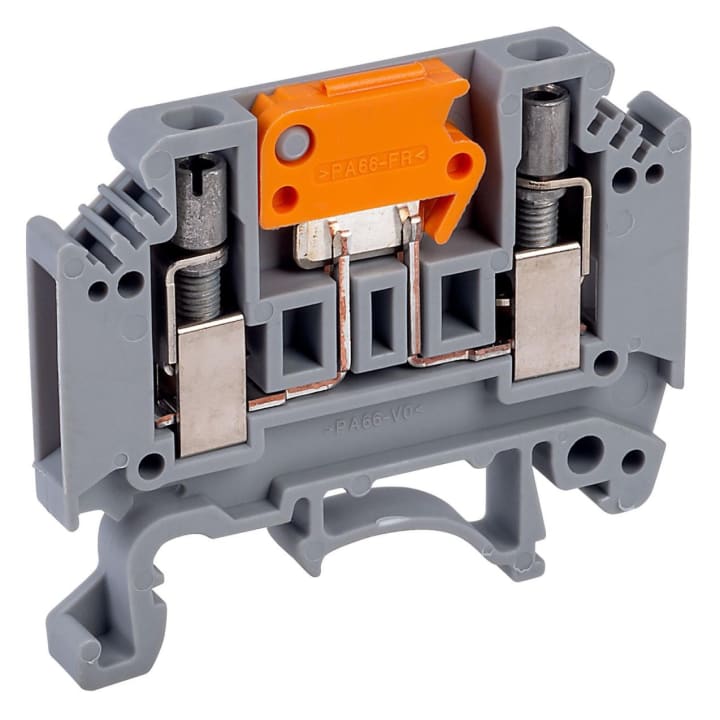
1. DIN Rail
DIN rails are meant to be installed on standard DIN rails found in industrial panels or enclosures. They can be connected through screw-in, push-in, or spring clamp terminal blocks. These options make them well-suited for use in industrial applications, including power distribution equipment and control panel wiring.
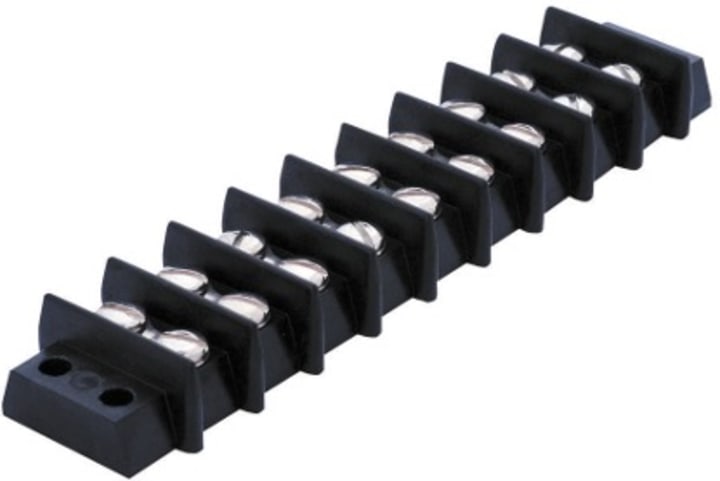
2. Barrier Strips
The screw terminals in barrier strips allow for the attachment of ring or spade connectors, which are then inserted onto the screw and tightened to secure the connection. With each wire having its own terminal, the plastic insulating barrier ensures separation from neighboring terminals. These terminal blocks are ideal for applications with higher current and voltage requirements.
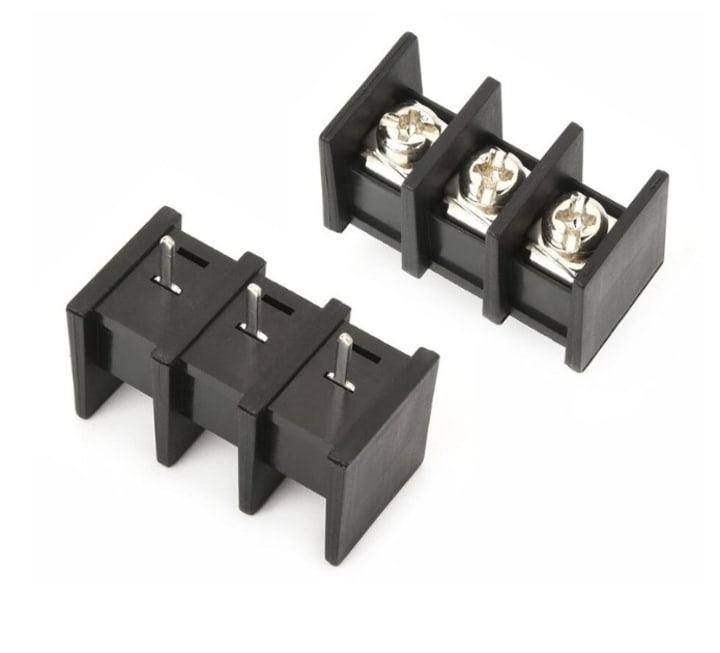
3. PCB Mount
These PCB mount-type terminal blocks are designed to be mounted onto printed circuit boards for secure and organized wire connections. Mounting is simple and offers significant space savings on the board, making it easier for inspection and repair. Additionally, their design allows for easy replacement.
Wiring Methods
Selecting the appropriate wiring method is crucial for establishing secure and effective electrical connections. It is important to follow industry standards and guidelines in order to achieve optimal results.
Three common wiring methods are available: screw, push button, and push-in.
Screw Terminal
These terminal blocks are designed to securely hold wire in place by tightening screws on the conductor. They are compatible with both stranded and single-core wires, and are commonly used with ring or spade connectors on barrier strips.
Push-In
These terminal blocks function like push button style blocks, utilizing a spring-loaded clamp for wire retention. Inserting the wire is a straightforward process with this type of block, making it a convenient option for single-core wires. Push-in terminal blocks are particularly useful in demanding industrial settings.
Push Button
The spring-loaded clamp is opened with a push button to securely hold the wire. These clamps are user-friendly and highly compatible with single-core wires.
Terminal Block Selection Considerations
Proper selection of terminal blocks is essential for safety, reliability, and efficiency when designing and maintaining electrical systems.
Take into account all factors such as current and voltage ratings, wire size, and entry orientation to ensure that your system meets demands and adheres to safety standards.
In this section, we will delve into the key factors to consider when making your choice.
1. Voltage Rating
When choosing a terminal block for your system, it is important to select one with a voltage rating that is higher than the system's voltage. It is also necessary to consider any potential voltage surges that may occur.
2. Current Rating
When selecting a terminal block, it is crucial to consider the potential risks of high current and potential overheating and damage to the block.
When selecting a terminal block, it is important to consider safety concerns and choose one that is rated for a current of at least 150% of the system's maximum expected current.
3. Wire size and type
The terminal block can accept a variety of wire sizes determined by its voltage and current ratings. Be sure to choose the appropriate wire for a proper fit. Consider the type of wire as well, with screw terminals compatible with stranded or single-core wires, and single-core wires best suited for push-button and push-in styles.
4. Pitch
The distance between the center of one pole and the center of the next pole is known as pitch.
5. Pole count
Pole count refers to the quantity of circuits within the terminal block.
6. Wire entry orientation
Choose the orientation that best fits your overall design for easy wiring: horizontal, vertical, or 45°. The available options allow for flexibility and compatibility with your project's needs.
Terminal Blocks Available at Shanye
With terminal blocks, wiring connections can be easily and efficiently organized. By considering basic design principles, complex electrical systems can be connected in a systematic and efficient manner.
About the Creator
Keep reading
More stories from china inspection service and writers in Journal and other communities.
What are those BJD dolls and why are they so fascinating?
A BJD, or ball-jointed doll, features ball and socket joints (single or double) held together by an elastic string, as opposed to hinge joints commonly used in mass produced fashion dolls. These dolls are primarily made of resin, though they can also be made from Vinyl PVC, ABS plastic, porcelain, clay, or 3D printed resin and other plastics. BJDs are known for their articulation and typically have movement in the head, shoulders, elbows, wrists, hips, knees, and more.
By china inspection service10 months ago in Art
Author’s Advice
If you would’ve asked me 20 years ago did I know I’d become a writer and an author, I would’ve said “nope, ain’t happening”. As fate would have it I did become an author and I can honestly say I’m loving it so far. It really does feel good to be a writer. I’ve learned a lot on this journey and I feel like with even me being as new to this world as I am, there’s some wisdom I need to share with every other aspiring author.
By Joe Patterson2 days ago in Journal
Phuket for first-timers
If you have never been to Phuket, Thailand’s largest island, then there is always the first time. All the information that you seek is right here for you to soak in and let your stay run smoothly. From the best time to visit to how to arrange your activities and what to eat, we have got you covered on all sides during your Phuket stay. Read on find out the stuff to make it happen!
By Jeewanthi Armstrong5 days ago in Journal




Comments
There are no comments for this story
Be the first to respond and start the conversation.