
Car Bomb Kills Russian General in Moscow: A Deep Dive into an Escalating Shadow War
A brazen assassination in the Russian capital raises fresh fears over security failures and the expanding reach of the Ukraine war beyond the battlefield
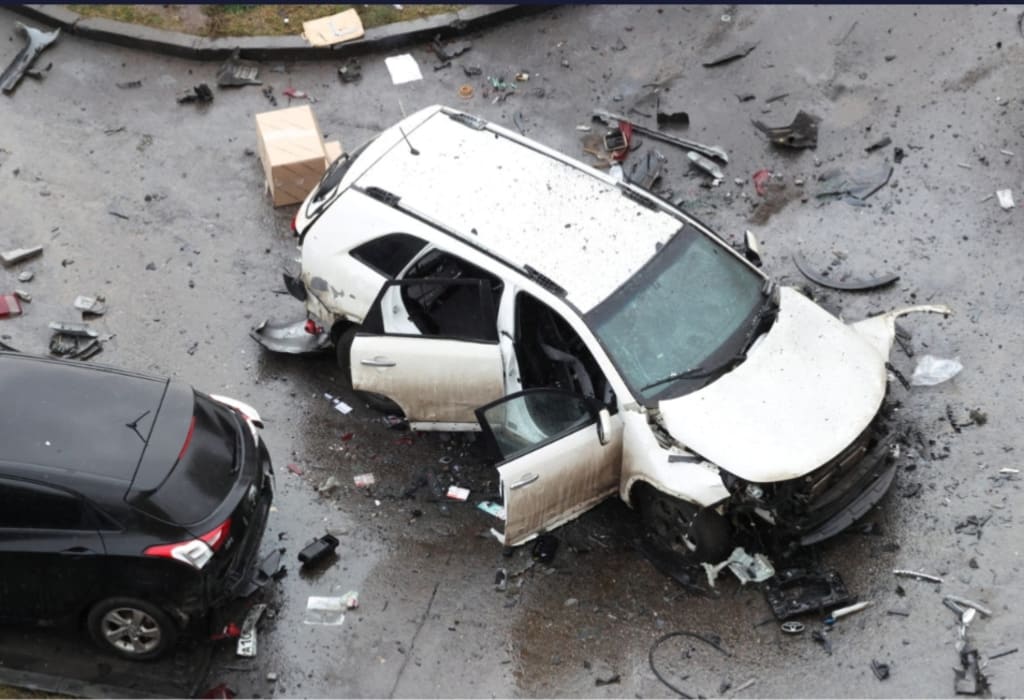
In a dramatic and unsettling incident that underscores the intensifying covert dimensions of the Russia-Ukraine conflict, a senior Russian general, Lieutenant General Fanil Sarvarov, was killed by a car bomb in southern Moscow on December 22, 2025, according to official Russian sources and international media. The attack has sent shockwaves through Russia’s military and political establishment, raising urgent questions about internal security, hybrid warfare, and the larger geopolitical stakes of the nearly four-year war with Ukraine.
Who Was Lt. Gen. Fanil Sarvarov?
Lieutenant General Fanil Fanisovich Sarvarov, 56, was a high-ranking Russian military officer who led the Operational Training Directorate of the Russian Armed Forces’ General Staff—an influential post responsible for preparing troops and shaping operational readiness. Sarvarov’s career spanned multiple conflicts, including the Chechen wars in the 1990s and early 2000s, deployment in Syria, and extensive involvement in the ongoing war in Ukraine.
Sarvarov was not a peripheral figure; his work directly influenced the training, tactics, and combat effectiveness of Russia’s forces. His death deprives the Russian military of a seasoned and strategically important leader at a time when the Kremlin has placed enormous emphasis on its war effort.
The Attack: How It Happened
According to investigators, an explosive device was placed beneath Sarvarov’s vehicle—a Kia Sorento—while it sat in a residential parking area on Yasenevaya Street in southern Moscow. The bomb detonated at approximately 06:55 local time as he was preparing to drive off, inflicting fatal injuries. Sarvarov was rushed to a hospital but succumbed to his wounds shortly afterward.
The blast was powerful enough to damage several nearby cars, and Russian security services quickly cordoned off the scene for forensic analysis, witness interviews, and security camera review.
Who Is Responsible? Russia Points to Ukraine
Within hours, Russian authorities indicated that they were exploring multiple lines of investigation, including the possible involvement of Ukrainian intelligence services. The Russian State Investigative Committee opened a formal criminal case under sections of the criminal code covering murder and illegal handling of explosives. Officials cited previous incidents where Ukraine was blamed for similar targeted killings of high-profile Russian figures.
Kyiv has not officially claimed responsibility for Sarvarov’s assassination. However, an unofficial Ukrainian site, Myrotvorets—which tracks individuals labeled as war criminals or enemies of Ukraine—updated its database to mark Sarvarov as “liquidated,” a designation often interpreted as suggesting Ukrainian involvement.
A Pattern of Targeted Killings
Sarvarov’s death appears to fit into an alarming trend of assassinations and bombing attacks targeting senior Russian military and political figures:
In December 2024, Lt. Gen. Igor Kirillov, head of Russia’s Nuclear, Biological, and Chemical Defence Forces, was killed by a bomb hidden on an electric scooter in Moscow’s residential area. Ukrainian sources openly claimed responsibility for that attack.
In April 2025, Lt. Gen. Yaroslav Moskalik, deputy chief of the General Staff’s Main Operations Directorate, died when an explosive device in his car detonated near his home outside Moscow.
These incidents suggest a disturbing pattern: high-level figures integral to Russia’s war strategy and military operations are increasingly vulnerable to explosive attacks, even in the heart of Moscow.
Russian Reaction and Domestic Implications
The Kremlin has reacted with alarm. President Vladimir Putin was reportedly briefed immediately following the killing, with government officials characterizing the incident as a grave security failure. Hardliners within the Russian political establishment have called for decisive retaliation and heightened vigilance against further such attacks.
State media and pro-government commentators have framed the attack as a sign of weakness within Russia’s security apparatus, intensifying criticism of the Federal Security Service (FSB) and other domestic counter-terrorism units. The broader message from Moscow has been one of outrage—both at the loss of a senior general and at the perceived audacity of an attack on Russian soil.
International and Strategic Implications
Internationally, the assassination has added a volatile new dimension to the Russo-Ukrainian war. Analysts say that such high-profile killings—whether carried out by intelligence operatives, irregular units, or proxy networks—reflect the growing sophistication and reach of asymmetric strategies employed by both sides.
For Ukraine, targeting top Russian commanders and influencers could be seen as a way to degrade leadership capabilities, disrupt operational continuity, and erode morale in Moscow. For Russia, these attacks underscore a sense of vulnerability that contradicts the Kremlin’s portrayal of invincibility.
Moreover, Sarvarov’s death comes at a time when diplomatic efforts—often brokered by Western mediators—are attempting to find pathways toward ending or de-escalating the conflict. How this assassination will influence negotiations is uncertain, but it is widely viewed as a potential complicating factor in talks involving Russia, Ukraine, and international partners.
Conclusion
The car bombing that killed Lieutenant General Fanil Sarvarov in Moscow is far more than a tragic headline—it marks a significant escalation in the covert dimensions of the Russia-Ukraine conflict. It highlights vulnerabilities within Russia’s security apparatus, raises troubling questions about the future of hybrid warfare tactics, and shines a spotlight on the murky, brutal realities of modern conflict where high-level military leaders can be targeted even far from the battlefield.
As investigations continue and geopolitical tensions remain high, analysts and policymakers alike will be closely watching how Moscow responds, how Kyiv addresses the accusations, and whether this attack shifts the broader strategic landscape of a war that shows no signs of abating.
About the Creator
Keep reading
More stories from Salaar Jamali and writers in Journal and other communities.
Highlights From New Year’s Eve Celebrations Around the Globe
As the calendar turned and a new year began, cities across the world erupted in color, music, and emotion, offering a powerful reminder of humanity’s shared traditions and diverse cultural expressions. New Year’s Eve is one of the few moments when billions of people, regardless of geography or background, pause together to mark the passage of time. The highlights from this year’s global celebrations reflected not only joy and spectacle, but also resilience, reflection, and hope for the future.
By Salaar Jamali11 days ago in Journal
The goals I did not achieve
Every writing goal I made for the year is a wash. It has been this way for a while, but I think it's important to be open about my failures and the reality of how life can get in the way. This is especially true considering the several times I have posted on Vocal about my writing goals, how I was changing my approach, and where I was hoping to be for the upcoming year. I will probably do that again in a couple months, but for now, it is time to acknowledge where I am today.
By Kay Husnick17 days ago in Journal
Where's the Glory?
In breaking news, rehabilitated Republican Senator Johnnie Johnson (Pronouns: HE, HIM, HIS) called a press conference from the Men’s room of the New Orleans Louis Armstrong International Airport, Concourse B, across from the Ignatius Reilly’s Lucky Dog stand. The Senator had just returned from a sexual reorientation rehabilitation program in Memphis, TN after being publically disgraced at a Buckee’s Truckstop restroom soliciting sex from an undercover cop three months ago. He is a founding member of the Reformed Christians for Christ, a conservative, pro-family and ex-gay advocacy group. In the spirit of being reborn, Senator Johnson invited reporters to marvel at his plans for a major remodeling of airport bathrooms.
By Cathy Schieffelin5 days ago in Humor



Comments
There are no comments for this story
Be the first to respond and start the conversation.