
Can Dr. Younis Restore Peace in Bangladesh Now?
Can Dr. Younis Restore Peace in Bangladesh Now?
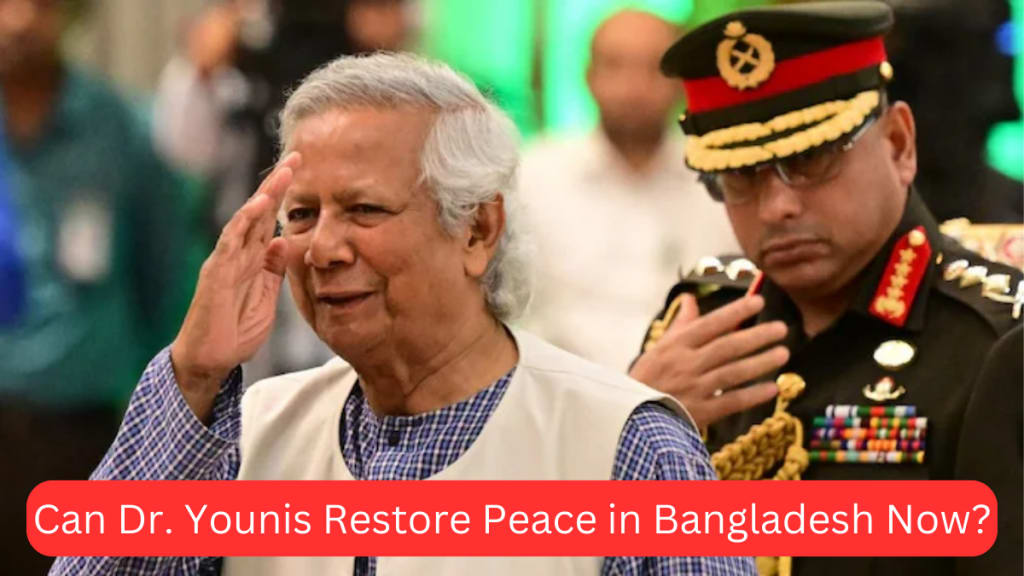
Bangladesh faces severe political turmoil. Violent protests and economic hardships plague the nation. The resignation of Prime Minister Sheikh Hasina has intensified the crisis. Dr. Younis, a Nobel laureate, now leads the interim government. His appointment brings hope for peace and stability. The potential impact of Dr. Younis's leadership on restoring peace is crucial. The international community supports his efforts. The future of Bangladesh hinges on his ability to unite the country.
The Current Political Turmoil in Bangladesh
Background of the Political Crisis
Key Events Leading to the Crisis
The political crisis in Bangladesh has deep roots. Student-led protests for civil reforms ignited the turmoil. These protests resulted in the deaths of hundreds. The persecution of minority populations, including Hindus, Buddhists, and Christians, intensified the situation. Radical Islamists attacked temples, houses, and businesses belonging to the Hindu community. The violence against minorities surged, prompting Transparency International Bangladesh to call for enhanced security.
Role of Sheikh Hasina and Her Resignation
Prime Minister Sheikh Hasina played a significant role in the crisis. Opposition parties demanded her resignation, arguing that a free and fair election required a neutral government. Public discontent grew due to economic hardship, high inflation, and corruption under her administration. Nationwide unrest reflected frustrations about authoritarianism. Hasina's resignation marked a turning point, leading to the appointment of Dr. Younis as the head of the interim government.
Impact on the General Population
Social and Economic Consequences
The ongoing turmoil has had severe social and economic consequences. The student protests led to significant economic losses estimated at billions of dollars. The Bangladeshi economy suffered losses of $10 billion due to the protests, curfews, and communication blackouts. Political unrest crippled the already shaky economy, hurting small traders and ordinary residents. The economic hardships exacerbated public discontent, making daily life challenging for many citizens.
Public Sentiment and Protests
Public sentiment has been deeply affected by the crisis. The violent protests and economic hardships have fueled anger and frustration among the general population. The opposition's push for Prime Minister Hasina to quit ahead of the general election resonated with many citizens. The promise of safety and stability under Dr. Younis's leadership has brought a glimmer of hope. However, the road to restoring peace remains fraught with challenges, as the nation grapples with the aftermath of the turmoil.
ALSO READ
Pakistani Man try to Kill the Donald Trump
Achievements and Background
Nobel Peace Prize and Social Entrepreneurship
Dr. Younis received the Nobel Peace Prize in 2006 for pioneering microfinance. His work with Grameen Bank revolutionized access to credit for the poor. This initiative helped millions escape poverty. Dr. Younis's approach emphasized social entrepreneurship. He believed in creating businesses that solve social problems. His vision extended beyond traditional charity models. Social business courses now exist in universities worldwide due to his influence.
Previous Contributions to Bangladesh
Dr. Younis has a long history of contributions to Bangladesh. He founded Grameen Bank, which provided microloans to the impoverished. This bank empowered women and small entrepreneurs. Dr. Younis also established the Yunus Centre. This center focuses on developing social businesses. His efforts have significantly impacted poverty alleviation in Bangladesh. Recognition as a public intellectual and numerous awards highlight his influence.
Why Dr. Younis is a Suitable Candidate
Leadership Qualities
Dr. Younis possesses exceptional leadership qualities. His ability to inspire and mobilize people stands out. He has demonstrated resilience in the face of challenges. Dr. Younis's leadership style is inclusive and collaborative. He brings diverse groups together to achieve common goals. His commitment to ethical principles guides his actions. These qualities make him an ideal leader for Bangladesh during turbulent times.
Vision for Peace and Development
Dr. Younis envisions a peaceful and prosperous Bangladesh. He advocates for an independent judiciary and a depoliticized election commission. His focus on fair governance resonates with many citizens. Dr. Younis aims to restore unity and stability in the nation. He believes in addressing the root causes of conflict. His vision includes sustainable development and social justice. The international community supports his efforts, enhancing his credibility. READ MORE
About the Creator
Keep reading
More stories from Muhammad Talha and writers in Journal and other communities.
Author’s Advice
If you would’ve asked me 20 years ago did I know I’d become a writer and an author, I would’ve said “nope, ain’t happening”. As fate would have it I did become an author and I can honestly say I’m loving it so far. It really does feel good to be a writer. I’ve learned a lot on this journey and I feel like with even me being as new to this world as I am, there’s some wisdom I need to share with every other aspiring author.
By Joe Patterson4 days ago in Journal




Comments (2)
Thanks for sharing
Excellent written