
Building Resilient Organizations: The Role of Strategic HR and Business Consulting
In today's unpredictable global economy, businesses face various challenges: economic uncertainty, fast-paced technological advancements, workforce shifts, and evolving consumer expectations.


In today's unpredictable global economy, businesses face various challenges: economic uncertainty, fast-paced technological advancements, workforce shifts, and evolving consumer expectations. To navigate this complex environment, companies must be more than agile; they must be resilient. But what exactly makes an organization resilient?
Resilient businesses' core lies in adapting, recovering, and growing stronger from disruption. And two pillars are essential in cultivating that adaptability: strategic human resource management and forward-thinking business consulting.
What is Organizational Resilience?
Organizational resilience refers to a company's ability to anticipate disruption, respond effectively, and continue operations under stress or change. It's not just about surviving a crisis; it's about thriving despite it. From the COVID-19 pandemic to supply chain disruptions and cybersecurity threats, recent years have shown that companies that respond strategically to uncertainty are far better positioned to succeed in the long run.
Resilience is built over time and is shaped by culture, leadership, systems, and most importantly, people.
The Human Element of Resilience
Employees are the beating heart of any organization. Their ability to adapt, innovate, and collaborate under pressure drives business continuity and performance. But this doesn't happen by chance. It requires intentional strategy and investment. This is where modern human resource consulting becomes invaluable.
Resilient organizations take a proactive approach rather than treating HR as a reactive or administrative function. They work closely with HR experts to create systems that support employee well-being, enable rapid skill development, and maintain productivity in changing environments.
Through customized approaches in workforce planning, employee engagement, and leadership development, HR consulting services can help companies build stronger internal frameworks that can withstand external pressure. These services are critical in assessing gaps, designing people-first policies, and supporting transitions during growth or crisis.
Why Strategy and Culture Go Hand in Hand
One of the greatest strengths of resilient companies is their culture. It's not just about having a strong brand or mission statement; it's about how people behave when no one is watching, especially during tough times.
Human resources play a central role in shaping and maintaining culture. This includes:
• Reinforcing organizational values through policies and behavior modeling
• Ensuring leaders are equipped to manage teams through change
• Fostering trust and psychological safety across all levels
Companies that invest in these cultural dimensions tend to have more engaged employees, better performance outcomes, and lower turnover, each contributing directly to resilience.
Bridging Business Strategy and Human Capital
While people are essential to resilience, they cannot succeed in a vacuum. Businesses also need coherent strategies that align resources with objectives. That's where external business consulting becomes critical.
Business consultants offer an external perspective, backed by data, industry benchmarks, and years of experience. They help organizations clarify their goals, improve operational efficiency, and anticipate future challenges. More importantly, they bridge the gap between strategy and execution, ensuring that plans are well-designed and realistically implementable.
One key area where business consulting and HR strategy intersect is during periods of transformation. Whether digital innovation, market expansion, or restructuring, aligning business and HR strategies ensures smoother transitions and long-term viability. Leading business consultants highlight how this integrated approach can unlock new growth opportunities while minimizing organizational friction.
The Role of Leadership in Resilience
Resilient organizations often have something else in common: strong, emotionally intelligent leadership. Employees look to leaders for direction, reassurance, and clarity during uncertain times. Leadership must be prepared not only to make quick decisions but also to communicate transparently and empathetically.
Strategic HR teams play a key role here by supporting leadership development programs, offering coaching, and identifying potential leaders early on. Companies that regularly invest in leadership pipelines are better equipped to handle succession, manage change, and maintain continuity when key individuals leave.
Additionally, leaders must foster inclusivity, openness to feedback, and continuous improvement, all characteristics that encourage team adaptability and cohesion.
Reskilling and Upskilling: The Lifeblood of Future-Proofing
The World Economic Forum estimates that over 50% of all employees will require reskilling by 2027. The pace of technological change means that roles are evolving faster than traditional learning and development methods can accommodate.
Forward-thinking organizations are addressing this head-on. Strategic HR initiatives include personalized learning pathways, micro-credentials, mentorship, and cross-training. By investing in employees' growth, companies retain top talent and build internal flexibility, a key ingredient for resilience.
Moreover, business consultants often advise on workforce transformation initiatives, including technology integration and digital literacy, ensuring businesses can confidently meet tomorrow's demands.
Digital Infrastructure: A Backbone of Modern Resilience
Technology enables agility, scalability, and real-time decision-making. Companies that adopted cloud-based systems, remote collaboration tools, and data-driven analytics early on were better prepared to manage disruptions like global lockdowns or cyber threats.
From an HR perspective, digital tools such as performance management software, engagement tracking platforms, and AI-powered recruitment solutions offer more innovative, faster, and more transparent ways to manage people.
On the consulting side, digital transformation strategies help streamline operations, enhance customer experiences, and enable innovation. Together, these efforts allow companies to act quickly and pivot, hallmarks of resilient enterprises.
Practical Steps Toward Organizational Resilience
If resilience is the goal, how can companies actively build it? Here are a few foundational steps:
• Assess Vulnerabilities: Conduct an internal audit of operational, financial, and talent-related risks. Look for weak points in supply chains, technology, and workforce planning.
• Align HR and Business Strategy: Ensure HR initiatives support the overall direction of the business. Collaboration between HR leaders and business consultants can align people, processes, and priorities.
• Invest in Leadership and Culture: Equip leaders to manage through change and nurture a culture that supports learning, innovation, and adaptability.
• Strengthen Communication Channels: Transparent, two-way communication builds trust, reduces misinformation, and keeps teams aligned.
• Create a Talent Development Framework: Focus on continuous learning, role flexibility, and internal mobility to prepare for future shifts in demand.
• Leverage Technology: Use digital tools to gather insights, automate routine processes, and stay agile in decision-making.
• Plan for Succession and Continuity: Have contingency plans for key roles and ensure knowledge transfer systems are in place.
Final Thoughts
Resiliency is not optional in a world marked by volatility and transformation; it's a competitive advantage. And at the center of that resilience is a deliberate combination of strategic human resource management and expert business consulting.
Organizations that take a proactive approach, investing in their people, aligning their strategy, and embracing change, are the ones that will emerge stronger, no matter what the future holds.
Whether through structured HR frameworks or comprehensive consulting insights, building a resilient organization is both an art and a science and now more important than ever.
About the Creator
Keep reading
More stories from Shiraz Kahn and writers in Journal and other communities.
Spotting Red Flags Before You Click: A Practical Guide
In the digital age, scams are changing increasingly quickly. Whether it is phishing emails or fake websites, or fraudulent coats and social media ads, criminals are always renewing hacks to deceive people of their personal information or money. One of the best defenses against these tactics is to know what the red flags look like before you click on something you shouldn’t. With this guide, you will identify what a scam is and how a scam checker can increase your level of protection.
By Shiraz Kahn6 months ago in Journal
How AI Agent Development Companies Design Autonomous Workflows
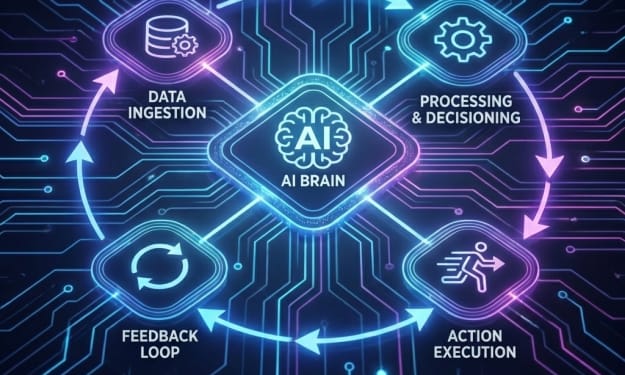
Autonomous workflows aren’t about replacing humans they’re about removing friction from decision-heavy processes. AI agent development companies focus on designing systems that can observe, decide, act, and improve with minimal human intervention.
By Lilly Scott3 days ago in Journal



Comments
There are no comments for this story
Be the first to respond and start the conversation.