
BP Suspends Share Buybacks as Profits Slump Amid Market Headwinds
Financial pressures, weak oil prices, and strategic shifts lead the British energy giant to halt buybacks and refocus on balance sheet strength
The global energy sector has long been shaped by cycles of boom and bust, but for BP plc, the latest downturn is proving particularly challenging. In a move that surprised investors and analysts alike, the British oil major recently announced the suspension of its share buyback program, citing a sharp decline in profits and the need to protect its financial position.
This decision marks a significant shift in BP’s capital allocation strategy and highlights the mounting pressures facing even the world’s largest energy companies. As oil prices remain subdued and the costs of strategic missteps come into focus, BP’s latest move raises important questions about its future direction and long-term stability.
Understanding Share Buybacks and Why They Matter
Share buybacks are a popular tool used by large corporations to return excess cash to shareholders. By repurchasing their own shares from the market, companies reduce the number of outstanding shares, often boosting earnings per share and supporting stock prices.
For BP, buybacks have been a key component of shareholder returns in recent years, particularly during periods of strong cash flow. Suspending them sends a clear message: the company is prioritizing financial resilience over short-term investor rewards.
While dividends remain intact for now, the halt in buybacks signals that BP is entering a more cautious phase — one shaped by uncertainty, tighter margins, and the need to preserve capital.
Profits Take a Hit Amid Tough Market Conditions
BP’s decision follows a notable decline in its annual profits. The company reported a significant drop in underlying replacement cost profit, a key industry metric that reflects the true performance of oil and gas operations.
Several factors contributed to this downturn:
Weak global oil prices, which stayed below historical averages for much of the year
Lower refining margins, squeezing downstream earnings
Write-downs in renewable and low-carbon investments that failed to deliver expected returns
These challenges combined to erode BP’s profitability, forcing management to rethink how cash is deployed across the business.
Oil Prices and the Broader Energy Slowdown
One of the biggest pressures on BP has been the prolonged weakness in crude oil prices. Slower global economic growth, increased supply, and geopolitical uncertainty have all played a role in keeping prices under pressure.
Unlike some of its peers, BP entered this period with less financial flexibility, making it more vulnerable to sustained price weakness. As revenues fell, maintaining aggressive shareholder payouts became increasingly difficult to justify.
The suspension of buybacks reflects the reality that BP must adapt to a lower-margin environment — at least in the near term.
The Cost of a Complicated Energy Transition
BP has spent years positioning itself as a leader in the transition to cleaner energy. However, that ambition has come at a cost. The company recently recorded multi-billion-dollar impairments related to renewable energy and biogas projects that underperformed expectations.
While the push toward low-carbon energy remains strategically important, these write-downs highlight the financial risks involved. BP now appears to be recalibrating its approach, placing renewed emphasis on core oil and gas operations while reassessing the pace and scale of its green investments.
This strategic balancing act — between sustainability goals and financial discipline — remains one of BP’s biggest challenges.
Debt Reduction Takes Center Stage
Another key reason behind the buyback suspension is BP’s focus on reducing net debt. Although the company has made progress in lowering its debt levels, management has signaled that further reductions are necessary to strengthen the balance sheet.
In an industry prone to volatility, maintaining a strong financial foundation is critical. Redirecting cash from buybacks to debt reduction gives BP greater flexibility to weather future downturns and invest selectively when opportunities arise.
For long-term investors, this may ultimately prove to be a prudent move — even if it causes short-term disappointment.
Investor Reaction and Market Sentiment
Unsurprisingly, the market reaction to BP’s announcement was negative. Shares fell sharply following the news, reflecting concerns about earnings momentum and confidence in management’s strategy.
Some investors view the suspension as a warning sign, suggesting that BP is underperforming compared to rivals that continue to return cash through buybacks. Others, however, see it as a necessary reset — one that prioritizes sustainability over optics.
Analysts remain divided, but many agree that BP’s next steps will be critical in determining whether the company can regain investor trust.
Leadership Change and a Strategic Reset
The timing of the buyback suspension is notable, as BP is also preparing for a change in leadership. A new chief executive is set to take the helm, bringing the promise of a fresh perspective and potentially a revised strategy.
This transition offers BP an opportunity to reassess its priorities, streamline operations, and clarify its long-term vision. Investors will be watching closely to see whether the new leadership can strike the right balance between profitability, capital discipline, and energy transition goals.
What Lies Ahead for BP?
BP’s decision to suspend share buybacks is more than a financial adjustment — it is a reflection of deeper structural and strategic challenges. The company is navigating a complex landscape marked by volatile energy prices, evolving climate expectations, and intense competition from global peers.
Whether this move proves to be a turning point or a temporary setback will depend on BP’s ability to execute its strategy effectively. Strong cost control, disciplined investment, and clear leadership will be essential in restoring confidence and delivering long-term value.
Final Thoughts
In an era of uncertainty for the energy industry, BP’s latest decision underscores a hard truth: even the biggest players are not immune to market realities. Suspending share buybacks may disappoint investors today, but it could also lay the groundwork for a more resilient and focused company tomorrow.
As BP charts its path forward, one thing is clear — the choices made now will shape its future for years to come.
About the Creator
Keep reading
More stories from Ayesha Lashari and writers in Journal and other communities.
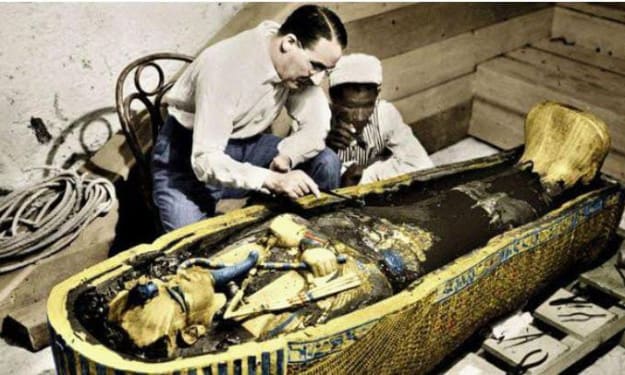
“A Gasp of Wonderment Escaped Our Lips”: The Dazzling Discovery of Tutankhamun’s Tomb
In November 1922, a moment of history unfolded in the Valley of the Kings that would forever etch the name Tutankhamun into the annals of archaeology. British archaeologist Howard Carter, after years of meticulous excavation, uncovered a hidden doorway leading to the tomb of Egypt’s boy king. As Carter peered inside, he famously whispered to his patron, Lord Carnarvon, “At last, wonderful things!” — a gasp of wonderment that captured the world’s imagination.
By Ayesha Lasharia day ago in Journal
The Strangers Chapter 3 Movie Review: A Disappointing End to the Horror Trilogy
The Strangers Chapter 3 is being marketed as the epic finale to the new Strangers trilogy. And yes, I’m specifying “new” because let’s not forget—there was the original The Strangers, which was actually pretty solid. Then it got a not-so-great sequel.
By Bella Andersonabout 5 hours ago in Journal



Comments
There are no comments for this story
Be the first to respond and start the conversation.