
Black Sea Oil Spill: Unveiling the Tragic Incident and Its Devastating Aftermath
Navigating the Ripple Effects of a Maritime Tragedy in the Black Sea

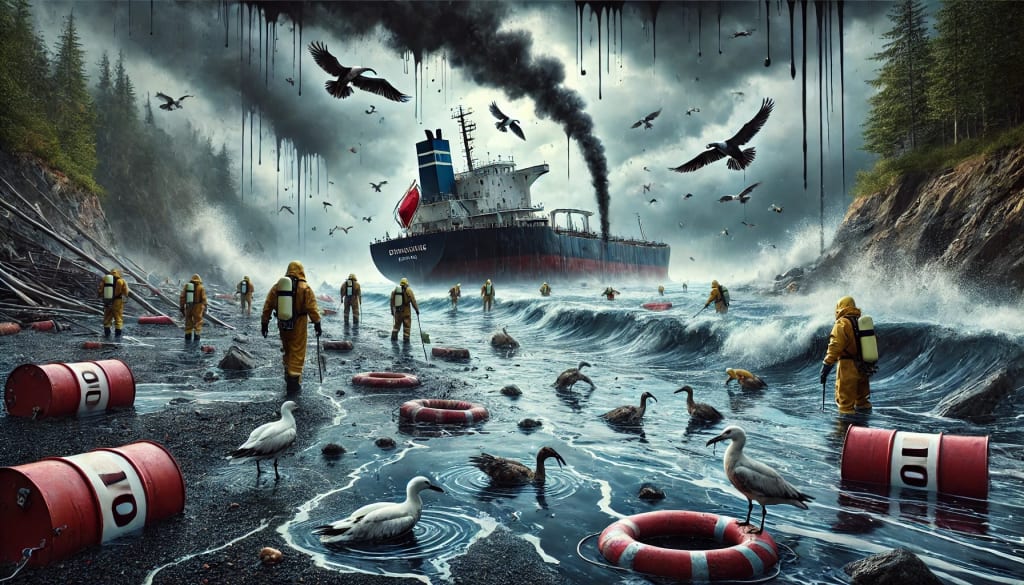
The tranquil waters of the Black Sea have turned into a scene of environmental disaster following a catastrophic oil spill on December 15, 2024. The incident, caused by the severe damage of two Russian oil tankers during a storm in the Kerch Strait, has sent shockwaves through local communities, environmentalists, and international observers. This article delves into the severity, environmental and human impacts, cleanup efforts, and the global response to this unfolding tragedy.
The Incident: A Storm's Fury Unleashed
The crisis began when two Russian oil tankers, Volgoneft-212 and Volgoneft-239, were caught in a violent storm while navigating the narrow Kerch Strait. The Volgoneft-212 split in two and sank, releasing its cargo of mazut—an extremely heavy fuel oil—into the sea. The Volgoneft-239, while avoiding a similar fate, ran aground, further exacerbating the situation.
Both tankers were carrying thousands of tons of mazut, a substance notorious for its persistence and toxicity in marine environments. Although investigations are ongoing, initial reports point to stormy weather and potential crew errors as significant contributors to the disaster.
Environmental Catastrophe
The magnitude of the spill has left the Black Sea reeling under an environmental crisis of immense proportions. The heavy mazut has already spread across a significant stretch of coastline, threatening marine ecosystems and local wildlife. This toxic oil is known to cling stubbornly to surfaces, making cleanup efforts arduous and time-consuming.
Marine life has borne the brunt of the spill. Oil-coated seabirds, suffocated fish, and damaged coral reefs present a grim picture of the ecological toll. The impact extends to popular tourist destinations, where pristine beaches have turned into slicks of oil, leaving local economies in jeopardy.
Human Impact: Communities in Peril
The human toll of this disaster is equally dire. Fishermen, who depend on the sea for their livelihoods, are facing an uncertain future as contaminated waters render fishing activities unviable. Tourism-based businesses are witnessing cancellations and reduced footfall, further deepening the economic distress in affected regions.
Local residents are grappling with the overpowering stench of oil, which has permeated coastal areas. Concerns about drinking water safety and potential health hazards, including respiratory issues and skin irritations, are mounting. The spill has disrupted daily life, leaving communities anxious and frustrated.
Cleanup Efforts: A Herculean Task
In response to the disaster, Russian authorities declared a federal-level emergency, mobilizing thousands of responders, volunteers, and specialized equipment. Cleanup operations are underway, but the nature of mazut poses significant challenges. The oil’s heavy composition and sticky texture make it difficult to remove from both water surfaces and coastal terrain.
Despite the deployment of containment booms, skimmers, and chemical dispersants, progress remains slow. Critics have raised concerns about the adequacy of the response and the potential for long-term damage, questioning whether the current measures are enough to mitigate the spill's devastating impact.
International Response and Calls for Action
The Black Sea oil spill has drawn international attention, with countries expressing concern about its far-reaching consequences on the region's ecosystem. Offers of assistance have come from neighboring nations and environmental organizations, highlighting the need for global solidarity in combating marine pollution.
The incident has also reignited discussions about international marine safety protocols. Experts are calling for stricter regulations on oil transportation, improved disaster preparedness, and enhanced cooperation to tackle oil spills effectively. This disaster serves as a grim reminder of the vulnerabilities associated with maritime oil transport, particularly in high-risk regions.
The Road Ahead: Challenges and Hope
As cleanup efforts continue, the situation remains fluid, with new developments emerging daily. The focus now is on minimizing further environmental degradation while addressing the needs of affected communities.
For many, this disaster underscores the urgent need to transition away from heavy fuel oils like mazut and towards cleaner energy alternatives. It also highlights the critical importance of investing in robust disaster response frameworks to mitigate the impact of future spills.
Conclusion
The Black Sea oil spill is a stark illustration of the fragile balance between human activity and the natural world. The damage to marine ecosystems, local communities, and the region’s economy is a sobering reminder of the high stakes involved in oil transportation.
As the world watches, the efforts to recover from this disaster serve as a crucial test of humanity’s resolve to protect the environment. Only through collective action, innovation, and a commitment to sustainability can such tragedies be averted in the future.
Stay tuned for further updates as the story unfolds, offering hope that the lessons learned here will pave the way for a safer, more responsible approach to maritime operations.
About the Creator
Det. Marcus
I'm a reporter, detective, YouTuber, and article writer based in Florida with 7+ years of experience. Since 2017, I've been uncovering stories, creating engaging content, and delivering unique perspectives across multiple platforms.
Keep reading
More stories from Det. Marcus and writers in Journal and other communities.
Party City Closes Its Doors: The End of an Era for Party Supplies
In a bittersweet turn of events, Party City, the beloved retail chain synonymous with celebrations and festive gatherings, is closing all its stores. This marks the end of a significant chapter in the party supply industry. Announced on Friday, December 20, 2024, by CEO Barry Litwin, the decision comes after years of financial struggles and market challenges.
By Det. Marcusabout a year ago in Journal
The goals I did not achieve
Every writing goal I made for the year is a wash. It has been this way for a while, but I think it's important to be open about my failures and the reality of how life can get in the way. This is especially true considering the several times I have posted on Vocal about my writing goals, how I was changing my approach, and where I was hoping to be for the upcoming year. I will probably do that again in a couple months, but for now, it is time to acknowledge where I am today.
By Kay Husnick21 days ago in Journal
How do I Become a Mobile App Developer in 2026
The path to becoming a mobile app developer has changed. It has shifted from mastery of syntax to Entity Accountability. It now focuses on high-level architecture stewardship. The shift occurred within a post-generative development economy. In 2026, the barrier to entry is no longer writing code. The new barrier is validating the integrity of systems. You must also validate the security of AI-mediated discovery systems.
By Del Rosario2 days ago in Journal



Comments
There are no comments for this story
Be the first to respond and start the conversation.