
Biochar Market Soars to USD 6.3B by 2033: Key Trends & Applications
The global biochar market size was valued at USD 2.2 Billion in 2024. Looking forward, IMARC Group estimates the market to reach USD 6.3 Billion by 2033, exhibiting a CAGR of 10.9% from 2025-2033.


Introduction
Biochar stands at the forefront of sustainable innovation, transforming agricultural waste into a powerful tool for soil enhancement and carbon sequestration. This carbon-rich material, derived from organic matter through pyrolysis, is reshaping farming practices and environmental strategies globally. As climate change and soil degradation intensify, biochar’s potential to boost crop yields and lock away carbon makes it a game-changer. Dive into this comprehensive exploration of the biochar market, uncovering its growth, trends, applications, and future opportunities from 2025 to 2033.
Overview of the Biochar Market
Biochar, a charcoal-like substance produced by heating organic materials like wood chips, crop residues, or manure in a low-oxygen environment, is gaining traction for its environmental and agricultural benefits. Its porous structure enhances soil fertility, retains water, and sequesters carbon, making it a cornerstone of sustainable agriculture. The market is driven by rising demand for organic farming, climate change mitigation efforts, and supportive government policies. Below are key insights into the biochar market’s dynamics:
- Sustainability Driver: Biochar converts agricultural waste into a valuable resource, reducing landfill use and emissions.
- Soil Enhancement: Improves nutrient retention and microbial activity, boosting crop productivity.
- Carbon Sequestration: Locks carbon in soil for centuries, aiding climate change mitigation.
- Versatile Applications: Used in agriculture, water treatment, and livestock feed.
- Global Adoption: Growing interest in North America, Europe, and Asia-Pacific due to environmental policies.
This market is poised for significant expansion as industries and governments prioritize eco-friendly solutions, with biochar leading the charge in sustainable innovation.
Market Size & Growth
Global biochar market size was valued at USD 2.2 billion in 2024, with IMARC Group estimating it will reach USD 6.3 billion by 2033, exhibiting a CAGR of 10.9% from 2025-2033. North America dominates, holding over 41.4% market share in 2024, driven by advanced agricultural practices and policy support. This growth reflects increasing adoption in farming, environmental applications, and carbon credit markets. Key factors fueling this expansion include:
- Agricultural Demand: Farmers use biochar to enhance soil health and reduce fertilizer costs.
- Policy Support: Governments offer incentives for carbon-negative practices.
- Climate Focus: Rising awareness of biochar’s role in reducing greenhouse gas emissions.
- Regional Growth: Asia-Pacific shows rapid adoption due to large agricultural sectors.
- Investment Surge: Increased funding for biochar production facilities globally.
These drivers underscore biochar’s growing role in sustainable agriculture and environmental management, with North America leading due to its robust infrastructure and policy framework.
Key Trends in the Biochar Market
Several trends are shaping the biochar market’s trajectory, driven by technological advancements and environmental priorities. Adoption of slow pyrolysis technology dominates due to its efficiency in producing high-quality biochar with minimal emissions. Growing interest in carbon credit markets is boosting demand, as biochar projects generate revenue through carbon sequestration. Customization of biochar for specific soil types and crops is also gaining momentum, enhancing its efficacy. Key trends include:
Technological Advancements: Slow pyrolysis leads for its adaptability to diverse feedstocks, ensuring high carbon retention.
Carbon Credits: Projects like India’s Samunnati Carbon Incubator Facility (launched September 2024) integrate biochar for carbon revenue.
- Customized Solutions: Tailored biochar formulations improve outcomes for regional soils and crops.
- Circular Economy: Converting agricultural waste into biochar aligns with waste reduction goals.
- Policy Integration: Governments promote biochar through subsidies and sustainability mandates.
These trends highlight biochar’s evolving role in addressing global challenges like soil degradation and climate change, with innovations driving broader adoption.
Industry Applications
Biochar’s versatility extends across multiple sectors, with agriculture leading the charge. In farming, it enhances soil structure, boosts water retention, and reduces nutrient leaching, improving crop yields. For instance, Ghana’s cocoa biochar project (December 2024) converts pod husks into biochar, enhancing soil health and reducing emissions. Beyond agriculture, biochar is used in water filtration, livestock feed, and even construction materials. Key applications include:
- Agriculture: Enhances soil fertility, reducing fertilizer use and increasing yields.
- Water Treatment: Adsorbs contaminants, improving water quality in filtration systems.
- Livestock Feed: Improves digestion and reduces methane emissions in cattle.
- Construction: Used as an additive in eco-friendly building materials.
- Carbon Sequestration: Locks carbon in soil, supporting climate goals.
These diverse applications demonstrate biochar’s potential to transform industries while promoting sustainability and environmental resilience.
Regulatory Landscape
Regulatory frameworks play a pivotal role in the biochar market’s growth. Governments worldwide are introducing policies to support sustainable agriculture and carbon sequestration. The European Biochar Certificate ensures sustainable production standards, while in India, subsidies encourage farmers to use crop residues for biochar. In the U.S., federal renewable energy mandates promote biochar adoption. However, challenges like inconsistent global standards persist. Key regulatory aspects include:
- Sustainability Standards: Certifications like the European Biochar Certificate ensure quality and safety.
- Subsidies and Incentives: India’s government supports biochar production through financial aid.
- Carbon Credit Policies: Enable revenue generation for biochar-based carbon sequestration projects.
- Regional Variations: North America and Europe lead with robust regulations, while Asia-Pacific is catching up.
Challenges: Lack of universal standards hinders global market scalability.
These regulations foster biochar adoption but require harmonization to unlock its full potential across regions and industries.
Grab a sample PDF of this report: https://www.imarcgroup.com/biochar-market/requestsample
Challenges in the Biochar Market
Despite its promise, the biochar market faces several hurdles. High production costs, driven by expensive pyrolysis equipment, limit scalability, especially in developing regions. Limited awareness among farmers about biochar’s benefits hampers adoption. Variability in biochar quality due to differing feedstocks and production methods also poses challenges. Additionally, regulatory inconsistencies across countries create barriers. Key challenges include:
High Costs: Pyrolysis equipment and production processes require significant investment.
Low Awareness: Many farmers lack knowledge of biochar’s long-term benefits.
Quality Variability: Inconsistent feedstock and methods affect biochar performance.
Regulatory Gaps: Lack of global standards complicates market expansion.
Scalability Issues: Infrastructure limitations in developing regions hinder growth.
Addressing these challenges through education, cost reduction, and standardized regulations will be critical for the market’s sustained growth.
Future Opportunities
The biochar market holds immense potential as sustainability becomes a global priority. Expanding applications in water treatment and construction offer new revenue streams. Advances in pyrolysis technology promise cost reductions, making biochar more accessible. Growing carbon credit markets provide financial incentives, as seen in Google’s 200,000-ton biochar carbon removal deal (January 2025). Emerging economies in Asia-Pacific present untapped markets. Key opportunities include:
New Applications: Expanding use in water filtration and eco-friendly construction materials.
Technological Innovation: Improved pyrolysis systems to lower production costs.
Carbon Markets: Increasing demand for carbon credits boosts biochar projects.
Emerging Markets: Asia-Pacific’s agricultural growth offers significant potential.
Research Investment: Enhanced R&D for tailored biochar solutions.
These opportunities position biochar as a cornerstone of sustainable development, with vast potential to reshape agriculture and environmental strategies.
Conclusion
Biochar represents a transformative solution for sustainable agriculture and climate change mitigation. Its ability to enhance soil health, sequester carbon, and repurpose waste makes it a vital tool for a greener future. With a projected market growth to USD 6.3 billion by 2033, driven by innovations and supportive policies, biochar’s role is set to expand. Overcoming challenges like high costs and regulatory gaps will unlock its full potential, ensuring biochar drives environmental and agricultural progress globally.
About the Creator
sujeet. imarcgroup
With 2 years of hands-on experience at IMARC Group, I have conducted in-depth market research and analysis across diverse industries including technology, healthcare, agriculture, and consumer goods.
Keep reading
More stories from sujeet. imarcgroup and writers in Journal and other communities.
Acoustic Camera Market Size, Share, Growth, and Trends Forecast 2025-2033
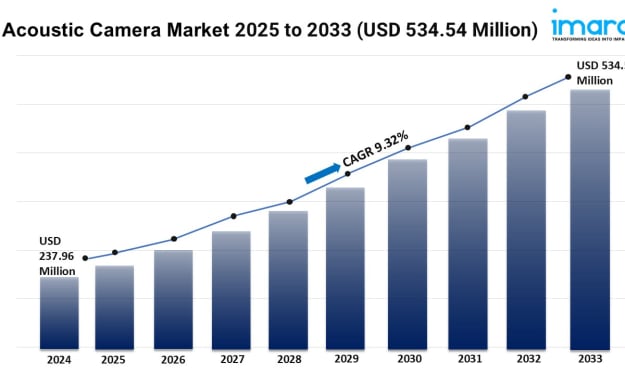
Market Overview: The acoustic camera market is experiencing rapid growth, driven by rising drug safety concerns, outsourcing to specialized providers, and ai and automation adoption. According to IMARC Group's latest research publication, "Acoustic Camera Market Report by Array Type (2D, 3D), Measurement Type (Far Field, Near Field), Application (Noise Source Detection, Leak Detection, and Others), End Use (Aerospace and Defense, Infrastructure, Energy and Power, Automotive, and Others), and Region 2025-2033". offers a comprehensive analysis of the industry, which comprises insights on the global acoustic camera market share. The global market size was valued at USD 237.96 Million in 2024. Looking forward, IMARC Group estimates the market to reach USD 534.54 Million by 2033, exhibiting a CAGR of 9.32% from 2025-2033.
By sujeet. imarcgroup6 months ago in Journal
The goals I did not achieve
Every writing goal I made for the year is a wash. It has been this way for a while, but I think it's important to be open about my failures and the reality of how life can get in the way. This is especially true considering the several times I have posted on Vocal about my writing goals, how I was changing my approach, and where I was hoping to be for the upcoming year. I will probably do that again in a couple months, but for now, it is time to acknowledge where I am today.
By Kay Husnick23 days ago in Journal
Agatha Christie’s Seven Dials Mystery Netflix Review
Netflix has dipped into the vault of one of the undeniable Masters of Mystery and pulled out a fresh adaptation. This time, it’s Agatha Christie’s Seven Dials—technically book two in the Superintendent Battle series, but the first one getting the streaming treatment.
By Bella Andersonabout 19 hours ago in Journal


Comments
There are no comments for this story
Be the first to respond and start the conversation.