
Billion-Dollar Startup Failures
The Cost of Overconfidence in the Startup World
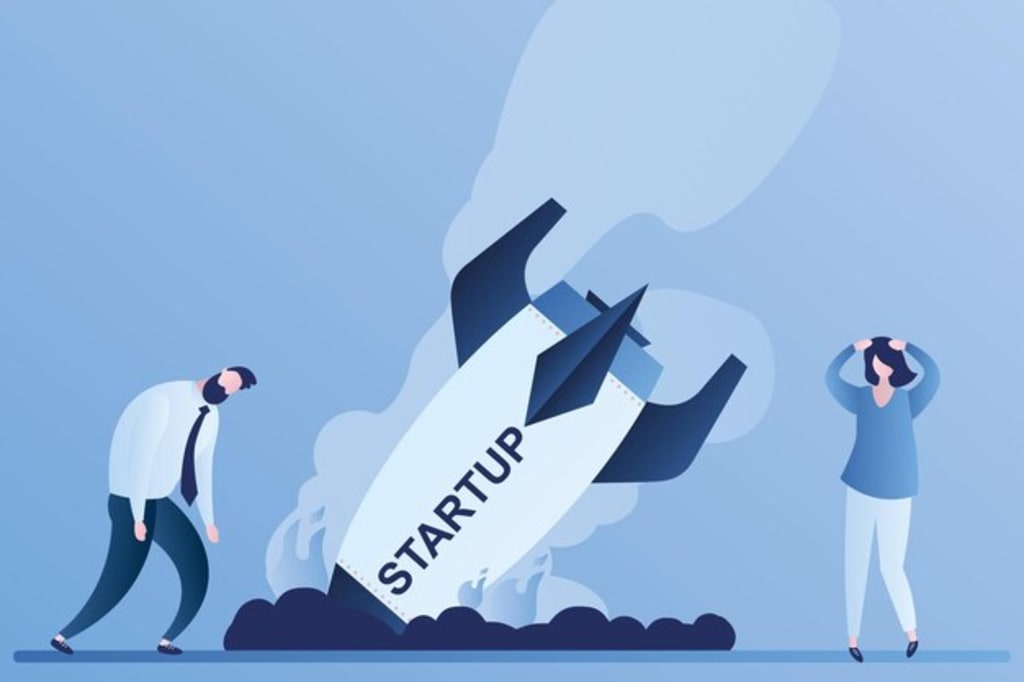
The Rise and Demise of Startups With Perfect Everything.
Startups are built on dreams. If it, the percentage of these dreams, becomes large enough to be as big as Apple, Amazon or Tesla, etc. Others rise fast, attract billions in funding, and seem destined for success—until they collapse under their own weight.
These companies had cash, media, and market power—yet they all went bust spectacularly. What went wrong?
Let's discuss some of the greatest commercial collapses from the startup world and what they have to teach us.
1. WeWork – The $47 Billion DisasterIllusion
The Dream That Sold a Movement
WeWork wasn’t just a company; it was a vision. The idea? Transform boring office spaces into hip, community-driven coworking hubs. With hip interiors, free beer and networking opportunities, they set themselves up as members of the new generation. Investors, including SoftBank, fell madly in love with
this vision and invested billions of dollars into its coffers and skyrocketed WeWork's valuation to a massive $47 billion.
The Cracks Beneath the Surface
The dream looked perfect, but reality told a different story:
- Rapid expansion without a path to profitability.
- CEO Adam Neumann's lavish spending—privacy jets, high end real estate, and quirky personal investments.
- An IPO process that exposed the fragility of the company's business model.
The Collapse of an Empire
Investors looked twice at the numbers the time WeWork attempted to go public. The company was hemorrhaging cash at an unsustainable pace and its valuation evaporated from $47 billion to less than $10 billion in just a few months. Neumann was forced out, and WeWork barely survived.
Lesson Learned: However, a good brand and culture will not be enough to save a company without, as a support, a sustainable business model
2. Theranos – The $9 Billion Science Fiction
A Health-Tech Revolution That Never Existed
Theranos, led by Elizabeth Holmes, promised a medical breakthrough—blood tests that required only a few drops of blood instead of large vials. The potential was huge, and investors believed in it. Theranos soared to the equivalent of $9 billion in valuation and Holmes, among other things, was dubbed the new Steve Jobs.
The Dark Side of Innovation
But the entire company was built on deception:
- The technology never actually worked.
- Employees were pressured to stay silent about the flaws.
- Fake test results put real patients at risk.
The Moment of Truth
Investigative journalists exposed the fraud, the company filed for bankruptcy and Holmes stood trial. She was ultimately sentenced to prison for defrauding investors.
Lesson Learned: The persuasive vision can make you billionaire, but then the realities will catch you fast and swallow the process while you are unable to deliver.
3. Quibi – The $1.75 Billion Streaming Misfire
The ‘Next Big Thing’ That Nobody Wanted
Launched, Quibi was poised to change mobile entertainment-high-quality content shot using mobile cameras-Hollywood style. Having an investment of $1.75 billion, a star-studded cast, and experienced leaders it appeared to be a given.
Why It Crashed So Quickly
- People weren’t looking for premium short-form content.
- The platform was mobile-only, ignoring consumer habits.
- It launched in 2020 - in the middle of the COVID-19 lockdown, when people were confined to their homes but not looking for spontaneous mobile entertainment.
A $1.75 Billion Failure
Six months after launch, Quibi shut down. Content was not the issue—it was the business model that was faulty from the very beginning.
Lesson Learned: Despite the billions of dollars spent in pursuit of success, it remains dependent on consumer behavior.
4. Juicero – The $700 Juicer That Nobody Needed
Tech for the Sake of Tech
a Wi-Fi-enabled juicer that required customers to buy proprietary juice packs. The company raised $120 million from top investors.
The Moment It All Fell Apart
Bloomberg investigation has exposed that it is possible to illegally achieve a system of extortion by forcibly extracting juice pouches from the $700 machine which did not function.
- The internet mocked Juicero,
- and customers felt scammed.
The Inevitable End
Once exposed as a joke, Juicero shut down. The startup world moved on, but its story continues to be a cautionary tale.
Lesson Learned: Not only because you are able to assemble a thing this does not mean that it is a good idea to do so. Solve real problems, don’t create unnecessary ones.
5. Fyre Festival – The Ultimate Startup Scam
A Music Festival That Never Happened
Fyre Festival was marketed as the (Coachella) experience but geared toward the super-rich. With promises of luxury accommodations, celebrity-filled parties, and a tropical island setting, tickets sold for thousands of dollars.
The Truth Behind the Hype
- The festival site was unfinished.
- Luxury hotels turned out to be disaster shelters.
- Headlining artists canceled at the last minute.
From Festival to Fraud Case
The show was a catastrophe, its organizer Billy McFarland was sentenced to six years in jail on fraud charges.
Lesson Learned: Marketing can sell anything—but if the product doesn’t exist, the downfall will be brutal.
Why Do Billion-Dollar Startups Fail?
Looking at these failures, a few common patterns emerge:
Hype Without Execution
WeWork and Theranos sold visions that didn’t match reality.
Misreading the Market
Quibi and Juicero posited that consumers craved their products without any real evidence to support them.
Burning Cash Too FastW
When companies focus on growth over profitability, they risk collapsing overnight.
Deception and Overconfidence
Fyre Festival, and Theranos, show us, alas, that companies founded on a lie, will someday be exposed.
The Harsh Truth About Startup Success
Not all billion-dollar ideas survive. What i,ek,Tesla and,Quibi aren't born of,is not by chance,but by the decisions wrought by the founder,Cihao j.Not just to make a headline, but to tackle real issues.
So, what’s the next billion-dollar idea? Hopefully, one that actually works.
About the Creator
Keep reading
More stories from Kazi Mahmud and writers in Journal and other communities.
Gen Z Millionaire
Youth: How Gen Z is Reimagining Business An Age That Won’t Stand Still There used to be a timetable for success. Go to class, go to college, get a steady job, work long hours, and maybe – just maybe – retire with enough money to make a living. Gen Z saw this outline and decided to change it. Unlike past generations, they can’t wait until they’re 40 or 50 to escape the rat race.
By Kazi Mahmud about a year ago in Journal
Author’s Advice
If you would’ve asked me 20 years ago did I know I’d become a writer and an author, I would’ve said “nope, ain’t happening”. As fate would have it I did become an author and I can honestly say I’m loving it so far. It really does feel good to be a writer. I’ve learned a lot on this journey and I feel like with even me being as new to this world as I am, there’s some wisdom I need to share with every other aspiring author.
By Joe Patterson3 days ago in Journal
My First Time Skiing and I Got Lost, Alone, in the French Alps
Looking back, I can trace some of my life’s biggest adventures to a simple action from my sister. She’d introduced me to Tommy (a very long time ago), a colleague of hers, who had overshared his penchant for Italian-looking women, and I ticked that box.
By Chantal Christie Weissa day ago in Humans




Comments
There are no comments for this story
Be the first to respond and start the conversation.