
Beyond Burnout: 5 Proven Retention Strategies to Fix the Healthcare Staffing Crisis
How Flexible Schedules, Mental Health Support, and Competitive Pay can stop the exodus of today’s healthcare heroes & save lives!


The Setting: The Healthcare Crisis
Healthcare is at a crossroads. Burnout rates are rising, there’s a gap in providers, and patients are feeling it. This isn’t a looming threat; it’s the daily reality for healthcare professionals. As a nurse or healthcare provider, you know the pressure of a failing system: burnout, exhaustion, constant demands, and the battle to balance work with the rest of your life.
Burnout, as defined by the World Health Organization, is a syndrome resulting from chronic workplace stress that has not been managed. It’s characterized by:
- Fatigue – physical and psychological
- Disinterest in work
- Negative attitude towards work
- Reduced professional effectiveness
Chronic diseases, age-related changes, and inequalities in healthcare access also contribute to these challenges. Providers and travel nurses are stepping up their roles, but without better staffing models, they are also at high risk of burnout. To navigate this dynamic environment, healthcare organizations must adopt new evidence-based approaches that focus on providing well-being, reducing burnout, and improving retention in the long term.
The Evolving Healthcare Job Market: Problems and Opportunities
Today’s healthcare facilities are facing several issues that have created a perfect storm:
- Provider Shortages: The AAMC says the country will have a shortage of up to 124,000 doctors by 2034. That’s not just a number on a page; it’s real pressure on the existing staff.
- Growth in Demand for Services: The aging population and the rise of chronic diseases and complexities require a larger, more specialized healthcare workforce.
- Pandemic-Related Issues: The COVID-19 pandemic has exacerbated the existing stressors, leading to increased employee burnout, turnover, and career changes in the healthcare industry.
- Geographic Disparities: Provider shortages in rural and underserved areas are especially damaging, limiting the healthcare available to those who need it.
These can only be solved by healthcare organizations by shifting their focus to retention strategies and new approaches to staffing that can create a more sustainable and supportive workplace. So, recognizing and meeting both the systemic workforce issues and the workers' needs, healthcare organizations can retain employees, improve patient care, and help create a brighter, more resilient future for their teams. What matters most to Healthcare Professionals? What matters most about job satisfaction in the healthcare profession?
1. Work-Life Balance and Well-Being
Healthcare has not changed because of the pandemic; the world has. Take Sarah, a healthcare professional from Texas, who worked 60-hour weeks during the peak of COVID-19. “I was emotionally exhausted and hardly had time to see my kids,” she said. “I knew I couldn’t keep doing it like that.” At that time, Sarah’s experience was not unique. According to a Gallup survey, healthcare professionals are starting to consider work-life balance as a reason for job change.
But flexible working hours are not just a benefit for providers like Sarah. “When my hospital introduced rotating shifts and the ability to work from home for some administrative work, it was like a weight had been lifted off my chest,” she said. “I was finally able to get some rest and be there for my family.”
To address work-life balance:
Offer remote work, compressed workweek, job share, or self-schedule. Offer generous and easily implementable leaves, including paid parental leave and mental health leaves. Offer on-site or easily accessible mental health providers, such as counseling services and stress management activities. Promote the organization’s policy on observing personal time and not overworking employees.

2. Generational Career Motivations: Multiple Motives
There is a multi-generational healthcare workforce, and each generation has its own concerns:
Millennial Providers (30-45 years old): Millennial providers have more commitments at home, such as children or caring for older parents. They prefer a set schedule and the ability to work from home.
Gen Z Providers: New clinicians who care more about structure and career development. To attract and retain workers of all generations, healthcare leaders must move beyond generic incentives and offerings, including flexible benefits and mentorship strategies, to address the differences.
3. Financial Motivations: It’s Not Just About the Money
Of course, healthcare workers still care about money. So, healthcare organizations must offer competitive compensation packages to attract and retain employees.
Key elements of a solid compensation plan include:
- Competitive Base Salaries – This ensures pay is industry standard and not region dependent.
- Performance-Based Incentives – Bonuses for productivity, patient satisfaction, or quality of care.
- Student Loan Repayment – Healthcare providers’ student loan debt management. Retention Bonuses – Bonuses for long-term commitment.
- Cost-of-Living Adjustments (COLA) - Salary adjustments that keep up with inflation and economic changes.
- Shift Differentials & Overtime – More money for night, weekend, and holiday work.
- Relocation Assistance & Housing Stipends – Financial help for providers moving to new areas.
4. Autonomy and Professional Growth: Independence
Role stability and autonomy have become increasingly important in job satisfaction and retention, especially for NPs practicing in states with full practice authority, which means they can practice to the full extent of their training. Several studies have shown that NPs and PAs with prescribing authority had 30% – 35% higher 10-year retention rates than those in more restricted practice settings, suggesting autonomy leads to job satisfaction and career duration.
5. Mentorship and Continuous Learning: Career Length
Solid mentorship and training programs are essential for clinicians in the complex world of healthcare. These programs offer support, advance careers, and foster learning and improvement.
Actionable Strategies: How to Implement the Healthcare Retention Reset
To be successful in this competitive environment and keep valuable providers, healthcare facilities should try a ‘Healthcare Retention Reset’ by doing the following:
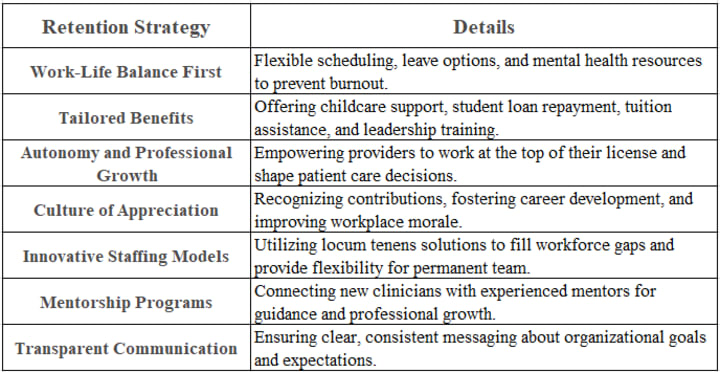
Conclusion: The Future of Healthcare
The situation in the healthcare workforce is bad but not bleak. If healthcare leaders do the ‘Healthcare Retention Reset, ’ they can create a better and healthier workplace for their most valuable asset – their people. This means a shift in mindset to new ways that focus on employee well-being, learning and development, and job autonomy. So, healthcare organizations should invest in their employees to reduce turnover, improve care, and create a sustainable future of healthcare.
About the Creator
Brian Sutter
Brian Sutter is a marketing leader transforming healthcare staffing through innovative strategies. A contributor to Forbes and Medium, he connects providers with opportunities nationwide as Marketing Leader for Advantis Medical.
Keep reading
More stories from Brian Sutter and writers in Journal and other communities.
The Nurse Shortage Fix: Empowering Healthcare with Locum Tenens APPs
Imagine a hospital administrator staring at a spreadsheet covered in red ink, the result of unfilled positions and loss of patient revenue. Or picture a busy team of nurses, burnt out and stretched thin, overwhelmed with another shift without enough hands on deck.
By Brian Sutter11 months ago in Journal
The goals I did not achieve
Every writing goal I made for the year is a wash. It has been this way for a while, but I think it's important to be open about my failures and the reality of how life can get in the way. This is especially true considering the several times I have posted on Vocal about my writing goals, how I was changing my approach, and where I was hoping to be for the upcoming year. I will probably do that again in a couple months, but for now, it is time to acknowledge where I am today.
By Kay Husnick24 days ago in Journal
How to Begin a Relationship with Jesus
A Step-by-Step Guide to Faith, Presence, and Transformation in Everyday Life Step 1: Find a quiet space Begin in a place where you can notice yourself. This could be a room, a park, or the space between heartbeats. The quiet is not about absence of sound but about presence of attention. Bring no agenda, only awareness. The first step is to show up.
By Sound and Spirit2 days ago in Journal



Comments (5)
Will be following along for more articles that you post! Important topic and great blog
Such an important read. 👏 Burnout isn’t just a buzzword, it’s a serious thing that's affecting the people we rely on to keep the healthcare system running. Love seeing real, actionable strategies that prioritize clinicians as people first.
Appreciate the insights regarding work/life balance. Post-pandemic nurses are wondering if they should stay in the field. Mental health, remote work, balancing family life --- these are all important to today's workers. Thanks for bringing those important points up. Gave me something to really think about!
Incredible insights. This piece does a great job of humanizing the healthcare staffing crisis while offering practical, actionable solutions. The focus on flexibility, mental health, and mentorship truly hits home — especially in an environment where burnout is often treated as inevitable rather than preventable. A much-needed perspective and a strong call to action for healthcare leaders. 👏
Such an important topic—thank you for bringing it to light, Brian. Burnout is real, and it’s past time we stop treating it like just part of the job. Flexible schedules, mental health support, and better pay aren’t perks—they’re essential if we want to keep good people in healthcare. Love the call for action and real solutions here.