
Beyond Antivirus: Cybersecurity Market Transforms with Predictive Analytics and Automation
As cyber threats continue to evolve, the cybersecurity industry must stay one step ahead. The integration of AI-driven predictive analytics and security automation is not just a trend—it's a necessity for modern enterprise defense.

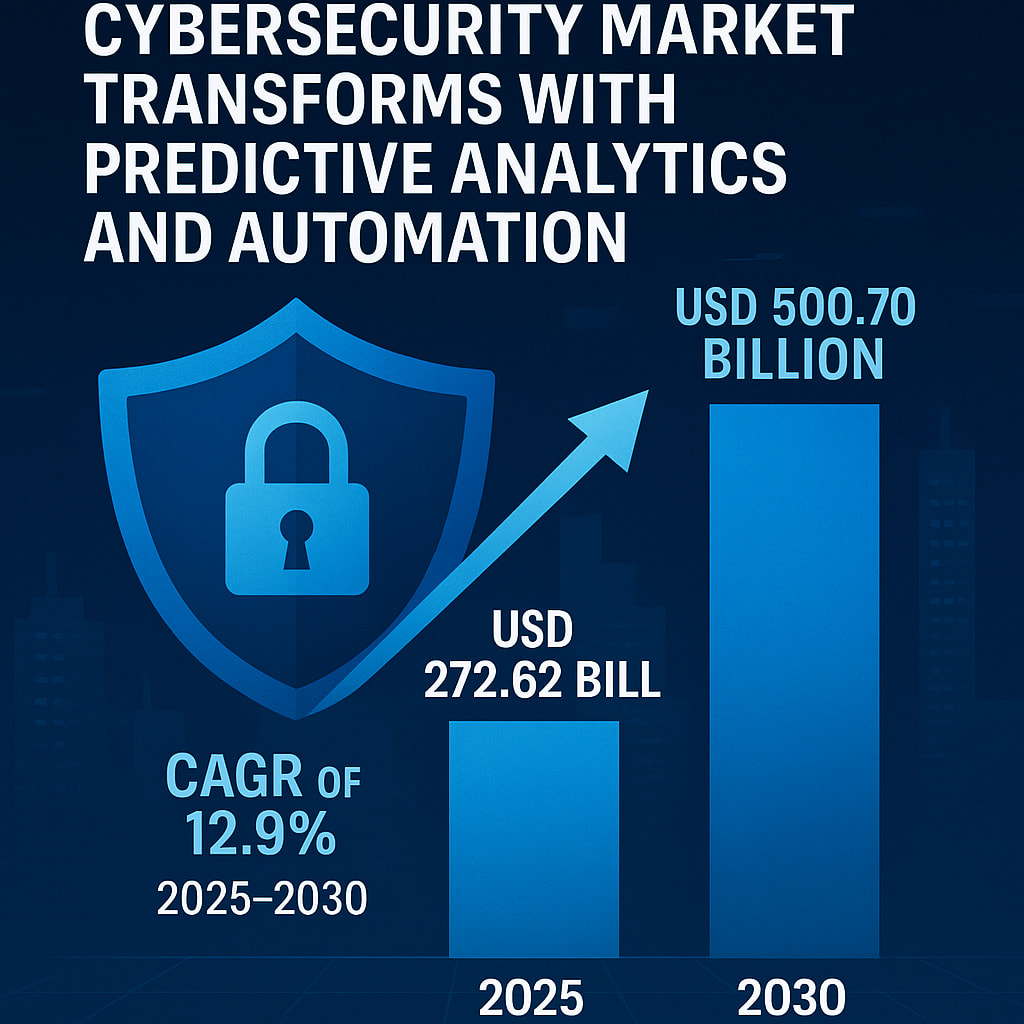
In an era defined by digital transformation and increasing cyber threats, the cybersecurity landscape is evolving rapidly. Traditional antivirus solutions are no longer sufficient to protect organizations against sophisticated and persistent cyberattacks. The market is now experiencing a paradigm shift—moving beyond reactive defenses to proactive, intelligent systems driven by predictive analytics and automation. As a result, the global cybersecurity market is forecasted to grow from USD 272.62 billion in 2025 to USD 500.70 billion by 2030, at a CAGR of 12.9%, reflecting the urgent need for innovative security technologies.
The Rise of Predictive Cybersecurity
Predictive analytics involves the use of big data, machine learning (ML), and artificial intelligence (AI) to anticipate cyber threats before they occur. Unlike traditional approaches that rely on known threat signatures, predictive systems analyze vast amounts of historical and real-time data to identify anomalies and forecast potential attacks.
One of the key advantages of predictive cybersecurity is threat anticipation. These systems can detect patterns and behaviors that may indicate a brewing threat, allowing security teams to neutralize issues before any damage is done. Industries such as finance, healthcare, and critical infrastructure are increasingly adopting predictive tools to safeguard sensitive data and maintain continuity.
Moreover, predictive analytics is enhancing risk assessment by identifying system vulnerabilities and quantifying their likelihood of exploitation. This allows organizations to prioritize their defenses and allocate resources more effectively. For example, financial institutions are leveraging predictive tools to monitor fraudulent transactions in real time, drastically reducing potential losses.
Automation: From Response to Resilience
Automation in cybersecurity streamlines repetitive tasks, accelerates response times, and reduces human error. With the growing complexity and volume of cyberattacks, manual threat detection and response methods are becoming impractical. Automated systems, such as Security Orchestration, Automation, and Response (SOAR) platforms, can instantly correlate security events, launch pre-defined countermeasures, and escalate critical alerts for human oversight.
One of the most transformative aspects of automation is incident response automation. By integrating threat intelligence, behavioral analytics, and pre-programmed playbooks, organizations can automatically isolate compromised systems, shut down malicious processes, and remediate vulnerabilities—often in a matter of seconds.
Furthermore, automation is enabling continuous compliance monitoring. As regulatory requirements become stricter across industries, automated tools can ensure that policies and procedures remain aligned with standards such as GDPR, HIPAA, and ISO 27001. This reduces compliance costs and minimizes the risk of penalties.
Key Growth Drivers in the Cybersecurity Market
The expansion of the cybersecurity market is being driven by several converging trends:
Expanding Threat Landscape: As attackers adopt more sophisticated techniques like ransomware-as-a-service (RaaS), phishing kits, and AI-generated deepfakes, enterprises are forced to adopt more intelligent and adaptive security systems.
Digital Transformation: The widespread adoption of cloud computing, remote work, and IoT has expanded the attack surface, necessitating advanced protection beyond traditional perimeter defenses.
Skills Shortage: With a global shortage of cybersecurity professionals, automation and AI are becoming indispensable in filling operational gaps and reducing response times.
Regulatory Pressures: Governments and regulatory bodies worldwide are implementing stricter data privacy and protection laws, pushing organizations to invest in robust cybersecurity solutions.
Enterprise Modernization: Organizations are increasingly embedding cybersecurity into digital strategy, integrating security functions directly into development pipelines (DevSecOps) and enterprise risk management.
The Road Ahead
Vendors are now developing integrated platforms that combine network security, endpoint protection, identity management, and behavioral analytics into unified solutions.
The future of cybersecurity lies in resilience rather than mere protection. Organizations must adopt an adaptive security architecture that anticipates threats, automates defenses, and continuously learns from emerging risks.
With innovation at the forefront, the cybersecurity market is poised not only to protect digital assets but also to redefine how businesses build trust and maintain continuity in a digitally interconnected world.
About the Creator
Paxton Templeton
I’m a storyteller at heart with a passion for turning data into compelling narratives. With a focus on industry trends, market insights, and growth statistics, I bring clarity to complexity
Keep reading
More stories from Paxton Templeton and writers in Journal and other communities.
Fatty Amines Market Demand Rising: Forecast to Reach $5.16B by 2034
Fatty Amines Market Fatty amines become essential elements in modern chemical solutions because their applications expand across multiple sectors such as agrochemicals, water treatment, oilfield chemicals, and personal care products.
By Paxton Templeton7 months ago in Journal
What happened in Minneapolis ICE Shooting
On 7 Jan, Wednesday morning in Minneapolis, 37-year-old Renee Nicole Good dropped her six-year-old child off at school. Shortly after, federal agents in unmarked vehicles confronted her. Within moments, an agent fired three shots into her maroon SUV. Good, a mother of three and U.S. citizen, died at the scene.
By Arsalan Haroon4 days ago in Journal
Center Stage with Paul Stewart
*** I'm keen to republish the interviews I did for my series with Vocal creators. It's been a few years and I thought it might be nice to revisit these wonderful conversations. I'll be releasing them one at a time for a few weeks/months.
By Heather Hublerabout 7 hours ago in Interview




Comments
There are no comments for this story
Be the first to respond and start the conversation.