
Best Practices to level up your game in SEO
Tips for 2023

Introduction:
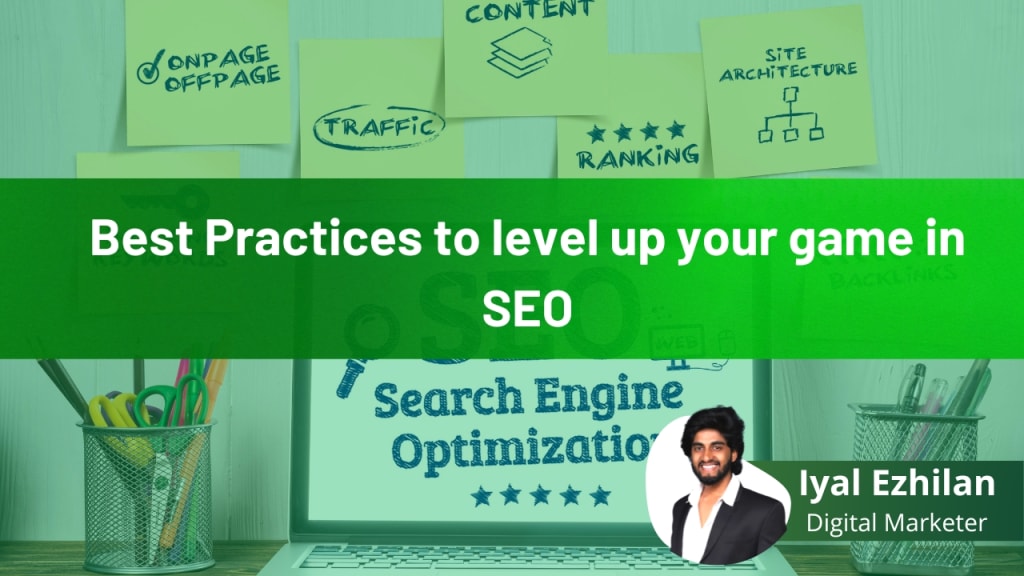
SEO stands for "search engine optimization." It is the process of optimizing a website or web page to improve its visibility and ranking in search engine results pages (SERPs).
This is accomplished by incorporating certain techniques, such as using relevant keywords, building backlinks, and making sure the website is easily crawlable and mobile-friendly.
The goal of SEO is to increase organic (non-paid) traffic to a website by making it more easily discoverable by search engines and users. By improving a website's visibility, businesses may gain more exposure, leads and ultimately revenue.
Types of SEO:
There are two main types of SEO: on-page SEO and off-page SEO.
On-page SEO involves optimizing the elements of a website that are within the control of the website owner, such as the content and the HTML code.
This includes optimizing title tags, meta descriptions, header tags, and keyword usage. It also includes website's structure, speed, mobile-friendliness, and other technical aspect that can affect search engine ranking.
Off-page SEO involves optimizing elements that are not within the control of the website owner. This includes building backlinks to the website from other sites, as well as social media promotion.
The goal of off-page SEO is to increase the visibility and credibility of a website in the eyes of search engines, which can ultimately lead to better rankings.
Another type of SEO is Technical SEO, which focus on the technical aspect of the website, such as the website structure, crawling and indexing, mobile-friendliness, and website speed.
It also includes website's security, URL structure and other technical elements that can affect search engine ranking.
Lastly, Local SEO is a type of optimization that targets local customers, it's help local businesses to be visible in the local search results.
It includes optimizing Google My Business listing, local directories, and other local citations that can help search engines understand the business location and service area.

Why SEO is important?
Increased visibility
By optimizing a website for search engines, it can improve its visibility and ranking in search engine results pages (SERPs). This means that the website will be more easily discoverable by users, which can lead to increased traffic and more potential customers.
Cost-effective
SEO is a cost-effective way to increase a website's visibility and drive traffic. Unlike paid advertising, SEO focuses on organic (non-paid) methods to improve a website's ranking.
Better user experience: By optimizing a website for search engines, it can also improve the user experience. This includes making sure the website is easy to navigate, mobile-friendly, and has a fast-loading speed.
Increased brand awareness
As a website's visibility and ranking improves, it can also increase brand awareness. When a website appears at the top of search engine results, it can build trust and credibility with users.
Long-term results
The effects of SEO are long-lasting. Unlike paid advertising, the benefits of SEO continue to accrue over time if the website remains optimized.
Best Practices in SEO
Here are some best practices for SEO in digital marketing:
• Conduct keyword research to identify the terms and phrases your target audience is searching for.
• Optimize your website's title tags, meta descriptions, and content for those keywords.
• Build high-quality backlinks to your website from reputable sources.
• Use alt text to describe images and other multimedia elements on your website.
• Make sure your website is mobile-friendly and has a fast-loading speed.
• Use header tags (H1, H2, etc.) to structure the content on your website.
• Create fresh and unique content regularly.
• Monitor your website's performance and adjust as needed.
• Use tools like Google Analytics and Search Console to track your progress.
• Use social media to promote your content and website.
• Use structured data (schema markup) to help search engines understand the content on your website.
Conclusion:
In conclusion, SEO is a vital aspect of digital marketing that can greatly benefit any business. By conducting keyword research, optimizing website content and HTML code, building backlinks, and improving the user experience, a website can improve its visibility and ranking in search engine results pages.
This can lead to increased traffic, better brand awareness, and higher revenue. With the help of SEO, businesses can connect with more customers and reach their target audience more effectively. It is a cost-effective and long-term strategy that can yield significant returns for any business.
About the Creator
iyal ezhilan
I help to transform your business and reach new audiences through targeted digital marketing efforts, So I'm here to help you with my articles.
I'm Iyal Ezhilan, a digital marketer who works with a wide range of clients in multiple domains.
Keep reading
More stories from iyal ezhilan and writers in Journal and other communities.
Top 10 Demanded digital skills in 2023
Introduction: Digital skills refer to the ability to use technology and digital tools to perform various tasks and solve problems. These skills include but are not limited to using a computer, the internet, and different software and applications.
By iyal ezhilan3 years ago in Education
How to Build AI Agents in 2026: Stop Coding Like It's 2024
Remember when we all thought pasting a prompt into ChatGPT was "prompt engineering"? Cute. It's 2026 now, and if your "AI" can't plan a vacation, book the flights, and argue with the airline about a refund, it's just a chatbot. Learning how to build AI agents isn't just a resume booster anymore; it's the only way to survive the "white-collar shockwave" experts warned us about.
By Sherry Walker4 days ago in Journal
Miss Persephone's Manual to a Seemingly Ordinary Life
Miss Persephone was found at the dining table, her blue eyes swollen, her tears arriving and retreating like the tides of the ocean. Earlier that day, her family had visited her in the retirement home where she had lived for eight years. It was her eightieth birthday.
By Imola Tóth3 days ago in Fiction




Comments
There are no comments for this story
Be the first to respond and start the conversation.